Introduction
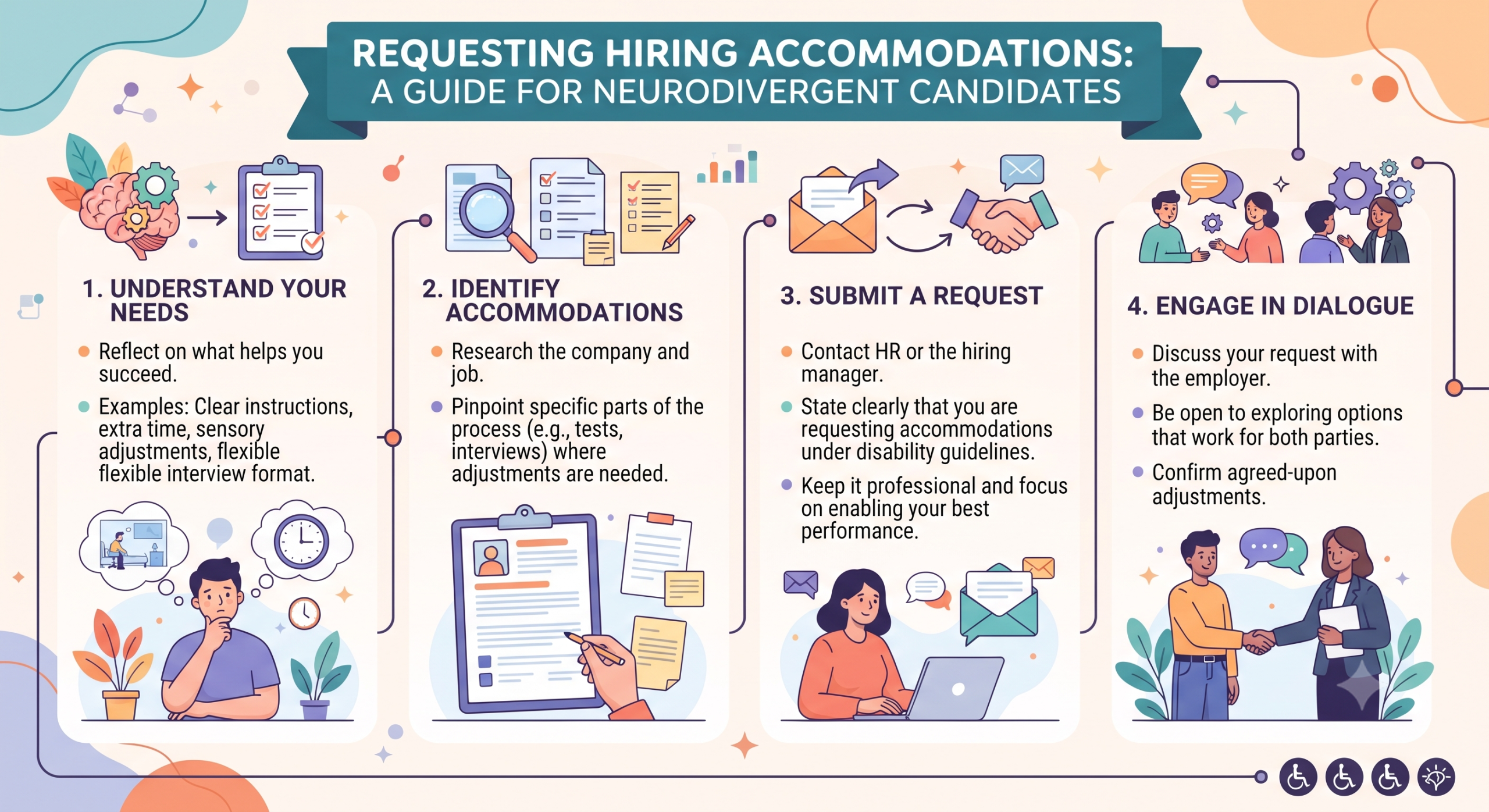
The hiring process is designed to help employers identify qualified candidates, but traditional recruitment methods do not always allow every applicant to demonstrate their abilities fairly. Timed assessments, panel interviews, unfamiliar environments, and communication expectations can present additional challenges for neurodivergent candidates, including individuals with autism, ADHD, dyslexia, dyspraxia, Tourette syndrome, and other cognitive differences. Accommodations
Many organizations are recognizing that creating an inclusive recruitment process means offering reasonable accommodations that enable candidates to showcase their skills without unnecessary barriers. These accommodations are not intended to provide an advantage—they help ensure that assessments measure job-related abilities rather than differences in how people process information, communicate, or manage sensory input.
Knowing when and how to request accommodations can make the hiring experience more accessible while maintaining professionalism. Candidates who understand their options and communicate their needs clearly are often better positioned to perform at their best throughout the recruitment process.
Whether you are applying for in-office or remote positions through the best job tool, a global job platform, understanding how to request accommodations confidently can help you navigate the hiring process successfully.
H2: Understand What Hiring Accommodations Are
Hiring accommodations are reasonable adjustments made during recruitment to ensure candidates have an equal opportunity to participate in the hiring process.
These adjustments focus on removing barriers rather than changing the essential requirements of the role.
Examples include:
- Additional time for assessments
- Alternative assessment formats Accommodations
- Written interview questions in advance
- Quiet interview environments
- Virtual interviews instead of in-person meetings
- Extra breaks during lengthy assessments
- Assistive technology compatibility
- Flexible scheduling when appropriate
The purpose is to evaluate candidates based on their qualifications and potential, not on their ability to navigate unnecessary obstacles in the hiring process.
H2: Know When to Request Accommodations
There is no single correct time to request accommodations. The appropriate stage depends on the hiring process and your individual needs.
Common opportunities include:
During the Application Process
Some employers include a section where applicants can request accommodations before interviews or assessments.
After Receiving an Interview Invitation
This is often the most practical time because interview details are confirmed, making it easier to explain specific requirements.
Before Skills Assessments
If technical tests, aptitude assessments, or presentations are involved, requesting adjustments beforehand allows recruiters to prepare appropriately.
Whenever possible, make your request early enough for the employer to arrange the necessary support.
H2: Communicate Your Needs Clearly and Professionally
You are not required to share extensive personal or medical information unless you choose to do so.
Instead, focus on explaining the adjustment that will help you participate effectively.
A professional request should:
- Be concise and respectful
- Identify the accommodation needed
- Explain how it supports your participation
- Focus on practical solutions
Examples include:
- Requesting additional time for a timed assessment.
- Asking for interview questions in advance.
- Requesting captions during virtual interviews.
- Asking for a quieter interview location.
- Requesting scheduled breaks during long assessment sessions.
Keeping the conversation focused on the accommodation rather than the diagnosis often helps employers respond more efficiently.
H2: Prepare for Different Types of Hiring Assessments
Modern recruitment often includes multiple evaluation stages beyond traditional interviews.
Preparing in advance helps reduce uncertainty.
Technical Assessments
Ask whether:
- Instructions can be provided in writing.
- Additional time is available if required.
- Practice materials are offered.
Panel Interviews
Request information about:
- Number of interviewers
- Interview format
- Expected duration
- Topics to be discussed
Presentations
Clarify:
- Time limits
- Available technology
- Evaluation criteria
Understanding expectations allows candidates to prepare effectively and perform with greater confidence.
H2: Evaluate the Employer’s Commitment to Inclusion
An organization’s response to accommodation requests can reveal valuable insights into its workplace culture.
Positive indicators include:
- Prompt communication
- Respectful interactions
- Flexible problem-solving
- Clear hiring instructions
- Accessible interview processes
- Professional handling of confidential information
Employers that prioritize inclusion generally view accommodations as part of creating an equitable recruitment experience rather than as an inconvenience.
When researching companies, review their careers page, accessibility policies, and employee inclusion initiatives to understand how they support diverse talent.
H2: Navigate Remote Hiring and Virtual Interviews
Remote recruitment has become increasingly common, creating both opportunities and challenges for neurodivergent candidates.
Helpful strategies include:
Optimize Your Environment
- Choose a quiet location.
- Minimize distractions.
- Test your equipment in advance.
- Ensure reliable internet access.
Request Virtual Accommodations
Examples include:
- Closed captions
- Written interview instructions
- Flexible scheduling
- Additional breaks for lengthy assessments
Prepare Your Technology
Before the interview:
- Test audio and video.
- Practice using the meeting platform.
- Organize any required documents.
- Prepare notes if permitted.
When searching for inclusive employers through the best job tool, consider organizations that clearly explain their remote hiring process and demonstrate flexibility in supporting candidates throughout virtual recruitment.
H2: Build Confidence Throughout the Hiring Process
Requesting accommodations is a professional step toward ensuring a fair evaluation of your abilities.
Confidence comes from preparation and understanding that accommodations support equal opportunity rather than providing preferential treatment.
Strengthen your confidence by:
- Practicing interview responses.
- Researching the organization thoroughly.
- Preparing examples of your achievements.
- Reviewing the job description carefully.
- Focusing on your skills and experience.
- Remembering that accommodations help you demonstrate your true capabilities.
Employers ultimately want to understand how well you can perform the responsibilities of the role, and appropriate accommodations help create that opportunity.
Practical Steps Before Requesting Accommodations
Use this checklist to prepare for the hiring process:
- Review the recruitment stages.
- Identify accommodations that support your success.
- Make requests early whenever possible.
- Keep communication professional and concise.
- Focus on practical adjustments.
- Prepare for assessments in advance.
- Test technology before virtual interviews.
- Research the employer’s accessibility policies.
- Document important recruitment communications.
- Practice answering interview questions confidently.
- Stay focused on your qualifications and strengths.
- Evaluate how the employer responds to your request.
Preparation helps reduce stress and allows you to approach interviews with greater confidence.
Conclusion
Every candidate deserves the opportunity to demonstrate their abilities in a fair and accessible hiring process. For neurodivergent professionals, requesting reasonable accommodations is not about seeking special treatment—it is about ensuring that recruitment methods accurately reflect skills, experience, and potential rather than barriers created by traditional assessment formats.
By understanding available accommodations, communicating needs professionally, preparing thoroughly for interviews and assessments, and evaluating an employer’s commitment to accessibility, candidates can approach the hiring process with greater confidence and clarity. Inclusive organizations recognize that diverse ways of thinking strengthen innovation, collaboration, and long-term business success.
Whether you are applying for your first professional role or pursuing international opportunities through the best job tool, a global job platform, knowing how to request accommodations effectively can help you navigate recruitment with confidence while identifying employers that genuinely value inclusion and equal opportunity.




Leave a Reply