Introduction
Artificial Intelligence (AI) has transformed the recruitment process, helping organizations write job descriptions, screen resumes, schedule interviews, and communicate with candidates more efficiently. Among these advancements, AI-generated job descriptions have become increasingly common. Employers can now create detailed job postings within minutes, saving time and maintaining consistency across multiple vacancies.
However, while AI can produce well-structured content, not every AI-generated job description accurately reflects the role or the organization’s hiring needs. Some postings are carefully reviewed and customized by hiring managers, while others are published with minimal editing, resulting in vague responsibilities, unrealistic expectations, or generic language.
For job seekers, learning to recognize AI-generated job descriptions is valuable. The goal is not to avoid every AI-assisted posting—many reputable employers use AI responsibly. Instead, candidates should evaluate whether the job description provides meaningful information, reflects thoughtful hiring practices, and offers enough detail to make an informed application decision.
Whether you are exploring remote opportunities or searching through the best job tool, a global job platform, understanding the quality of a job description can help you identify organizations that invest in clear communication and well-defined hiring processes.
H2: Understand Why Companies Use AI to Write Job Descriptions
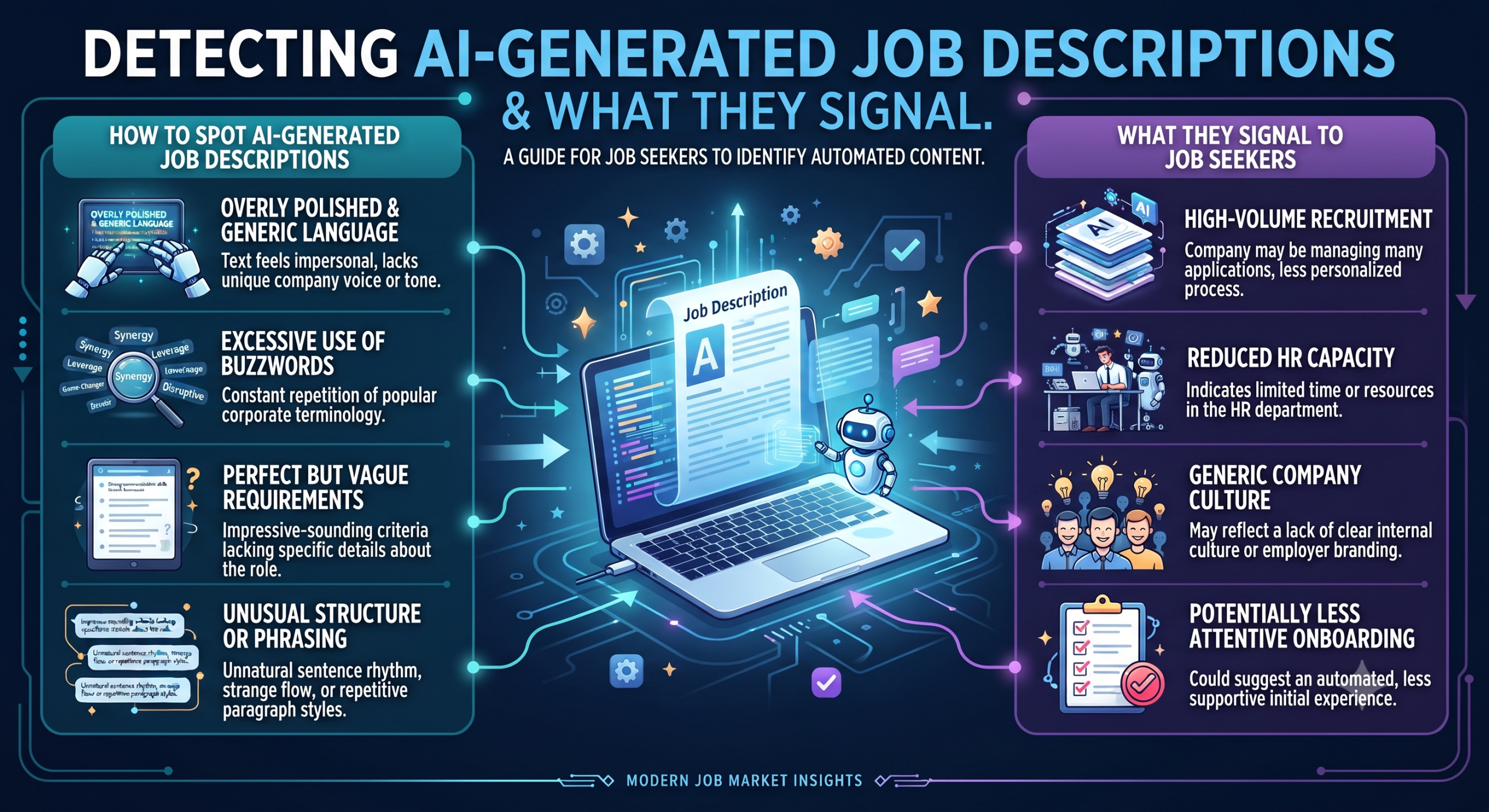
Many organizations use AI because it improves efficiency and helps recruiters manage a large number of vacancies.
Common reasons include:
- Reducing administrative workload.
- Standardizing job postings.
- Improving writing quality.
- Generating role summaries quickly.
- Supporting high-volume recruitment.
- Maintaining consistent employer branding.
Using AI is not necessarily a warning sign. In many organizations, AI creates a first draft that recruiters or hiring managers later review and customize.
Problems arise when AI-generated content is published without sufficient human review.
H2: Look for Generic or Repetitive Language
One of the most common characteristics of AI-generated job descriptions is overly broad or repetitive wording.
Examples include repeated phrases such as:
- “Fast-paced environment.”
- “Excellent communication skills.”
- “Dynamic team player.”
- “Self-motivated individual.”
- “Opportunity for growth.”
While these phrases are not inherently problematic, they become less useful when they appear without specific examples or context.
Ask yourself:
- Does the posting explain what success looks like?
- Are daily responsibilities clearly described?
- Are required skills connected to actual tasks?
Specific information generally reflects greater effort and clarity.
H2: Evaluate Whether Responsibilities Match the Role
Some AI-generated postings combine responsibilities from multiple positions.
Look carefully for signs such as:
- Entry-level salary with senior-level expectations.
- Multiple unrelated technical skills.
- Conflicting job responsibilities.
- Unrealistic experience requirements.
- Excessively long lists of qualifications.
For example, a marketing position requiring advanced software engineering skills may indicate that the description was generated from multiple templates rather than tailored to the actual role.
Well-written job descriptions focus on the core responsibilities that genuinely define the position.
H2: Assess the Level of Company-Specific Detail
Strong job descriptions usually include information that reflects the organization’s unique environment.
Look for details about:
The Team
- Team size
- Reporting structure
- Cross-functional collaboration
Business Goals
- Products or services
- Company mission
- Department objectives
Success Expectations
- First 90-day priorities
- Performance metrics
- Key responsibilities
Generic descriptions that could apply to almost any organization may indicate limited customization.
Candidates often gain greater confidence when employers clearly explain how the role contributes to business success.
H2: Analyze Salary, Benefits, and Workplace Information
Thoughtfully prepared job descriptions often provide transparent information about employment conditions.
Look for details such as:
- Salary range
- Benefits
- Work schedule
- Remote or hybrid expectations
- Career development opportunities
- Professional learning support
If important information is completely absent, consider researching the employer further before applying.
Transparency generally reflects a structured hiring process and helps candidates evaluate opportunities more effectively.
H2: Research Beyond the Job Description
A job description should be only one part of your evaluation process.
Before applying:
Review the Company’s Website
Compare the posting with:
- Careers page
- Leadership information
- Company values
- Products and services
Check Employee Reviews
Look for consistent feedback regarding:
- Management quality
- Career growth
- Work-life balance
- Hiring process
- Workplace culture
Review Professional Profiles
LinkedIn and other professional platforms may provide insights into:
- Team structure
- Employee tenure
- Internal promotions
- Current hiring activity
When discovering opportunities through the best job tool, combining job description analysis with independent company research helps you make more informed career decisions.
H2: Focus on Overall Hiring Quality Rather Than AI Usage Alone
The presence of AI in recruitment does not automatically indicate a poor employer.
Instead, evaluate whether the hiring process demonstrates professionalism.
Positive indicators include:
- Clear communication.
- Personalized recruiter interactions.
- Realistic qualifications.
- Transparent hiring timelines.
- Detailed interview information.
- Responsive candidate support.
A company may use AI responsibly while still maintaining an excellent candidate experience.
Conversely, a manually written job description can still be unclear or poorly designed.
The quality of the hiring process matters far more than whether AI was used to assist with drafting.
Practical Steps Before Applying
Use this checklist to evaluate every job description:
- Read the posting carefully from beginning to end.
- Look for clear role responsibilities.
- Check whether qualifications are realistic.
- Evaluate salary and benefit transparency.
- Research the employer independently.
- Compare multiple openings from the same company.
- Review employee experiences.
- Verify remote work expectations.
- Confirm required technical skills align with the position.
- Prepare questions for the interview if information is unclear.
- Prioritize organizations that communicate openly and specifically.
- Focus on overall hiring quality instead of assuming AI use is negative.
Careful evaluation helps you invest your time in opportunities that are more likely to match your career goals.
Conclusion
AI-generated job descriptions are becoming a standard part of modern recruitment, helping organizations create postings more efficiently and consistently. However, the presence of AI alone does not determine the quality of a job opportunity. What matters most is whether the final job description is accurate, specific, transparent, and thoughtfully reviewed by the employer.
Job seekers who evaluate responsibilities, qualifications, company-specific information, and hiring transparency are better equipped to distinguish between well-prepared opportunities and generic postings that provide little insight into the actual role. Combining careful analysis with independent company research leads to more informed application decisions and better long-term career outcomes.
Whether you are applying for local positions or exploring international opportunities through the best job tool, a global job platform, developing the ability to assess job descriptions critically will help you identify employers that value clear communication, structured hiring practices, and a positive candidate experience.




Leave a Reply