Introduction: Japanese Companies
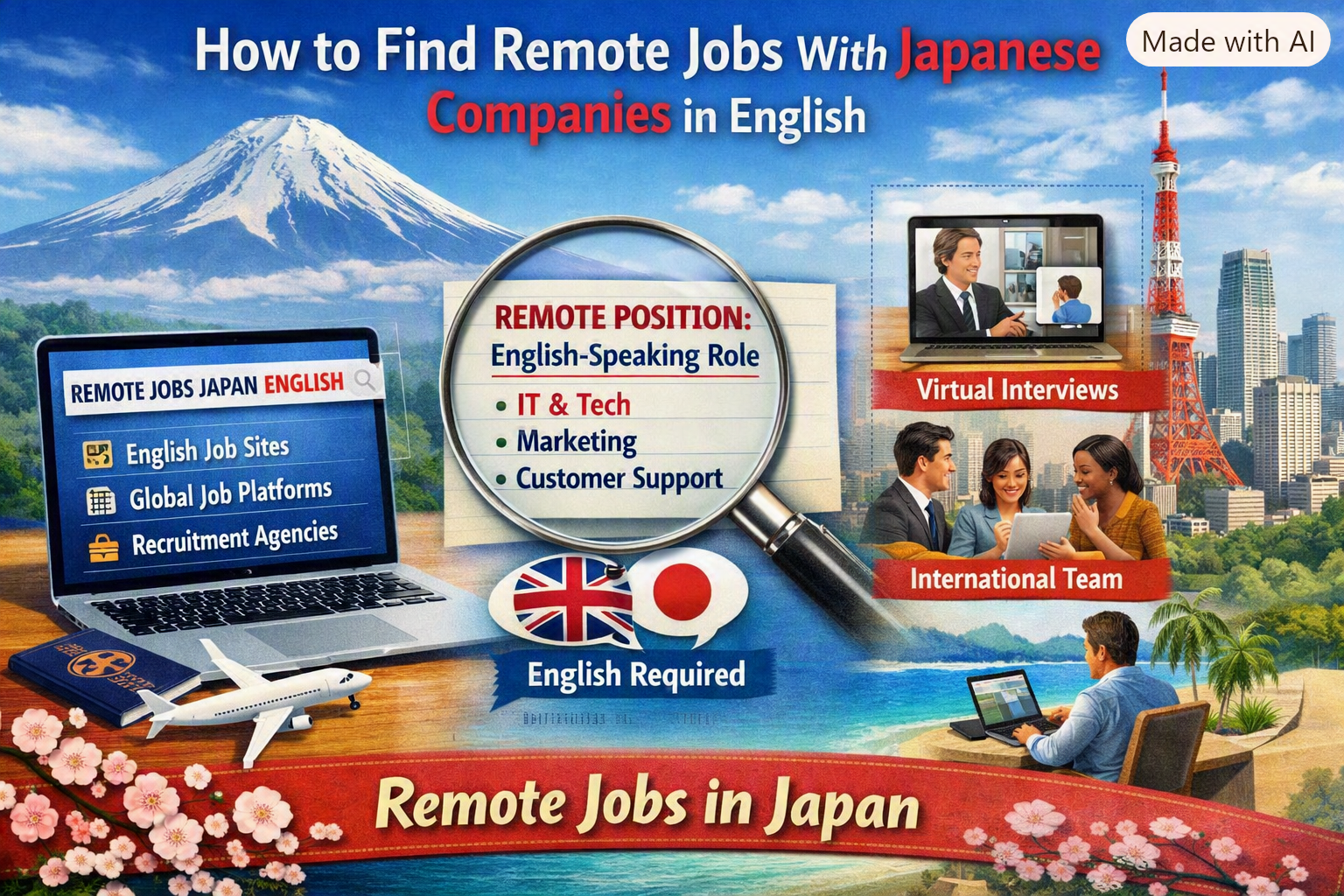
Japan is famous for its excellent companies, innovative technologies, artistic culture, and professional business environment. Still, many believe that working for a Japanese company implies knowing the Japanese language. In reality, numerous Japanese firms are internationally oriented and are always looking for skilled employees who are comfortable with remote work.
This article will discuss how you can find remote jobs with Japanese companies and prepare for working with them.
How to Find Remote Jobs With Japanese Companies In English?
1. Understand What Kind of Companies are Looking for International Candidates
First, you need to understand that not all Japanese companies are the same. Large technology corporations, video game developers, consultancies, software houses, online stores, and international startups have different staffing needs and attract different candidates. To narrow your search and increase your chances of success, analyze what companies are most likely to benefit from your participation.
To begin your search, investigate the corporations’ career pages and vacancy sections. Try to find the following keywords: remote, international, English, global, and work from anywhere.
2. Leverage International Job Platforms
Although many Japanese job websites will feature English-speaking vacancies, most of them will be in Japanese. Thus, it might be helpful to use international job platforms and LinkedIn to find remote opportunities with Japanese companies.
Make sure to use the following search terms: Japanese company remote English, Japan startup remote jobs, Tokyo company international remote, English-speaking remote jobs Japan, and Japan-based company global team.
If possible, search for your desired companies on LinkedIn. Moreover, you can sign up for their career pages to receive notifications about new vacancies. Some Japanese firms list their international vacancies on their social media accounts before they appear on LinkedIn or company career pages.
3. Highlight Your Skills Rather Than Your Location
When applying to remote companies, you should prioritize your skills over your location. You may notice that Japanese companies which are looking for international workers have specific needs that local firms do not.
Depending on the vacancy, you can offer content writing, marketing, programming, customer service, graphic design, sales, project management, financial expertise, translation, and business development skills.
Even if you are a fresher and have no relevant work experience, make sure to list your academic achievements, volunteer work, and personal projects. For example, if you apply for a content writing position, you can demonstrate your skill with writing samples.
4. Show That You are Capable of Remote Collaboration
Remember that most companies which allow remote work prefer self-driven and disciplined employees. Thus, your resume and LinkedIn profile should highlight your soft skills.
Instead of writing generic statements, provide specific examples of your achievements, such as excellent communication with customers or effective collaboration with overseas colleagues. Mention your ability to work independently and explain how you complete tasks without a direct manager’s control.
5. Specify Your Language Skills
Although many Japanese companies claim to offer remote jobs for English speakers, you should always check if they require any Japanese language proficiency.
Some firms indicate that Japanese skills are a bonus to the main position requirements, while others state that you should know at least a few hundred Japanese words or phrases. Look out for the following terms: Japanese not required, English is the primary language, and business-level English.
If a Japanese company lists English as the main language and does not mention any specific Japanese requirements, you can still apply if your other qualifications impress the recruiter.
6. Create an International Resume
When preparing your resume, remember that international recruiters will have a limited understanding of your achievements due to language barriers. Therefore, you should make it easy for Japanese recruiters to learn about your skills and work experience.
Avoid providing excessive personal details and focus on your education, experience, abilities, achievements, and projects. Moreover, if you have relevant remote work experience, mention it in your resume. Next, make sure that your LinkedIn page mirrors the information in your resume. On your LinkedIn headline, write your profession and the main skills you want to highlight. For example, you can write “Content Writer | SEO Writing | Blog & Website Content” instead of simply “Job Seeker.”
Conclusion: Japanese Companies
This article discussed how interested individuals can find remote jobs with Japanese companies and prepare for working with them. As seen from the article, not all Japanese companies require language proficiency. Most of them value the applicants’ skills, English language proficiency, self-discipline, and cultural awareness. Following the article’s guidelines will help you find a remote job with a Japanese company.
You can read more such blogs with the Best Job Tool.




Leave a Reply