Introduction: Intersection of Music and Technology
Music, creativity, emotions – the key components of the music sphere. However, technology has had an increasing impact on the creation, production, distribution, and perception of music. Various technological advances have influenced the music industry in recent years, giving people who want to work both in music and technology a lot of opportunities.
Career options at the intersection of music and technology provide a growing number of opportunities as companies need specialists who understand both spheres. Moreover, you do not need to aim to become a famous singer or musician to work in the modern music industry. There are many options for a career in the music sphere: production, software, data, marketing, digital media, and others.
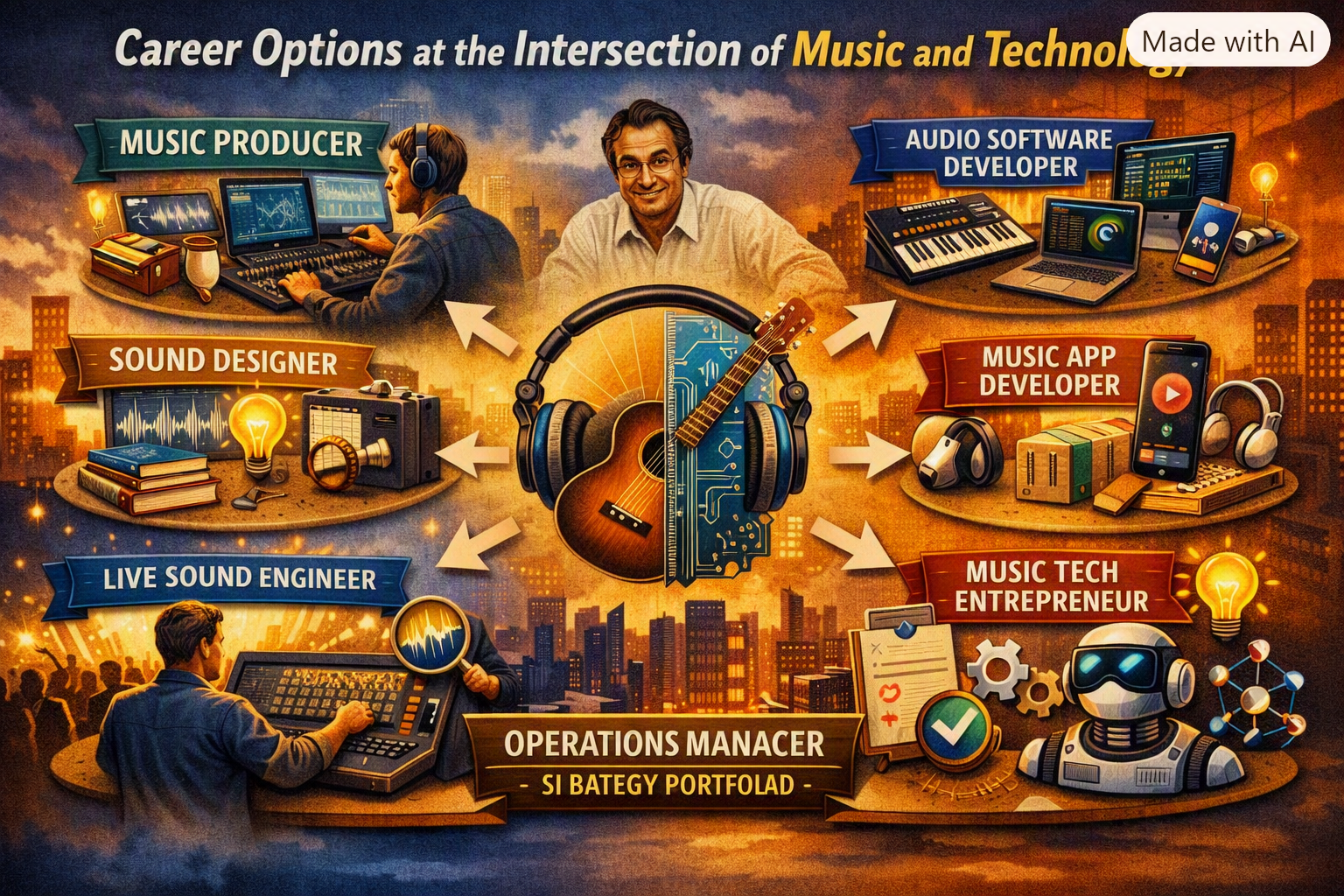
Career Options at the Intersection of Music and Technology
1. Music Producer
A music producer is a person who is involved in the production and creation of music. In particular, he suggests to singers, performers, and composers what songs to record and in what way to record them. In most cases, producers use special computer programs: Ableton Live, Logic Pro, FL Studio, Pro Tools, and others.
To work in this job, it is necessary to have at least some knowledge of music and know the features of audio editing software. Moreover, it is essential to be creative and have patience.
2. Audio or Sound Engineer
An audio or sound engineer is a specialist who handles all audio equipment: microphones, mixers, recorders, audio software, plugins, and other. Such people work in music production, movie making, television, gaming, concerts, and other spheres.
Technology plays a crucial role in this sphere, so it is essential to be technically proficient. Moreover, it is vital to have an understanding of music and be familiar with audio equipment. A career as an audio engineer is ideal for someone who is comfortable working with technology and has a flair for music.
3. Music Technology Developer
Developers can work on a wide range of products: from individual music-making software to entire digital ecosystems for the music industry. In particular, developers create applications for music production, instruments, audio effects, recommendation systems for music platforms, special apps for musicians, and much more.
A career option in music technology development is ideal for people who love to code but at the same time have a creative flair. Moreover, at least some basic knowledge of music and software development will give you an advantage in working in this niche.
4. Music Data Analyst
Music data analysts analyze data about users’ behavior on various music platforms. Moreover, such people study what songs people like, what genres are popular, what music is listened to the most, and much more. Consequently, data analysts help companies operating in the music sphere get to know their users better and improve their services.
This career path is perfect for people who love to work with statistics and dive into data to find meaningful patterns. Although programming knowledge will be helpful in this sphere, some analytical skills, as well as basic Excel knowledge, will suffice. Moreover, to succeed in this job, it is vital to understand the music industry and keep track of its latest trends.
5. Music Streaming Specialist
Music streaming services have taken over the music industry. Consequently, companies need specialists who know the specifics of the streaming industry and can work with data about users’ behavior on their platforms. Moreover, such people are often responsible for promoting and distributing content and helping discover new artists.
A career as a music streaming specialist is suitable for people who are creative and who know how to work with data. Moreover, it is essential to have at least some basic knowledge of the music industry.
Conclusion: Intersection of Music and Technology
There are many career options at the intersection of music and technology. Consequently, people who want to work both in music and in technology now have many opportunities. Moreover, it is possible not only to work in the traditional spheres of the music industry but also to try innovative projects. The most crucial thing is to learn the nuances of the selected sphere and not to be afraid to change.




Leave a Reply