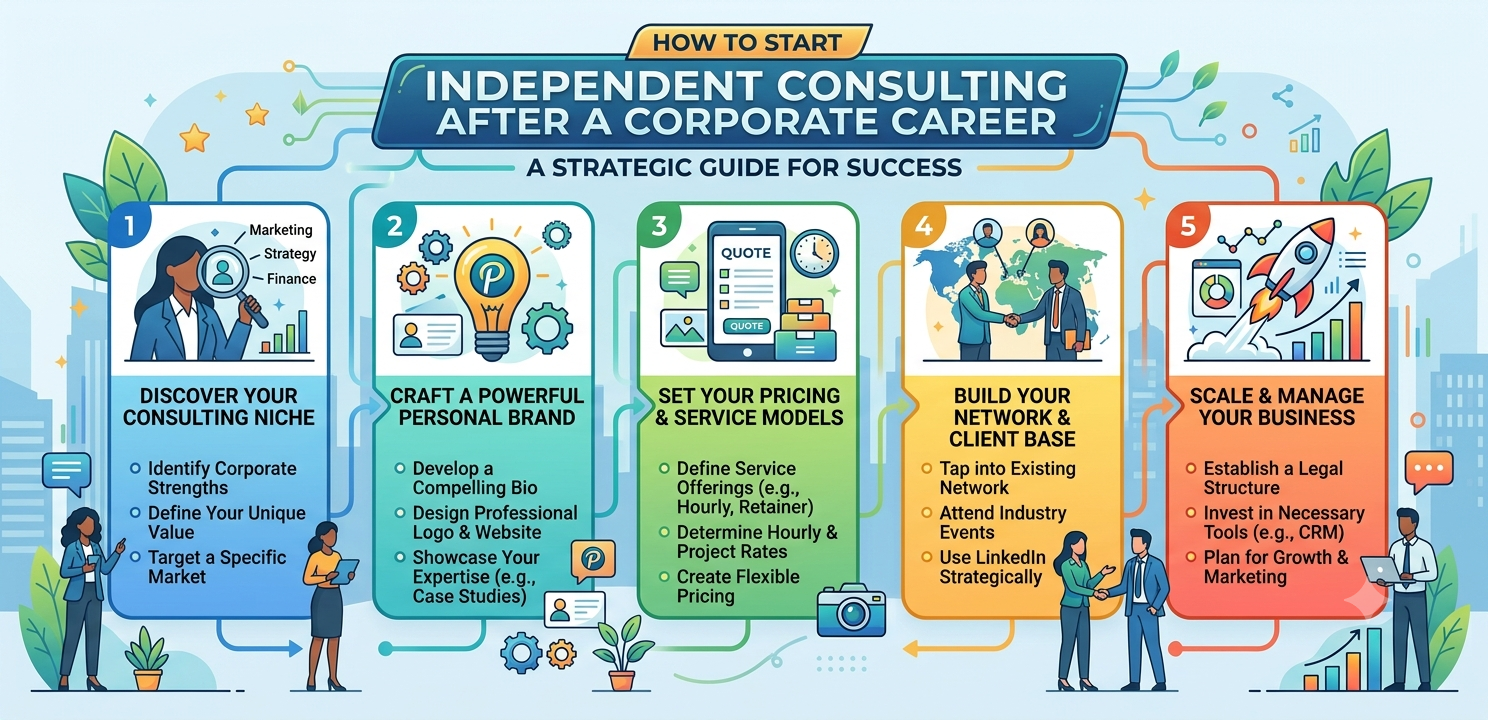
Introduction: Independent Consulting
Coming from a corporate career can be exciting yet intimidating as one begins their independent consulting career. While decades of work have honed one’s skills and provided industry insights, valuable professional networks, and expertise, being self-employed or consulting requires a different set of competencies. One must not only be good at what they do but also be able to sell their skills, pitch their proposition, manage their projects, brand themselves, and so on.
How to enter consulting independently after a long corporate career essay focuses on leveraging one’s existing skill set and transforming it into a lucrative independent consulting career.
How to Start Independent Consulting After a Corporate Career?
1. Leverage What You Are Good At
The first step to a successful independent consulting career is to identify what one is good at. One should not attempt to be a jack-of-all-trades. One’s expertise should be their point of difference and serve as a foundation for their independent consulting career. For instance, individuals who have dedicated the majority of their working years in human resources can consider human resource consulting. If one was in finance, the best place to start is to consider finance consulting.
It is important to highlight the problems one has solved in the past. If one has solved similar problems over the years, it is possible to turn it into a niche area.
2. Define Your Consulting Niche
While it might seem too obvious, it is important to narrow down on a niche. If one says they are a business consultant, it is difficult to say what they do specifically. It is advisable to be as specific as possible when branding yourself as a consultant. For instance, one could be a business growth consultant for small businesses or a financial reporting consultant for growing companies.
This area of specialization can also be determined depending on the kind of clientele one intends to target.
3. Make Your Experience Matter
While years of corporate work might be exciting, it is important to make it relevant to prospective clients. Experience is good, but clients are always looking for someone who can address their specific needs.
When developing services, think about the problems one can solve for their target audience. For instance, one should not position oneself as an operations manager, one should be looking to offer operational audits, operations improvement projects, and so on.
Coming up with two to three different service packages is always a good start. In each of the service offerings, one must state the problems they solve, deliverables, timelines, and what the clients can expect.
4. Network Extensively
One’s network of contacts is usually a good barometer of where one can start selling their skills and services as an independent consultant. Prospective clients and customers are always looking for credible and reliable consultants. As such, it is important to let one’s network know that one is in business. Let them get to know your new offer through a simple email or message.
Some contacts might be willing to become clients; others might connect one with others in need of a consultant.
5. Build a Strong LinkedIn Profile
Having a website is essential, but a strong LinkedIn profile can also help generate leads and market one’s brand as a reputable independent consultant. The LinkedIn page is, in many ways, a snapshot of the brand. As such, it is always important to optimize the page to reflect the consultancy’s value proposition. One could highlight their offerings and problems they solve on the page. It is always advisable to have value-led content on LinkedIn. This could be in the form of informative posts on the challenges in a particular industry.
An operations consultant, for instance, can share common challenges they have encountered while doing operations audits in specific industries. The same way an HR consultant can share common mistakes to avoid when recruiting.
6. Start Small and Scale
While some consultants might be ready to start managing large multinational corporations, most independent consultants start with smaller projects. At this point, consultants can also start to brand themselves and build their portfolios. Starting small allows consultants to get feedback from these initial clients, learn from them, grow, and move on to bigger clients.
Consultants can start with small project reviews, company audits, workshops, or training sessions. All this builds the experience and credibility of the independent consultant and sets them up for subsequent big-ticket consulting assignments.
Conclusion: Independent Consulting
How to enter consulting independently after a long corporate career essay offers a roadmap to consultants looking to make a transition from corporate employees to independent consultants. While the corporate experience might provide experience, it is essential that consultants identify what they are good at and carve out their niche.
It is essential to leverage one’s years of experience to build a successful independent consulting career. While one does not have to reinvent themselves, it is critical to utilize the existing skills and experience to meet the needs of the target market.
Ready to turn your corporate experience into an independent consulting career? Start by identifying your expertise, building a strong professional network, and showcasing your value to potential clients. You can also explore opportunities and discover your next career move with the Best Job Tool platform.

Leave a Reply