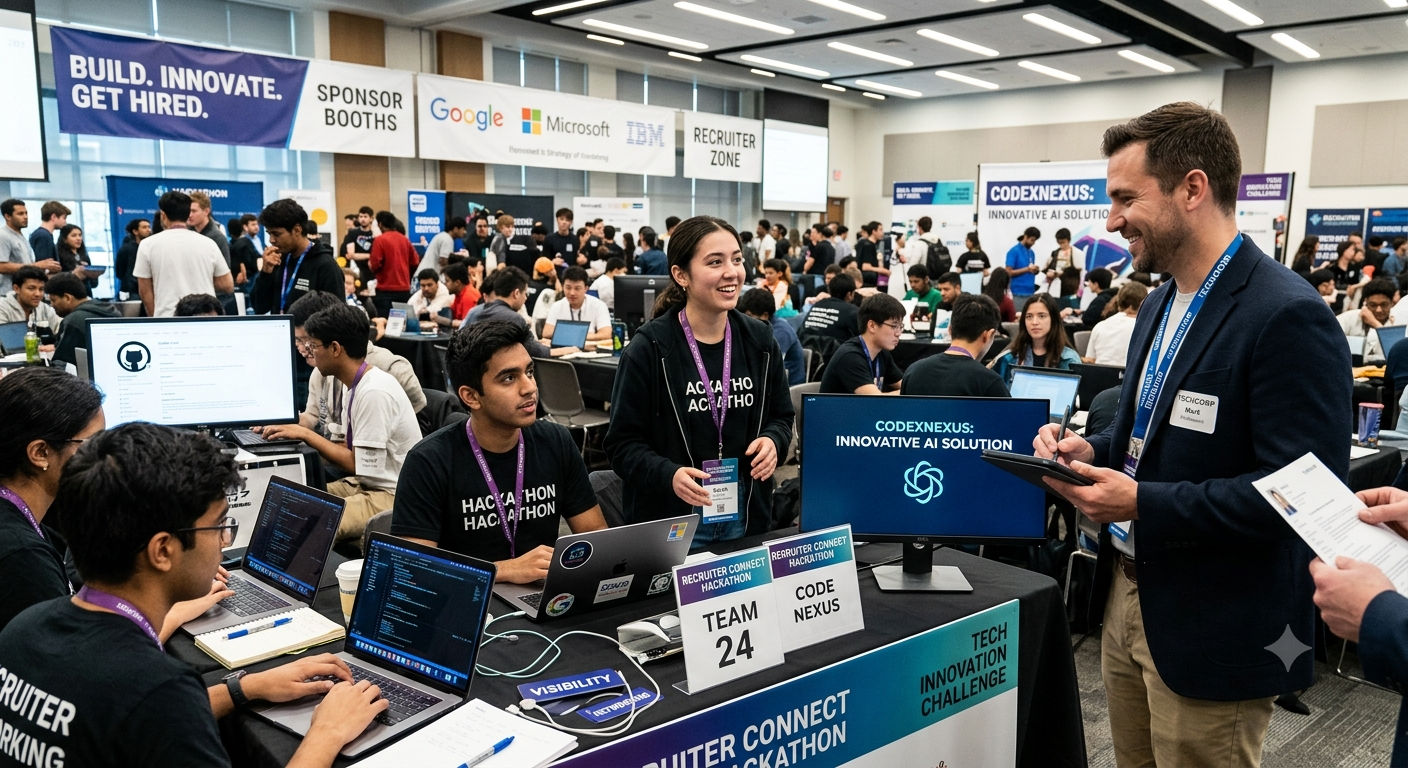
Introduction: Hackathons for Students
It can be quite challenging for students to get discovered by recruiters before graduation. There is usually a shortage of relevant work experience, and many students apply to hackathons and entry-level positions trying to get ahead. However, students need to be able to demonstrate their practical knowledge to land a job. Hackathons for Students provide valuable opportunities to develop practical skills, build innovative projects, and attract recruiters before graduation.
That is why attending hackathons can be a great idea for students. Not only can they gain valuable experience, but they can also show recruiters their skills and problem-solving abilities. Hackathons for Students can help everyone from CS majors to marketing students get noticed by the right people. So, if you want to get discovered by a recruiter before graduation, read this guide to learn how you can leverage the experience of attending a hackathon for your professional benefit.
Hackathons for Students: Get Recruiter Attention
1. How Hackathons for Students Help You Get Noticed?
First and foremost, before registering for a hackathon, you need to understand what skills are in demand in your industry. There are local and international events focused on niche topics like artificial intelligence, and there are hackathons that concentrate on sustainability, healthcare, or education.
For that reason, it is a good idea to research the list of hackathons for students. You should identify the companies that employ people in your field and analyze the themes and requirements of the hackathons. Pick 3-5 hackathons that seem interesting and relevant to you.
For example, if you are a CS major, you may want to join a hackathon for coders and programmers. If you are a marketing student, you can register for a hackathon for business, healthcare, or even tech. Hackathons for Students allow you to gain relevant knowledge and experience and demonstrate your practical skills to recruiters.
2. Create Projects That Address Specific Problems
The whole point of a hackathon is to show recruiters and companies what value you can bring to the table. Instead of developing a trivial project, think of a relevant problem that you can solve with your specific solution.
For example, you can develop a student budgeting application or a volunteer-finding platform. Hackathons for Students give you a chance to apply your CS skills to develop a working prototype. Think of something you are genuinely interested in and passionate about.
Elaborate on your ideas and consider what you were trying to achieve with the project. Think of a problem that you wanted to solve, the approach that you devised, and the tools that you used to address the issue. All of that will allow you to properly present your project to the recruiters at the end of the event.
3. Discuss Your Specific Contributions
Unless you are attending a solo exhibition, you will have to work with others during the hackathon. However, your primary goal is to demonstrate your individual knowledge and skills. That is why it is essential to define and understand your specific contributions to the project.
For example, if you were hired as a business analyst after the hackathon, you should specifically mention the research, analysis, and project presentation skills demonstrated during the event. Hackathons for Students can give you an opportunity to present your work ethic and individual contributions to the overall project.
Therefore, make sure to keep track of what you did and how that contributed to the common goal. At the same time, always remember to mention the work done by others. In the end, you have to know what part of the work you did and what part of the work your teammate did.
Never try to embellish your achievements at the cost of others’ successes. An honest attitude will help you build strong connections with the recruiters and companies that attend the hackathons.
4. Connect With Recruiters and Mentors
Sometimes, there are recruiters, executives, and professionals in the room with you at the hackathon. These people can give you valuable advice, help you identify your main professional achievements, and maybe even hire you after the competition. So, what should you say to them?
Essentially, you should introduce yourself and tell the recruiters and mentors what you are interested in. Instead of asking for a job, you can explain the concept behind your project and ask for feedback. At the same time, you should also inquire about the companies and the skills that are in demand. Hackathons for Students are a perfect place to build strong connections with mentors and recruiters.
Before departing, make sure that you have their contact information and that they know who you are. If there is an interesting company that is looking for students like you, you may want to connect with the recruiters on LinkedIn. Again, mention that you met at the hackathon and briefly describe the conversation you had.
5. Showcase Your Best Hackathon Work
Now, it is time to properly present and discuss the work you did at the hackathon. First and foremost, you should build an online portfolio that properly displays your work. Collect all the best projects and create a compelling description for each of them. When in doubt, simply add a few words about the problems you had to solve and the skills you gained during the hackathon.
If you developed a full-scale working application or website, be sure to add it to GitHub. Even if the project was not completed, you can still include it in your portfolio. The point is to demonstrate that you are a developer, a researcher, and a hard worker. Hackathons for Students can become an essential part of your portfolio. However, to properly display your work, you will need a few additional pointers. For each project, you should explain:
- the context of the problem that you wanted to solve;
- your proposed solution and the main features of the product;
- the tools and technologies that you utilized;
- your role in the project; and
- the outcomes and criticism.
If the last point is difficult for you because the project is far from completion, simply mention the current state of the work and the improvements you would make in the future.
6. Highlight Hackathon Experiences on Your Resume
Your experience at the hackathon can be extremely valuable for your resume. However, first and foremost, you need to add your best projects to the Projects section of your resume. Describe what the project is about, and, if applicable, mention the outcomes of the project, such as the number of people who tested your prototype or the rank the project received at the hackathon itself. Hackathons for Students can be an excellent addition to a resume.
Make sure that you mention the key takeaways of each project. Depending on your area of expertise, the projects you did at the hackathons can be placed in different sections: CS projects can go to the Projects section, while non-technical applications can be found in the Research or Business sections. Additionally, always use action-oriented language to describe your work and responsibilities.
For example, if you participated in a hackathon for CS students in the past, do not simply write “Experience: College Hackathon.” Instead, you can write something along the lines of “Collaborated with a four-person team to develop a prototype of a student expense tracking application at a 24-hour hackathon for computer science students.”
7. Publish Work Highlights on LinkedIn
When you finish the hackathon, you should publish a post on LinkedIn about the project. Briefly describe the task and what you wanted to accomplish. Additionally, mention the things you learned and the skills you gained during the hackathon. Always include a picture of your work and, if possible, a link to the application or project. Hackathons for Students are an excellent way to generate buzz about yourself as a professional.
You never know who sees your posts – executives from influential companies, old classmates, and even recruiters. The ideal scenario is for someone from the company you want to work at to see your post. However, always remember that the primary purpose of the event is not to win. The goal is to gain experience and demonstrate your skills. Therefore, do not write only about winning and receiving praises – speak about the difficulties you faced and how you overcame them.
8. Get Feedback to Improve Your Skills
After finishing the hackathon, you should collect feedback from other teams, mentors, and recruiters. Ask them what problems they saw in your project, what changes they would make, and what problems you could address in the future. Additionally, you can analyze the problems that the other teams had to solve. For example, if you are a CS major, you can improve your coding and web development skills. And if you are a marketing student, you can practice communicating your ideas to others.
Hackathons for Students can be extremely helpful in the professional growth of all attendees, as long as they know how to utilize the experience from the hackathons. If you want to improve your presentation skills, practice explaining what you did during the hackathon as often as possible. Additionally, always remember to keep track of your individual contributions to the project. For example, when presenting your work to recruiters, describe the technologies and concepts you applied in detail. Finally, always carry your previous experience with you and learn from it. If judges said that your prototype was too complicated, practice simplifying things before adding it to your portfolio.
Conclusion: Hackathons for Students
There is more to getting discovered by a recruiter before graduation than just having excellent grades. Instead, students need to demonstrate their practical knowledge and ability to work with others. Attending hackathons is a great way to gain valuable experience while building connections with recruiters and showcasing your work.
If you want to get discovered by a recruiter before graduation, start by attending a hackathon for students. Choose the events that are relevant to your specialty and allow you to acquire new skills. Think of a project that you can develop during the hackathon, and practice explaining what you did after the event. Finally, collect feedback to improve your skills and keep looking for new job opportunities.
Ready to get noticed by recruiters before graduation? Join hackathons, showcase your projects, and use the best job tools to discover internships and kick-start your career.





Leave a Reply