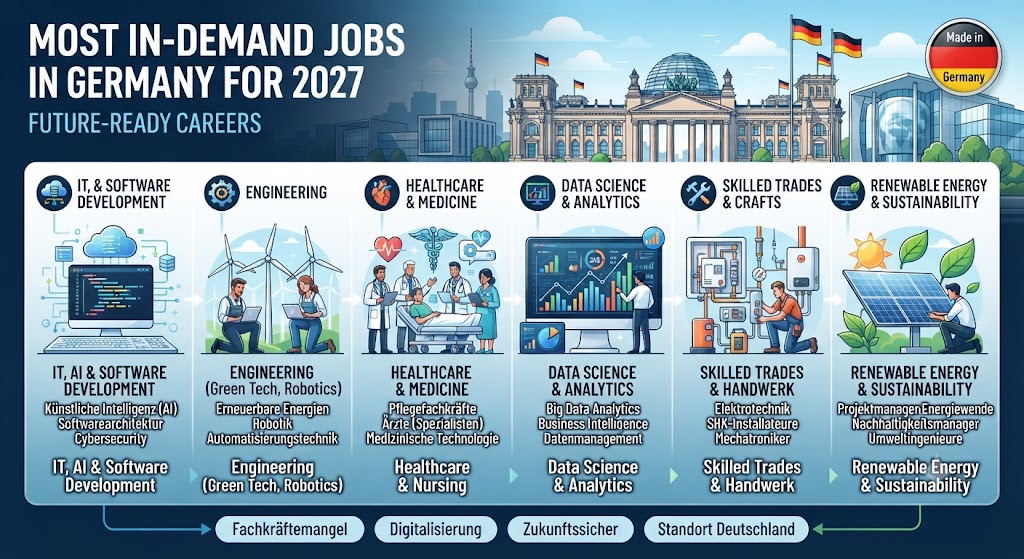
Germany continues to offer career opportunities across technology, healthcare, engineering, logistics, and skilled trades. As businesses adapt to digital transformation, an ageing population, and changing industrial needs, employers are likely to keep looking for professionals with relevant qualifications and practical experience In-Demand 2027.
However, demand varies by region, industry, and skill level. Understanding Germany which occupations have strong hiring prospects can help job seekers choose suitable training, improve their applications, and plan their next career move.
Why Germany May Need More Skilled Professionals in 2027
Germany has a large industrial economy, an established healthcare system, and businesses investing in technology and infrastructure. At the same time, demographic changes are creating replacement demand as experienced workers retire.
Several factors may influence hiring in 2027:
- Digitalisation is increasing the need for software, cybersecurity, and data expertise.
- An ageing population is contributing to demand for healthcare and eldercare professionals.
- Manufacturing and engineering companies need specialised technical skills.
- Energy transition projects require expertise in renewable energy and electrical systems.
- Logistics and supply chain businesses need professionals who can manage complex operations.
These trends create potential opportunities, although no occupation guarantees employment. Candidates should review current vacancies and regional requirements before choosing a career path.
IT and Software Development Jobs
Technology remains an important career area for professionals who can build, maintain, and secure digital systems. Companies across industries need reliable software, modern infrastructure, and efficient data management.
Roles worth exploring include:
- Software developers and engineers
- Cloud engineers and architects
- Cybersecurity specialists
- Data analysts and data engineers
- Artificial intelligence and machine learning specialists
- IT support and systems administrators
Employers often value programming ability, problem-solving, project experience, and familiarity with relevant tools. Depending on the role, knowledge of Python, Java, SQL, cloud platforms, or security frameworks may strengthen an application.
A degree can be helpful, particularly for specialised positions. However, practical projects, recognised certifications, and demonstrable technical skills can also support candidates who are building their careers.
Healthcare and Nursing Careers
Healthcare is another important field to investigate for 2027. Germany’s ageing population and continuing need for medical services contribute to demand for qualified healthcare workers, although requirements differ by occupation and location.
Potential roles include:
- Registered nurses
- Elderly care professionals
- Doctors and medical specialists
- Physiotherapists
- Medical laboratory professionals
- Healthcare support workers
International candidates should pay particular attention to professional recognition, German-language requirements, and any necessary licences. Regulated healthcare professions may require formal recognition of overseas qualifications before a person can work in the relevant role.
For many patient-facing positions, German communication skills are essential. Improving language proficiency before applying can make the recruitment and relocation process more manageable.
Engineering and Manufacturing Jobs
Germany’s industrial base creates opportunities for engineers and technical professionals in automotive manufacturing, machinery, electronics, industrial automation, and other sectors. Hiring needs can change with economic conditions and individual companies’ investment plans, so candidates should focus on specific specialisations rather than assuming every engineering discipline is equally in demand.
Career options include:
- Mechanical engineers
- Electrical engineers
- Automation engineers
- Embedded systems engineers
- Quality engineers
- Manufacturing and production engineers
Employers may seek knowledge of CAD software, robotics, control systems, quality management, or production processes. Experience with Industry 4.0 technologies and data-driven manufacturing can also be useful.
Candidates should tailor their CVs to each position by highlighting technical projects, measurable improvements, relevant software, and industry-specific experience. German language skills can broaden opportunities, especially in roles involving production teams, customers, or safety procedures.
Renewable Energy and Environmental Careers
Germany’s energy transition supports opportunities in renewable power, energy efficiency, electrification, and environmental management. The volume and timing of hiring will depend on project funding, infrastructure development, and employer demand.
Potential roles include:
- Renewable energy engineers
- Solar installation technicians
- Wind energy technicians
- Electrical engineers
- Energy consultants
- Environmental and sustainability specialists
Technical candidates can benefit from experience in electrical systems, power generation, energy modelling, or project management. Sustainability professionals may need skills in emissions reporting, environmental regulations, lifecycle analysis, or corporate sustainability data.
For hands-on roles, vocational training and safety qualifications may be particularly important. For engineering and consulting positions, employers may expect a relevant degree and evidence of experience with energy systems or environmental projects.
Skilled Trades and Technical Professions
University degrees are not the only route to employment in Germany. Skilled trades and technical occupations can offer career paths for people with relevant vocational qualifications, hands-on experience, and the ability to meet local certification requirements.
Occupations to explore include:
- Electricians
- Heating, ventilation, and air-conditioning technicians
- Industrial mechanics
- Mechatronics technicians
- Plumbers and pipefitters
- Maintenance technicians
These professionals help maintain buildings, factories, equipment, and essential infrastructure. Employers may value troubleshooting, equipment maintenance, technical drawing interpretation, and workplace safety knowledge.
International applicants should check whether their occupation requires formal qualification recognition or additional certification. German language ability can also be important for understanding safety instructions and communicating with colleagues.
Logistics, Supply Chain, and Transportation Jobs
Germany’s role in European trade and manufacturing creates opportunities in warehousing, transportation, distribution, and supply chain management. Employers increasingly use digital systems to track inventory, coordinate shipments, and improve operational efficiency.
Relevant positions include:
- Supply chain analysts
- Logistics coordinators
- Warehouse supervisors
- Procurement specialists
- Transport planners
- Fleet and distribution managers
Candidates with experience in enterprise resource planning systems, inventory management, demand forecasting, and supplier coordination may have an advantage. Analytical skills are especially useful for roles focused on reducing delays, controlling costs, and improving delivery performance.
Some operational positions require specific driving licences or professional permits. Applicants should verify these requirements before accepting a role, particularly when moving from another country.
Finance, Accounting, and Business Analysis
Businesses need professionals who can manage financial information, monitor performance, assess risk, and support strategic decisions. Opportunities exist in corporate finance, accounting, financial services, and business operations.
Potential roles include:
- Financial analysts
- Accountants and controllers
- Risk analysts
- Business analysts
- Auditors
- Compliance specialists
Relevant skills include financial modelling, Excel, reporting tools, data analysis, and knowledge of applicable accounting standards. Some positions may require professional qualifications or experience in a regulated industry.
International candidates should check whether a role requires familiarity with German accounting and tax rules. Strong English may be sufficient in some international companies, while German can be important for local reporting, client communication, and regulatory work.
Which Skills Can Improve Your Job Prospects?
Regardless of occupation, employers look for evidence that candidates can perform the work effectively. In 2027, combining technical competence with communication and adaptability may help applicants compete for suitable roles.
Focus on these areas:
- German language proficiency: Learn the level expected for your target occupation and workplace.
- Digital skills: Build familiarity with the software and systems commonly used in your industry.
- Practical experience: Include internships, apprenticeships, projects, or measurable work achievements.
- Recognised qualifications: Check whether your education, licence, or vocational training is accepted in Germany.
- Communication: Demonstrate teamwork, problem-solving, and the ability to explain technical information clearly.
- Application quality: Prepare a focused CV and adapt it to each job description.
Rather than collecting unrelated certificates, choose training that directly supports your target role and appears in relevant job postings.
How to Find In-Demand Jobs in Germany for 2027
A focused search is more effective than applying to every vacancy. Start by selecting two or three target occupations based on your qualifications, experience, language ability, and willingness to relocate.
Next, review current job advertisements to identify repeated requirements. Compare those requirements with your existing skills and create a plan to address any gaps.
Use these practical steps:
- Search for specific job titles on established job platforms and employer career pages.
- Compare vacancies across different German cities and regions.
- Check qualification recognition and work authorisation requirements if you are applying from abroad.
- Prepare a clear CV that highlights relevant skills and achievements.
- Learn useful German workplace vocabulary and practise interview answers.
- Track applications and follow up professionally when appropriate.
International applicants should also verify visa eligibility through official German government resources. A vacancy alone does not guarantee sponsorship, a work visa, or permission to practise a regulated profession.
Conclusion
Germany may offer promising career opportunities in 2027 across IT, healthcare, engineering, renewable energy, skilled trades, logistics, and finance. The best choice depends on your qualifications, experience, language skills, and the actual hiring needs of your target region.
Before investing in a new qualification or planning a move, compare current vacancies and identify the skills employers repeatedly request. A targeted job search, a well-prepared CV, and a realistic understanding of local requirements can help you make better career decisions.
Using a best job tool to explore relevant vacancies, compare job requirements, and focus your applications can make the process more organised. Start with roles that match your strengths, then build the additional skills needed to compete confidently in Germany’s job market.
#JobsInGermany #GermanyJobs2027 #CareerOpportunities #JobSearch #EngineeringJobs #ITJobs #HealthcareCareers #SkilledWorkers




Leave a Reply