Introduction: Job Search in the Netherlands
It can take a few weeks to a few months to find a job in the Netherlands. It will depend on what type of job you’re looking for, your experience, the industry you’re in plus your qualifications and work permission. Some people will be offered a job within a month whilst others may take 3-6 months or longer. Knowing how long it will take to find a job can help you plan your applications, budget, and prepare for interviews. The job search in the Netherlands can take different amounts of time depending on your experience, industry, language skills, and work authorisation. Understanding these factors can help you set realistic expectations and plan your applications effectively.
There are many industries in the Netherlands which can give you a job, this includes technology, healthcare, engineering, finance, logistics, and hospitality. However, there will be many factors that can affect how long it takes to get a job. Having an understanding of these can help you create a realistic plan to find a job.
How Long Does a Job Search Take in the Netherlands?
1. How Long Does it Take to Find a Job in the Netherlands?
There isn’t a specific timeframe for finding a job in the Netherlands as it can depend on what type of job you’re looking for, your experience and how flexible you are with where and what salary you’re looking for. A successful job search in the Netherlands requires patience, consistent applications, and a clear understanding of the local employment market.
Here is a general guide on how long it can take depending on what type of candidate you are:
- 2-6 Weeks – People applying for temporary or seasonal roles, hospitality or urgent roles can find jobs fairly quickly.
- 1-3 Months – Those with experience can find suitable jobs in their field.
- 3-6 Months – International candidates, career changers and those looking for specialist roles will need extra time.
- 6+ Months – Senior professionals, those with little experience locally and people needing sponsorship will take longer.
This is just a guideline to help with your planning. It can vary depending on the employers you apply for, the quality of your applications and how many suitable vacancies are available.
2. Timeframes by Industry
The industry you’re looking for can greatly affect how quickly you’ll find a job. Some employers will need people quickly whilst others may have a long process.
Technology & IT
The Netherlands has a good tech industry meaning you can find jobs in software development, cybersecurity, cloud computing, data analysis and artificial intelligence. Candidates with high-demand technical skills and experience may be invited to interview within a few weeks.
However, this can take longer due to technical tests, multiple interviews and specialist roles. A good timeframe to plan for would be 1-3 months but can take longer.
Healthcare
Many employers in the healthcare industry will be looking for Nurses, Medical professionals, Care assistants and Specialist roles. However, if you have international training you may need to meet the qualifications recognition requirements, register and show proficiency in Dutch.
This can mean it can take a few months to find a suitable vacancy. However, the licensing and registration process can take a considerable amount of time.
Finance & Business
Finance, accountancy, consultancy, and business administration roles often have multiple interview stages. Employers may ask you questions to test your knowledge in the industry, communication skills and relevant certifications.
Those with good experience may find roles available within 2-4 months.
Logistics, Hospitality & Retail
Many warehousing, delivery, hospitality and retail roles will be looking for staff quickly, especially during busy times. Temporary and entry level roles can sometimes result in a job offer within a few weeks.
However, this will depend on the hours you can work, location, language requirements and seasonality.
3. What is the Recruitment Process Like in the Netherlands?
Knowing what the recruitment process is can help you know how long it could take.
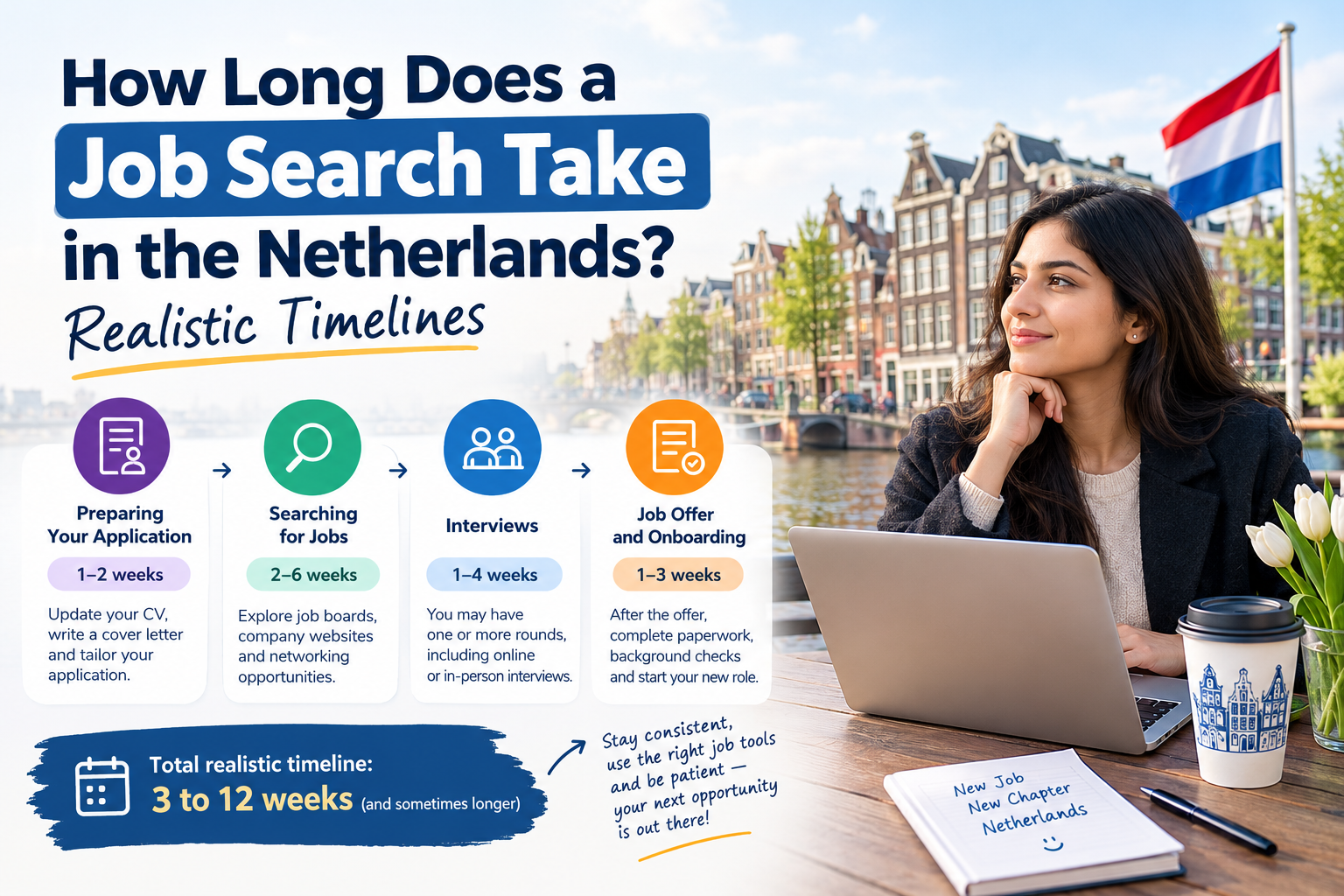
Week 1-2
Update your CV and write a targeted covering letter to highlight your relevant experience, qualifications, technical skills and achievements. Research Dutch employers and look for vacancies.
Create a professional LinkedIn profile and ensure you have everything the employer may need.
Week 2-6
You’ll begin to apply for roles using the careers pages, recruitment agencies and job sites. Employers may get back to you quickly however others may take longer or never respond.
Ensure you are applying regularly. Track what you’ve applied for, follow up professionally and adapt your strategy.
Week 4-10
Employers may schedule you for an initial screening call, online interview, technical test and one or more interviews.
Some companies will have this completed within 2 weeks whilst others may take a month. Ensure you have examples of your achievements, research the employers and practice some common interview questions.
Week 6-12+
Once the employer has decided on a candidate they may run background checks, negotiate salary and create an employment contract.
International candidates may also need to complete immigration or work permit processes. This can add to the overall time frame. Be aware of the difference between getting a job offer and being legally able to start.
The stages can often overlap and some candidates will complete them quickly. Planning each stage of your job search in the Netherlands can help you manage your time, prepare for interviews, and follow up with employers professionally.
4. Why You May Take Longer to Find a Job
There are many reasons why finding a job in the Netherlands can be difficult.
Language Requirements – Many international companies will operate in English (especially in tech and research). However, employers in customer service, healthcare, education and other public facing roles may require you to speak Dutch.
Work Permission – If you need a work permit or sponsorship from an employer there may be fewer suitable vacancies available to you. Immigration requirements can also affect how quickly you can start.
Competition – Popular cities like Amsterdam, Rotterdam, Utrecht, and Eindhoven can be very competitive. High paying roles or those with flexible working may have many candidates.
Little Local Experience – Employers may want someone who knows how things are done in the Netherlands. Show you have transferable skills and achievements.
CV Quality – A generic CV, unclear achievements and not matching the role can decrease your chances.
5. How to Find a Job in the Netherlands Faster
Whilst you can’t control everything there are many things you can do to help. To make your job search in the Netherlands more efficient, use reliable job portals, tailor your CV to each vacancy, and connect with recruiters in your industry. Tailor your CV to the role. Highlight your skills and achievements and keep it clear, relevant and easy to read. Use reputable job sites such as LinkedIn Jobs, Indeed Netherlands, and the official employment site (UWV).
Network with recruiters, attend industry events and reach out to professionals in your target companies. Apply regularly. Try to set a realistic amount of applications per week and apply for relevant roles. Learn some Dutch to open up more opportunities. Whilst employers may be happy with English speakers, learning Dutch can help. Research the company, practice talking about your achievements and come up with some thoughtful questions.
Check what work permits are needed. If you’re applying from outside the Netherlands ensure you know which employers can help with the immigration process. Use job search tools to help you find suitable vacancies, tailor your CV, track your applications and prepare for interviews. This can help save you time however there is no guarantee of an offer.
6. When to Adapt Your Job Search Strategy
If after applying regularly for 4-6 weeks you’re not getting interview invites check your CV, application quality and the roles you’re applying for. Ensure your qualifications match the roles and your achievements are clear. If you’re getting interviews but no offers work on your interview answers, research the company and practice explaining why your skills match their needs.
If after 2-3 months you’re not making any real progress try looking in other cities, similar job titles and other employers in the surrounding industries. You may also want to reach out to recruitment agencies and work on a skill that comes up a lot in the relevant job descriptions.
7. Best Time of Year to Find Jobs in the Netherlands
Depending on when you are looking for work in the Netherlands, it may help to know that many companies have ongoing recruitment throughout the year. However, there may be times of increased hiring activity depending on what industry you are working in.
January-March – Many companies will start new projects and will need to hire staff to achieve their goals for the year.
April-June – Employers may hire more people for permanent roles to get ready for the busy summer period.
July-August – There may be less hiring due to the busy summer period but there may be more seasonal work available.
September-November – There can be an increase in hiring as companies get back into their usual routine and fill any vacancies they may have before the end of the year.
December – Some processes may slow down due to the holiday period.
To get the best out of your job search make sure you keep an eye out for any vacancies. As soon as you find suitable roles apply and make sure to have your CV and supporting documents ready.
Conclusion: Job Search in the Netherlands
Finding a job in the Netherlands can take a few weeks, a few months or longer, depending on the industry you’re in, your experience, language skills and work permission. A well-organised job search in the Netherlands can improve your chances of finding suitable opportunities and moving forward with confidence. Temporary roles and entry level roles can be quicker to find whereas specialist and senior roles often take longer.
Having a strong CV, applying regularly, networking and practicing for interviews can help improve your chances. Most importantly have realistic expectations and regularly review your strategy. With a focused approach and patience you can make your job search more organised and increase your chances of finding a suitable role in the Netherlands.
Ready to speed up your job search in the Netherlands? Use the best job tools to discover relevant vacancies, optimise your CV, prepare for interviews, and track your applications. Explore platforms like LinkedIn Jobs and Indeed to find opportunities that match your skills and experience. Start using the right tools today and take the next step towards your career goals.




Leave a Reply