Introduction: First Job in Berlin
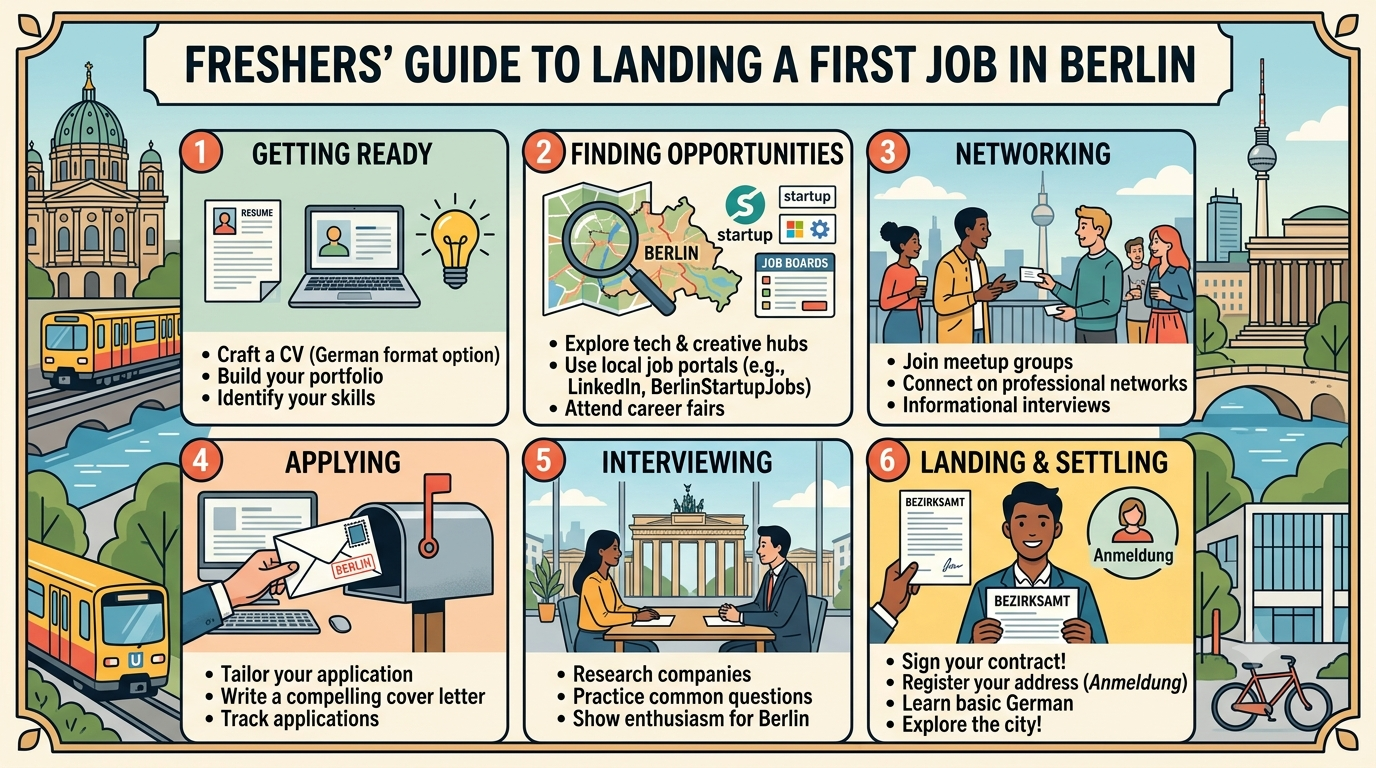
Starting your career in a new city can be an exciting time! Berlin is a great place to start your career as there are lots of opportunities in different sectors. The diverse job market in Berlin, along with the ever-growing tech industry and international working environment makes it popular with graduates and young professionals looking to begin their careers. However, this can be tricky if you are unfamiliar with the job market in Berlin.
No matter if you are just graduating or starting your career in Germany, knowing how to go about job hunting will help you. We have created this fresher’s guide to getting your first job in Berlin to show you how to get the most out of searching for jobs. This guide will give you practical tips to help you find the right opportunities and improve your applications.
How Can Freshers Land Their First Job in Berlin in 2027?
1. Know the job market
Firstly, do some research into the industries in Berlin that often hire graduates. There are plenty of opportunities in the following sectors: Tech companies and startups may have entry level roles such as junior developers, digital marketing assistants, customer service representatives. Hotels, restaurants, retail and tourism companies may have entry level roles. You can look into finding your first job in Berlin by finding industries that match your skills, interests and education. Look at the requirements of jobs to see what skills they require and what roles are open to freshers.
2. Create a professional CV and cover letter
Creating a good CV will often be the first thing the employer will look at. Be concise and make sure it’s focused on the role. Include your education, any internships, projects, skills, languages and volunteering. If you haven’t worked full time yet include things like assignments from university, freelance projects, certifications and extra-curriculars. This will allow you to show how you have good communication, teamwork, problem solving and time management skills.
Create a cover letter for each application which will explain why you are interested in the company, how your skills would be a good fit and what you could bring to the company. By having a well crafted CV and cover letter you will increase your chances of getting your first job in Berlin despite being up against more experienced candidates.
3. Learn basic German
As Berlin is an international city many companies will use English as their main language. This means that there are loads of opportunities for international graduates in the tech, research and multi-national industry. However, if you are looking into customer service, admin, healthcare, retail and many local businesses then knowing some German could be beneficial. Knowing some basic German will help you communicate with your colleagues, understand what is expected of you and help you to settle in.
Start by learning some basic phrases you may use in the workplace. Try to improve your speaking, reading and writing skills. Be honest with how fluent you are in your CV. If your aim is to get your first job in Berlin try searching for English roles whilst learning German to help increase your opportunities.
4. Use online job sites
Job websites will help you find roles. Set up alerts so you are notified when roles are available. Use sites such as LinkedIn, Indeed Germany, StepStone, and the Federal Employment Agency. You can also look on company career pages if you want to work for a particular startup or international company.
Try using keywords such as entry level jobs in Berlin, graduate jobs in Berlin, junior roles and English jobs in Berlin. Create a spreadsheet to help you keep track of the roles you are applying to. Include the title of job, deadline, name of company and date to follow up. Being consistent will help you apply to roles more efficiently.
5. Network
By networking you can find roles that may not be widely advertised. Try connecting with recruiters, alumni, professionals and those in your desired industry on LinkedIn. Attend career fairs, industry events, university events and startup events. Be professional when introducing yourself and ask relevant questions.
Don’t ask them to find you a job straight away. Ask them for tips on getting into their industry or improving your application. Getting to know people in your industry will take time but will help you gain useful referrals. Networking will also help fresh graduates to get to know the market.
6. Get experience
Many employers will favour those with some experience. However, you do not need to have had a full time role. Getting an internship, working student role, traineeship, temp job or graduate scheme will give you valuable work experience. This will help you gain professional skills, understand what is expected in the German workplace and help you build up your network in your chosen industry.
If you are still studying see if there are any internships that you are eligible for. If you have already graduated see if there are any traineeships or junior roles that would be a good fit for your skills and employment status. Make sure you know what you are eligible for, how much you will be paid and what the contract says. Having relevant experience will help improve your CV and make you more competitive when applying for your first job in Berlin.
7. Prepare for interviews
Once you have caught the eye of an employer you may be asked to do a phone interview, video interview or in person interview. Practice answering common interview questions such as tell me about yourself, why do you want to work here and what are your strengths? Use examples from your studies, internships and personal projects.
Do some research on the company to understand the role and have some thoughtful questions ready. Make sure your internet and microphone are working for any online interviews and arrive on time. Many employers looking to employ freshers will look for those who are motivated, adaptable, good communicators and eager to learn. Being confident and prepared will help you make a good impression.
8. Work permits
If you are an international candidate make sure you are eligible to work in Germany. This will depend on your nationality, current status, your qualifications and what type of job you are doing. EU and EEA citizens will generally have different employment rights. Non-EU candidates may need the correct visa or permit to work. Students and recent graduates may have extra rules.
Check official government sources such as the Federal Foreign Office and Make it in Germany. By knowing what you need to do early you won’t run into any issues when trying to get your first job in Berlin.
Conclusion: First Job in Berlin
It can take some time, preparation and having a good strategy to get your first opportunity. Berlin has lots of opportunities in many industries. To be successful you need to find the right roles, show off your skills and know what employers are looking for.
Start by creating a targeted CV, searching online job sites, building your network and practicing for interviews. Continue to improve your German and make sure you are eligible to work if you are applying from abroad.
Although your first job in Berlin might not be your dream job, it can give you lots of experience, build your professional network and set you up for the future. Be consistent, learn from your applications and continue to improve. Having realistic expectations and a proactive attitude will help you take real steps to kickstart your career in Berlin.
Ready to start your career in Germany? Use the Best Job Tool to explore relevant vacancies, identify entry-level opportunities, and organise your job search. Prepare your CV, apply consistently, and take the next step toward landing your first job in Berlin.


Leave a Reply