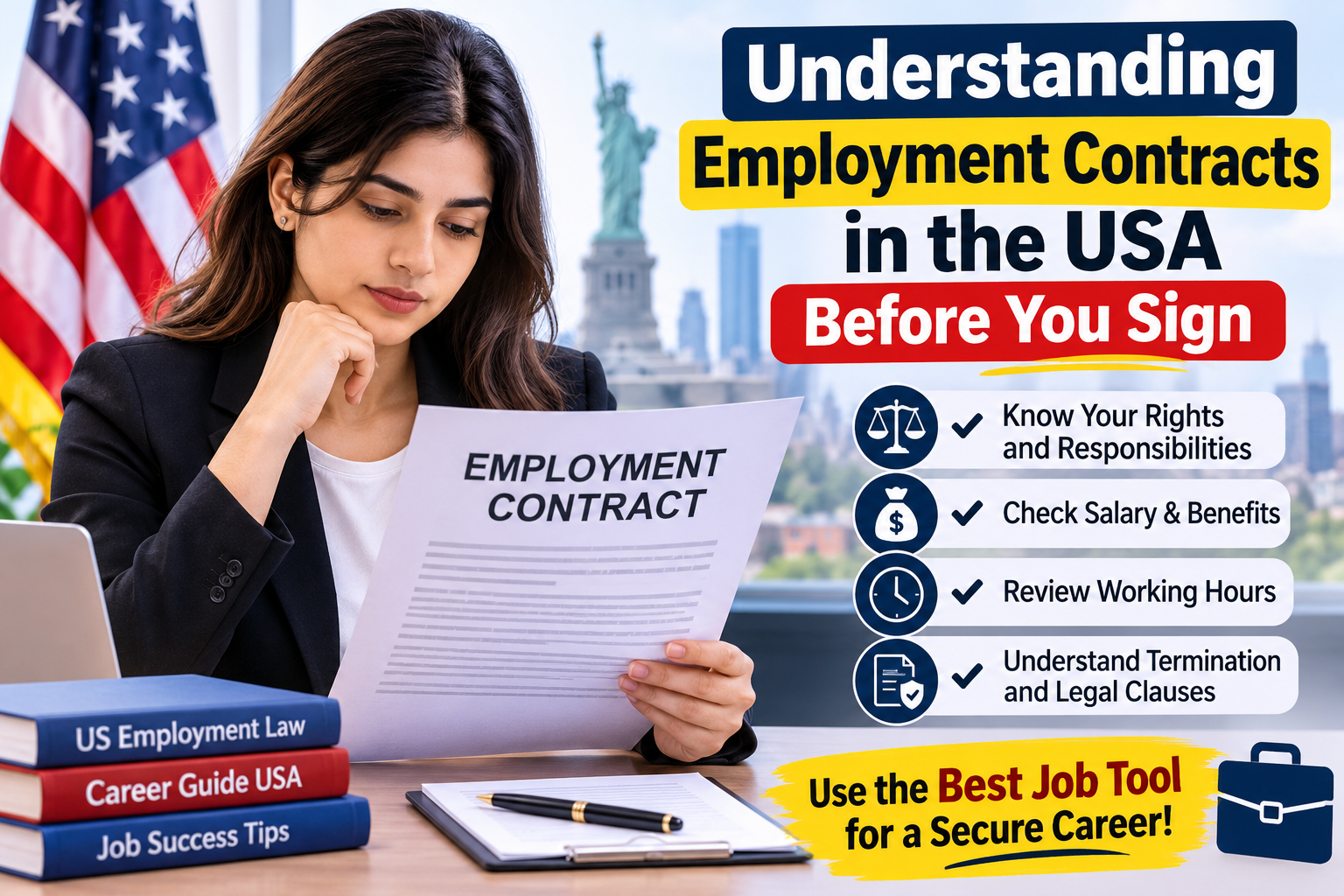
Introduction: Understanding Employment Contracts
If you have been given a job in the USA, either as a graduate, experienced employee or as a move in location, you may want to consider key factors within your employment contract. An employment contract outlines various important elements of working within an organization. This includes pay, working hours, benefits, responsibilities and termination. Taking time to understand employment contracts will allow you to make informed decisions regarding your career, and avoid potential issues.
Although individuals may primarily focus on the pay within employment contracts, other factors can influence both personal and professional aspects of their lives. Ensuring that all clauses are understood may help secure your best interests and give you confidence in starting your new role.
How To Understand Employment Contracts in the USA?
1. Job Title and Responsibilities
Within your employment contract, ensure that you understand what role you will be in, what department you will be working in, who you will be reporting to and what responsibilities you will have. This will ensure that you understand your responsibilities within the company, and reduce confusion between you and your employer in the future
Depending on business needs, additional responsibilities may be required. Within the employment contract, be aware of whether or not additional changes in roles/responsibilities can occur. Understanding Employment Contracts will help you to understand what is expected of you by your employer. It will also allow you to identify whether the responsibilities match what was discussed in interviews.
Pay
2. Understanding the pay
Understanding the pay within your employment contract is very important. Be aware of what annual pay you will be receiving, how frequently your pay is delivered, and whether you will be eligible for bonuses/commissions and other monetary benefits. Employees in the USA may be paid in weekly, fortnightly or monthly intervals depending on the company.
Be aware of whether you will be receiving a fixed pay or pay based on performance. If there are potential bonuses, ask what criteria must be met and under what circumstances. Furthermore, check whether the company offers pay reviews and annual pay increases. By Understanding Employment Contracts, you will have a clear understanding of what you are earning, and avoid confusion in pay once in the company.
3. Working Hours
Working hours will vary depending on the industry, role and company. Full time employees may work around 40 hours per week. Alternatively, some roles may require working in the evenings, at weekends or in flexible hours. Within your employment contract you should understand what working hours you will be expected to work. You should also understand the break times, expected overtime and whether further payment is provided for this overtime.
Most non-exempt staff who are eligible for overtime are entitled to 1.5x their usual pay if they work more than 40 hours in a week (Fair Labour Standards Act). However, some employees may be exempt from the national overtime requirements. Before signing the contract, understand whether you are considered exempt or non-exempt in this role. This is an important element to understand in employment contracts, particularly in roles where additional working hours may be required.
4. Benefits and Paid Leave
Benefits can greatly increase your total earnings in a job. Many companies in America provide benefits such as healthcare, pension schemes, paid annual leave, sick leave and holiday leave. However, depending on the company and role, benefits may differ. Check what benefits you will be entitled to, and when you will be able to access them. Some companies may require you to work a certain number of days before becoming eligible for healthcare.
Check if the company offers a 401(k) scheme and if they match contributions. Understanding Employment Contracts, ensure that you are aware of paid leave. Find out how much holiday leave, sick leave and parental leave you will be entitled to. Knowing this information can give you a good idea of the value of an offer.
5. Termination
It is important to understand how employment can come to an end. In most states of America, employment is considered ‘at will’ meaning that an employment relationship can be ended by either party at any point (subject to legal constraints). However, in some employment contracts, there may be conditions placed on termination.
Check these carefully to understand your rights and responsibilities. Find out what will happen if you resign from the role, do not meet the expected performance, or breach company rules. Understanding Employment Contracts will help you to be prepared for unexpected changes in employment and reduce any disputes.
6. Non-Compete and Confidentiality Clauses
Some employees’ employment contracts may include non-competes and confidentiality clauses. Within a confidentiality clause, employees will generally not be allowed to share sensitive information of the company including client details, financial information, business strategy and confidential documentation. Non compete clauses may be used to prevent employees from joining direct competitors, or starting similar businesses after leaving.
However, non-competes are not always strictly enforcable depending on the state. The proposed national non-compete clause from the Federal Trade Commission was put on hold by a federal court in 2024 and is currently not enforcable. Be careful to understand these clauses and how they may affect your future employment opportunities. If any clauses seem overly restrictive, it may be worth consulting a legal expert. Understanding Employment Contracts is very important in this case.
7. Probation Periods and Performance
Some companies may include a probation period within employment contracts. Employers may wish to assess your skill level, performance, communication and whether you meet company expectations. The employment contract should tell you how long the probation period will last, whether it affects your benefits, and what performance standards you need to meet.
It should also state whether performance reviews will be conducted to confirm you in your role. While probationary periods are not required for all jobs in America, some employers may include them in their recruitment practices. Understanding Employment Contracts will allow you to understand what is expected of you in your first few months, and what performance standards you must achieve.
8. Dispute Resolution and Legal Clauses
Within employment contracts, there may be clauses outlining how disputes will be resolved between employers and employees. Some companies include mandatory arbitration clauses, meaning that certain disputes must be dealt with via arbitration rather than a court of law. Before signing, check if you understand how arbitration will take place, what legal costs may apply, confidentiality requirements and what rights you may be giving up.
Also check clauses within the contract such as intellectual property, company rules and state laws. If any complex legal information or unclear conditions exist in the contract, ask your employer to clarify. If you need help understanding complex clauses, a legal expert may be useful. Understanding Employment Contracts means that you are aware of the legal requirements of your new role.
Conclusion: Understanding Employment Contracts
Before you accept a role in an organisation, it is very important that you understand all of the details within the employment contract. This may include salary, hours of work, benefits, termination and confidentiality.
Having knowledge regarding employment contracts means that you will have clarity on your rights, responsibilities and limitations within the role. Do not sign this agreement simply because you have been offered a position in the company. Be sure to take your time to understand what is in the contract, ask plenty of questions and if necessary, consult a lawyer.
Overall, having knowledge and understanding in your employment contract will help you to avoid confusion, and protect your professional interests within the USA.
Before signing your next job offer in the USA, make sure you understand every detail of your employment agreement. Review your salary, benefits, working hours, and legal obligations carefully. Use the Best Job Tool to explore suitable career opportunities and make informed employment decisions. Take the next step towards building a successful career in the United States!





Leave a Reply