Introduction
Want to know remote work red flags hidden in job descriptions?
Remote work sounds like freedom—no commute, flexible hours, and the comfort of working from home. But not every “remote opportunity” is as good as it looks on paper. Many job descriptions quietly include warning signs that can lead to burnout, poor pay, or even toxic work environments.
If you’re applying for remote roles, learning to spot these red flags early can save you time, energy, and frustration.
Let’s break down the hidden signals you should never ignore.
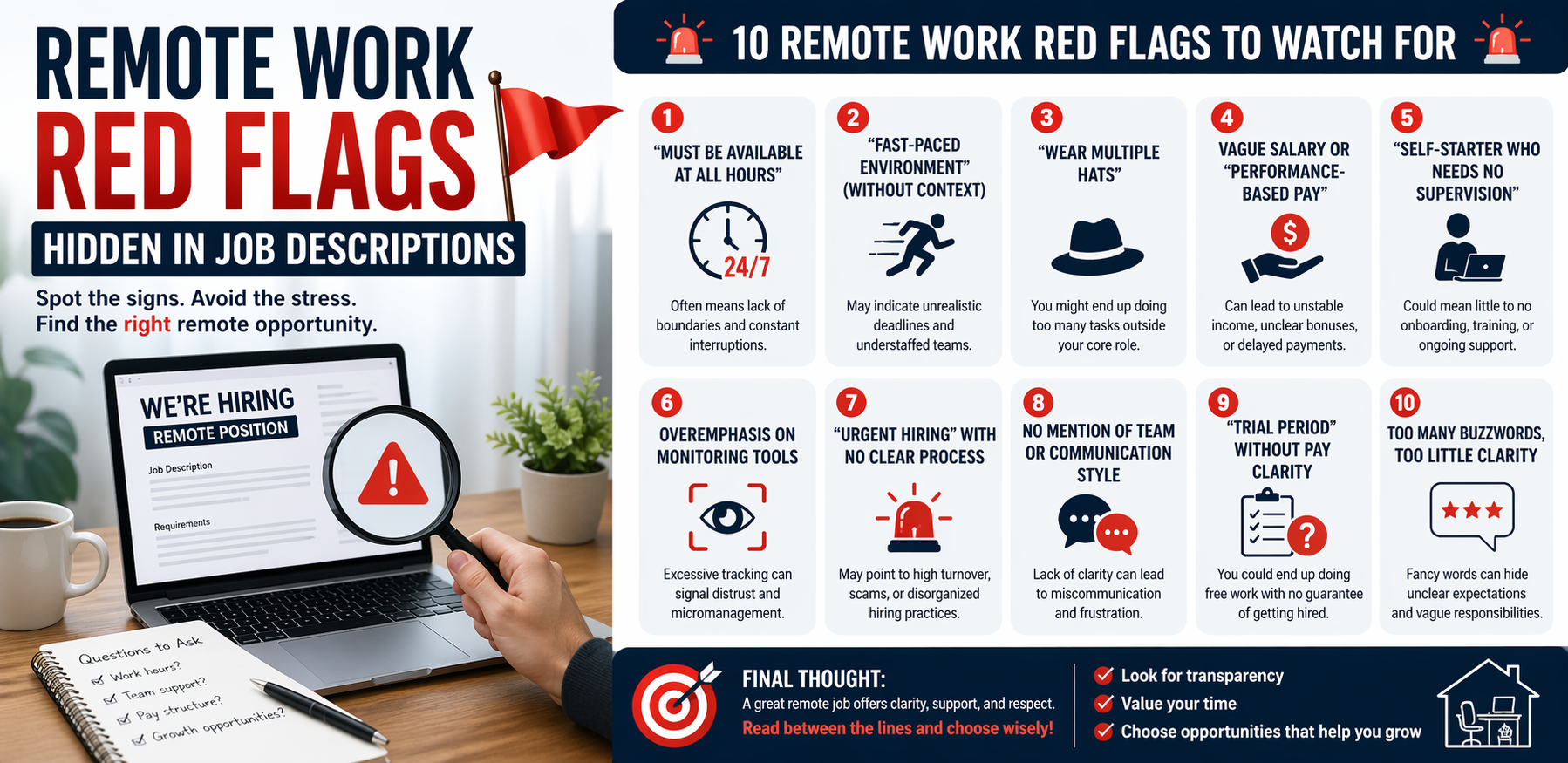
Remote Work Red Flags Hidden in Job Descriptions
1. “Must Be Available at All Hours”
The first red flag is when the job description says “24/7 availability” or “flexible working hours including weekends” and expects you to respond quickly at any time. This means they want you to be available all the time, whether it’s your personal time or work time.
In this situation, your personal life and work life start to mix. Over time, this can lead to burnout, increased stress, and instead of freedom, it starts to feel like a restriction.
2. “Fast-Paced Environment” (Without Context)
Another red flag is a “fast-paced environment.” Every company wants work to be completed on time, but some companies create too much pressure to finish tasks quickly. They set unrealistic deadlines and have very small teams, so most of the workload falls on one person.
Sometimes, companies also push employees to multitask a lot. Because of this, you can’t focus properly on your main work, which can slow down your growth.
So, if you are applying for a remote job, make sure to research whether the company provides proper support systems, tools, and clear priorities.
3. “Wear Multiple Hats”
Many companies try to get the work of multiple roles from one person. For example, if a company is hiring a content writer, they may expect that person to write articles, blogs, create social media content, and even handle customer support. But the salary is usually very low.
At first, beginners may feel this is a good opportunity to learn many things. But that is not completely true. Trying new things is important, but it should be related to your field. If you keep doing work from different roles, you won’t be able to focus on your main skill, and it can lead to burnout.
That’s why it is very important to check whether the company expects you to “wear multiple hats.” Instead of growing your expertise, you may end up feeling stretched too thin without mastering any one skill.
4. Vague Salary or “Performance-Based Pay”
Another remote work red flag is when a job description does not mention a clear salary range and instead uses phrases like “competitive salary,” “earn based on performance,” or “unlimited earning potential.”
You don’t need to get excited by these terms or assume you can earn a lot. In many cases, it can mean unstable income, a commission-heavy structure, or even delayed payments.
That’s why it’s important to choose a trustworthy company that clearly shares the salary, payment cycle, and compensation structure.
5. “Self-Starter Who Needs No Supervision”
Many people look for remote jobs to work independently without a boss. But if a job says “no supervision,” it does not always mean true freedom. It can also be a disadvantage.
It may mean there is no proper onboarding, no training, and no clear guidance. Because of this, you can feel very confused in the beginning. This confusion can affect your work quality and increase your stress, especially if you are a beginner. As a result, your growth may slow down.
That’s why, if you are searching for a remote job, make sure to research whether the company expects you to work completely independently or if they provide proper guidance and support.
6. Remote Work Red Flags Overemphasis on Monitoring Tools
If a company tracks your work, it can be a good thing because it shows they are serious about their work. This can help both the company and the employee grow.
However, if a job description clearly mentions tracking tools like time-tracking software, screen monitoring, or activity logging, it can be a red flag. It may indicate excessive monitoring.
This often means a lack of trust, a controlling management style, or pressure to look busy instead of actually being productive.
Conclusion: Remote Work Red Flags
Remote job descriptions are more than just hiring details—they’re a preview of your future work life. The words a company chooses often reveal its culture, expectations, and how it treats its employees.
If you notice vague promises, unrealistic demands, or a lack of transparency, don’t ignore those signals. What seems like a small concern now can turn into daily stress later.
The goal isn’t just to find a remote job—it’s to find the right remote job. One that values your time, supports your growth, and respects your boundaries.
So before you hit “apply,” slow down and read between the lines. Because in remote work, clarity isn’t a bonus—it’s a necessity.
Spot red flags before you apply — explore transparent and better-fit remote opportunities on Best Job Tool.





Leave a Reply