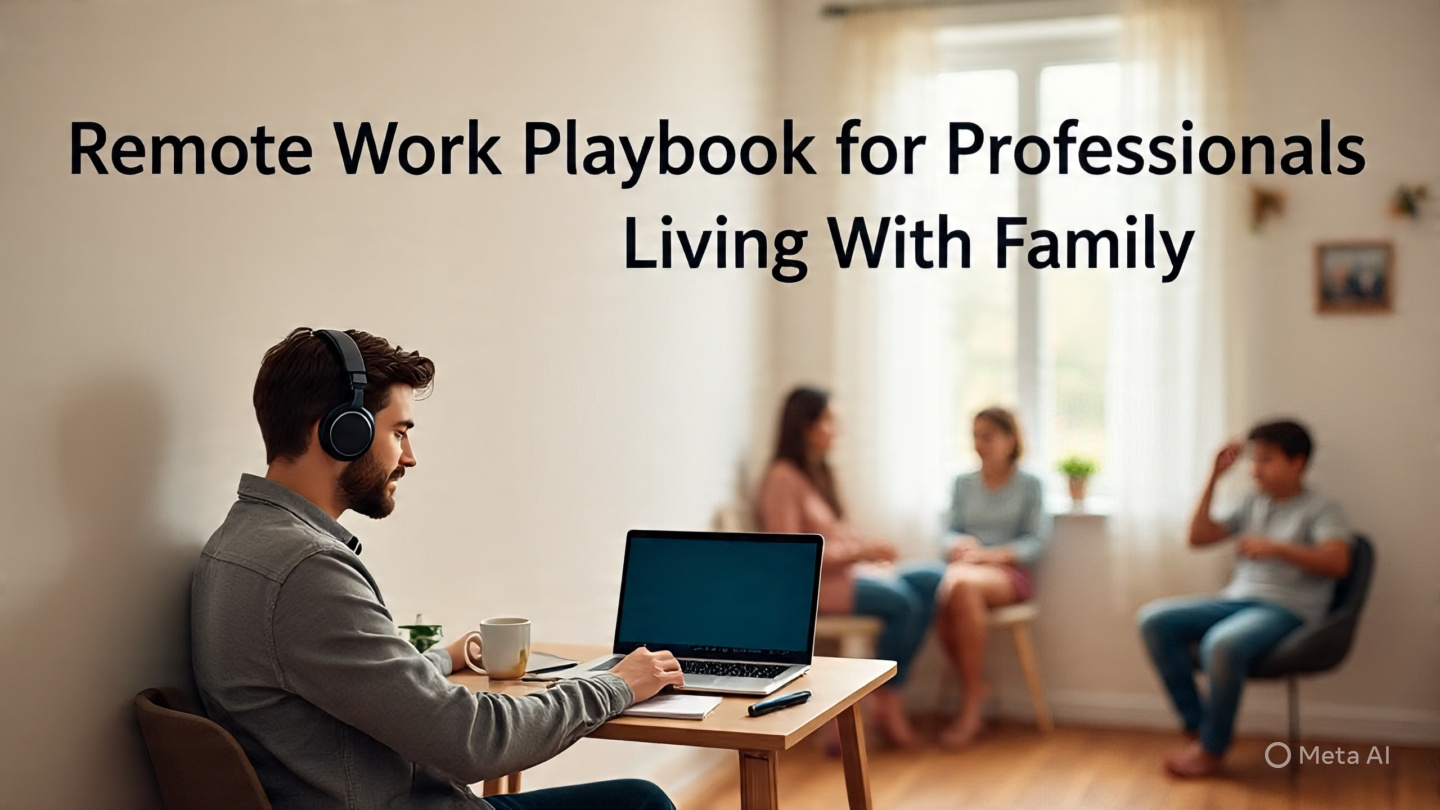
Introduction: Remote Work Playbook
Remote work sounds like a dream—no commute, flexible hours, and working in comfortable clothes. But if you live with family, especially in a busy home, it can quickly become challenging. Noise, interruptions, expectations, and lack of personal space can affect your productivity and focus.
This playbook will help you manage remote work effectively while living with family, without harming your relationships or your career.
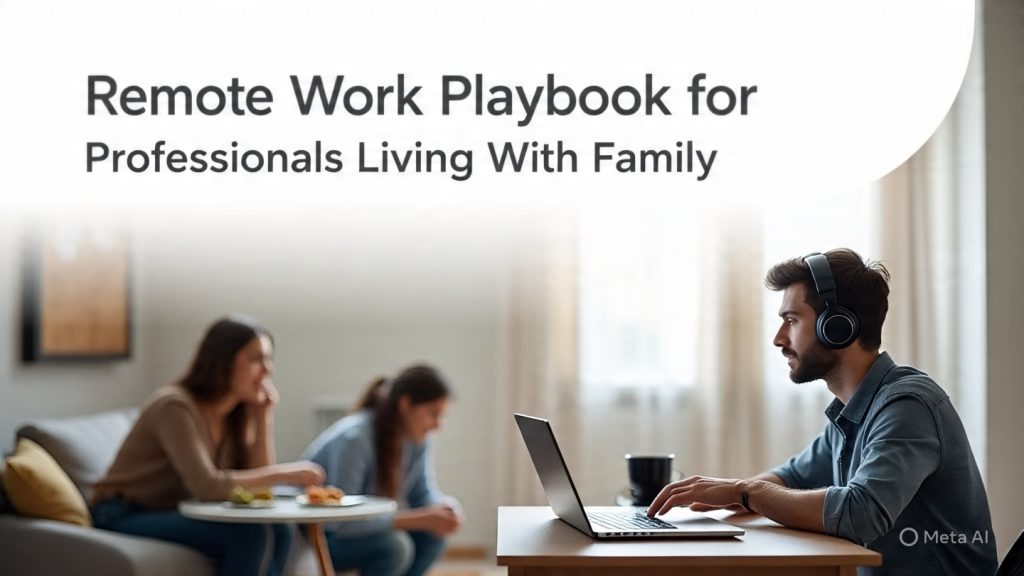
Remote Work Playbook for Professionals Living With Family
1. Set Clear Boundaries From Day One
When you work from home, people often assume you are “available.” This is the biggest mistake.
You need to clearly communicate:
- Your working hours
- When you cannot be disturbed
- What counts as an emergency
For example, tell your family:
“I will be working from 9 AM to 5 PM. Please avoid interruptions unless it’s urgent.”
At first, they may not take it seriously. But if you stay consistent, they will start respecting your schedule.
2. Create a Dedicated Workspace
You don’t need a big home office. Even a small corner works.
Your workspace should:
- Be used only for work
- Have a chair and table (avoid bed working)
- Be as quiet as possible
Why this matters:
Your brain connects places with activities. If you work on your bed, your productivity drops and your sleep also gets affected.
If space is limited, use:
- A foldable table
- A specific chair
- A fixed corner
Consistency is more important than size.
3. Build a Routine (Even If You Work Flexible Hours)
Without a routine, your day becomes messy.
A simple routine can include:
- Wake-up time
- Work start time
- Breaks
- End time
For example:
- 8:00 AM – Wake up
- 9:00 AM – Start work
- 1:00 PM – Lunch
- 6:00 PM – Finish work
This helps both you and your family understand your schedule.
4. Use Headphones as a “Do Not Disturb” Signal
Sometimes words are not enough. Visual signals work better.
Wearing headphones tells others:
“I am busy right now.”
Even if you’re not listening to anything, it creates a psychological boundary.
Noise-cancelling headphones can also improve focus in a noisy home.
5. Manage Interruptions Smartly
Interruptions will happen. You can’t eliminate them completely.
Instead:
- Pause calmly
- Respond politely
- Return to work quickly
Avoid getting irritated. If you react emotionally, it creates tension at home.
You can also create a rule:
“Please note your questions and ask me after my work hours.”
6. Communicate Your Work Importance
Sometimes family members don’t understand remote work seriousness.
They may think:
“You’re just sitting at home.”
Explain clearly:
- Your deadlines
- Your responsibilities
- How your work affects your income
When they understand the importance, they become more supportive.
7. Take Planned Breaks With Family
Living with family is not a problem—it’s an advantage if managed well.
Use your breaks to:
- Talk to family members
- Eat meals together
- Relax your mind
This reduces guilt and improves relationships.
Just make sure breaks don’t turn into long distractions.
8. Avoid Overworking Just Because You’re at Home
One common problem in remote work is overworking.
Because your office is your home:
- Work hours extend
- You feel guilty stopping
- You keep checking emails
Set a clear “shutdown time.”
After that:
- Close your laptop
- Stop checking messages
- Focus on personal time
Work-life balance is your responsibility now.
9. Learn to Say “No” Politely
You may hear things like:
- “Just do this small work”
- “You’re free, help me quickly”
If it’s during work hours, say:
“I’ll help after my work time.”
Saying yes to everything will:
- Reduce your productivity
- Increase stress
- Delay your tasks
Polite refusal is a necessary skill.
10. Use Productivity Techniques
Working from home requires discipline.
Try simple methods like:
Pomodoro Technique
- Work for 25 minutes
- Take a 5-minute break
- Repeat
Task Batching
- Group similar tasks together
- Complete them in one go
Daily To-Do List
- Write 3–5 important tasks
- Focus on completing them
These methods help you stay focused even in a distracting environment.
Conclusion: Remote Work Playbook
Remote work while living with family is not easy—but it is completely manageable.
The key is balance:
- Set boundaries without hurting relationships
- Stay disciplined without becoming stressed
- Communicate clearly without creating conflict
When you handle it correctly, you can build a successful career without leaving your home—and at the same time, stay connected with your family.





Leave a Reply