Introduction
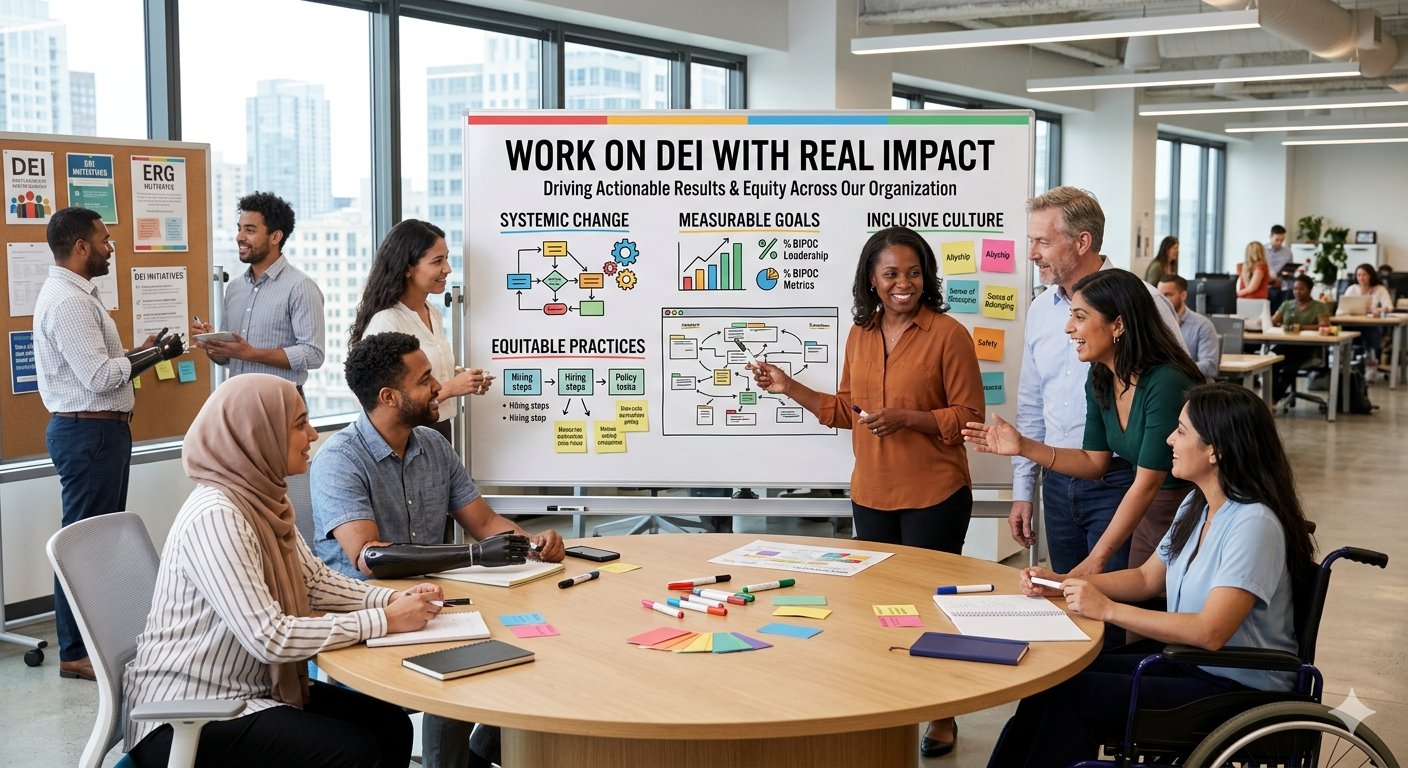
Diversity, equity, and inclusion have become central to modern workplaces. However, many organizations struggle to move beyond surface-level initiatives. This is exactly why understanding how to work on diversity, equity and inclusion with real impact is essential.
Real impact requires more than policies or statements. It involves measurable change, consistent effort, and alignment with business goals. Therefore, professionals working in this space must focus on outcomes rather than intentions.
When implemented effectively, DEI strengthens culture, improves performance, and drives long-term success.
Understanding what real impact in DEI means
Real impact in DEI goes beyond representation. It focuses on creating fair systems, inclusive environments, and equal opportunities for all employees.
This means addressing biases in hiring, promotions, and decision-making. It also involves ensuring that all voices are heard and valued.
Additionally, real impact is measurable. Organizations must track progress and outcomes rather than relying on assumptions.
Therefore, DEI must be treated as a strategic function, not just a cultural initiative.
Why many DEI efforts fail
Many DEI programs fail because they are not integrated into core business processes. They often exist as isolated initiatives without clear goals.
Additionally, lack of leadership commitment can limit effectiveness. Without accountability, progress slows down.
Moreover, some organizations focus only on awareness rather than action. Training alone does not create change.
Therefore, a structured and results-driven approach is necessary.
How to work on diversity, equity and inclusion with real impact
Start by assessing the current state of the organization. Identify gaps in representation, pay equity, and employee experience.
Next, set clear and measurable goals. Define what success looks like in terms of outcomes.
Additionally, integrate DEI into business processes. This includes hiring, performance management, and leadership development.
Moreover, ensure accountability at all levels. Leaders must be responsible for progress.
Thus, a structured approach leads to meaningful change.
Embedding DEI into hiring and talent processes
Hiring is one of the most critical areas for DEI. Organizations must ensure fair and inclusive recruitment practices.
This includes removing bias from job descriptions and interview processes. Diverse hiring panels can also improve outcomes.
Additionally, focusing on skills rather than backgrounds can increase inclusivity.
Moreover, creating equal opportunities for growth ensures long-term impact.
Therefore, talent processes play a key role in DEI success.
Creating inclusive workplace cultures
Inclusion is about how employees feel within the organization. A diverse workforce without inclusion cannot succeed.
Organizations should encourage open communication and psychological safety. Employees must feel comfortable sharing their perspectives.
Additionally, recognizing and valuing different viewpoints improves collaboration.
Moreover, inclusive policies support work-life balance and flexibility.
Thus, culture is central to DEI impact.
Measuring and tracking progress
Measurement is essential for real impact. Organizations must track key metrics such as representation, retention, and employee satisfaction.
Regular surveys and feedback help identify issues. Data-driven insights support better decision-making.
Additionally, transparency in reporting builds trust.
Moreover, continuous evaluation ensures that strategies remain effective.
Therefore, measurement turns DEI into a results-driven function.
The role of leadership in driving DEI
Leadership commitment is critical for success. Leaders set the tone for organizational culture.
They must actively support DEI initiatives and lead by example. This includes making inclusive decisions and addressing biases.
Additionally, leaders should communicate the importance of DEI clearly.
Moreover, accountability at the leadership level ensures sustained progress.
Thus, leadership plays a central role in creating impact.
Overcoming challenges in implementing DEI
Implementing DEI can face resistance. Some employees may not fully understand its importance.
Additionally, unconscious biases can affect decision-making.
To address this, organizations must focus on education and awareness alongside action.
Moreover, creating safe spaces for discussion helps build understanding.
Therefore, addressing challenges proactively is essential.
Building long-term sustainability in DEI
DEI is not a one-time initiative. It requires continuous effort and adaptation.
Organizations should embed DEI into their long-term strategy. This ensures consistency.
Additionally, regular training and development support ongoing improvement.
Moreover, involving employees in initiatives increases engagement.
Thus, sustainability ensures lasting impact.
Conclusion
Understanding how to work on diversity, equity and inclusion with real impact is essential for building strong and inclusive organizations. Real change requires structured strategies, measurable outcomes, and leadership commitment.
By integrating DEI into hiring, culture, and decision-making processes, organizations can create meaningful and lasting improvements.
In today’s evolving workplace, DEI is not optional. It is a critical factor for success and growth. Professionals who can drive real impact in this area will continue to be in high demand.
To explore opportunities in this growing field, use the best job tool and discover roles that align with your expertise and goals.
Find Your Dream Job Today – Explore Endless Career Opportunities and Secure Your Next Role with Best Job Tool.



Leave a Reply