Introduction
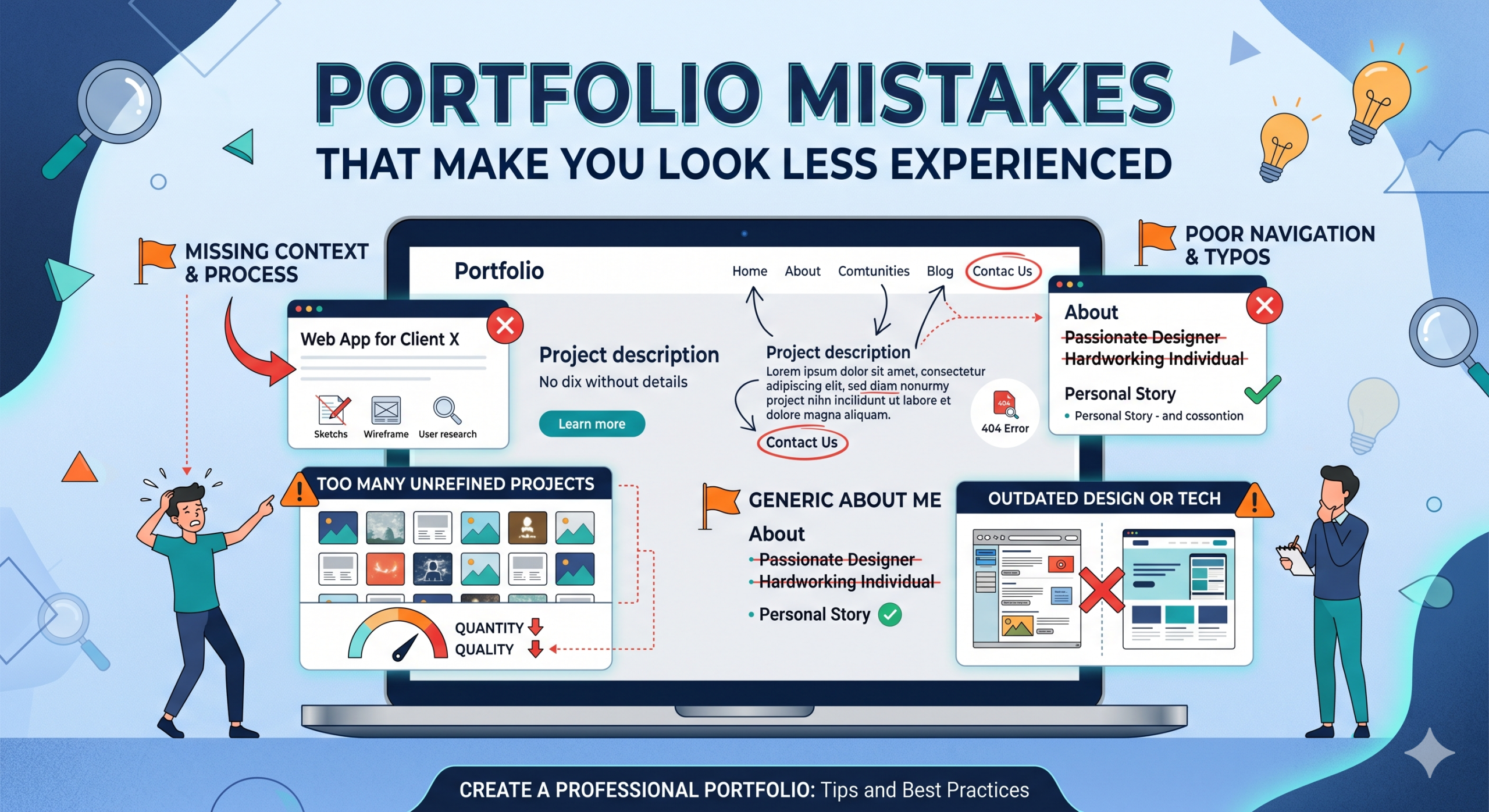
A strong portfolio is often the deciding factor in hiring, especially in remote and skill-based roles. However, many professionals unintentionally weaken their chances by presenting their work poorly. Even with solid experience, a misaligned portfolio can make you appear less capable Mistakes than you actually are.
The issue is rarely lack of skill—it is usually lack of structure, clarity, and positioning. Employers and clients evaluate portfolios quickly, and small mistakes can significantly impact perception.
Understanding what not to do is just as important as knowing what to include.
Lack of Clear Positioning
One of the most common mistakes is not defining what you actually do. A portfolio that tries to cover everything ends up communicating nothing.
If your portfolio includes unrelated skills without a clear focus, it creates confusion. Recruiters should immediately understand your expertise within seconds.
Instead of being general, define:
- Your core skill or service
- The type of work you specialize in
- The audience or industry you serve
Clarity builds trust and makes your portfolio easier to evaluate.
Showing Work Without Context
Simply displaying projects is not enough. Without context, your work loses meaning and impact.
Many professionals upload designs, reports, or case samples without explaining the problem, process, or results. This makes it difficult for recruiters to assess your actual contribution.
Every project should clearly explain:
- The objective or problem
- Your role in the project
- The approach you used
- The outcome or measurable results
Context transforms your work from “samples” into “proof of capability.”
Overloading With Low-Quality Work
More projects do not equal a better portfolio. In fact, too many average or weak samples can dilute your overall impression.
A common mistake is including every project you have ever worked on instead of curating your best work.
A strong portfolio should:
- Highlight 3–6 high-quality projects
- Focus on relevance rather than quantity
- Showcase your strongest skills
- Remove outdated or weaker work
Quality signals experience more effectively than volume.
Ignoring Results and Impact
Many portfolios focus only on what was done, not what was achieved. This is a critical gap.
Employers are not just interested in tasks—they want outcomes.
Whenever possible, include:
- Performance improvements
- Measurable metrics (growth, engagement, revenue impact)
- Before-and-after comparisons
- Client or team feedback
Even approximate results are better than none. They demonstrate that your work creates value, not just output.
Poor Structure and Navigation
A cluttered or confusing portfolio can quickly turn away potential opportunities. If someone cannot navigate your work easily, they are unlikely to spend time understanding it.
Common issues include:
- No clear sections or categories
- Long, unstructured descriptions
- Broken links or missing files
- Inconsistent formatting
Your portfolio should be easy to scan and logically organized.
A simple structure works best:
- Introduction or summary
- Key projects
- Skills and tools
- Contact information
Clarity in presentation reflects professionalism.
Lack of Personal Branding
Your portfolio is not just about your work—it is also about your identity as a professional.
Many portfolios fail because they feel generic. There is no sense of personality, perspective, or unique value.
To improve this:
- Add a concise personal summary
- Highlight your approach or methodology
- Share your professional values or work style
- Maintain a consistent tone across content
Strong personal branding helps you stand out in competitive markets.
Not Updating Your Portfolio Regularly
An outdated portfolio signals inactivity and lack of growth. Even if you are actively working, an old portfolio creates the impression that you are not evolving.
Regular updates should include:
- Adding recent projects
- Removing irrelevant or outdated work
- Updating tools and skills
- Refining descriptions based on new experience
Many professionals use the Best Job Tool to track completed projects, organize achievements, and ensure their portfolio stays aligned with current career goals.
Consistency in updates shows that you are actively improving and adapting.
Weak Call-to-Action and Contact Clarity
Even a strong portfolio can fail if it does not guide the viewer toward the next step.
Common mistakes include:
- No clear contact information
- No direction on how to work with you
- Missing links to LinkedIn or email
- No call-to-action
Make it easy for opportunities to reach you.
Your portfolio should clearly state:
- How to contact you
- What services you offer
- Whether you are open to work or collaborations
The goal is to convert interest into action.
Conclusion
Portfolio mistakes often have less to do with skill and more to do with presentation. Lack of clarity, weak structure, missing context, and poor positioning can make even experienced professionals appear less capable.
By focusing on quality, showcasing results, and maintaining a clear and updated structure, you can transform your portfolio into a powerful career asset. With the support of systems like the Best Job Tool, managing and improving your portfolio becomes more efficient and aligned with your professional growth.
A well-structured portfolio does not just display your work—it communicates your value.




Leave a Reply