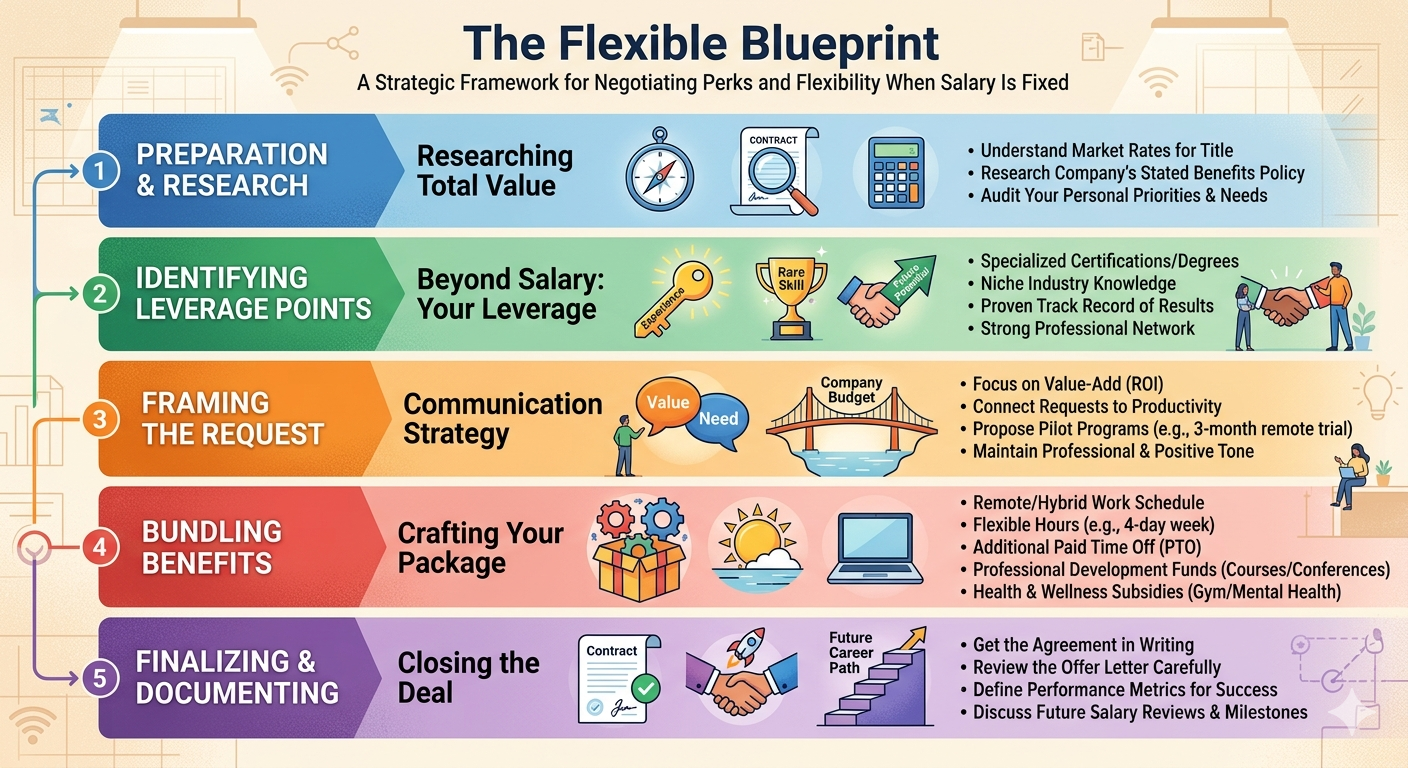
Salary negotiations are often one of the most important parts of the hiring process. However, many candidates face situations where companies clearly state that compensation is Negotiate fixed and cannot be increased further. While this may feel disappointing initially, it does not mean negotiations are completely over.
Modern workplaces now offer much more than just salary. Flexibility, remote work options, learning opportunities, bonuses, wellness benefits, and additional perks have become extremely valuable for employees. In many cases, these benefits can improve overall job satisfaction even more than a small salary increase.
Learning how to negotiate perks and flexibility when salary is fixed is an important professional skill. Smart negotiation helps candidates improve work-life balance, career growth, and daily productivity without creating conflict during the hiring process.
Companies are often more open to adjusting non-salary benefits because they may cost less financially while still improving employee satisfaction. Candidates who understand this can create better long-term career outcomes.
In this blog, we will explore why companies limit salary negotiations, which perks are negotiable, how to communicate professionally, common mistakes to avoid, and strategies that help candidates negotiate successfully.
Why Companies Sometimes Fix Salaries
Many organizations operate with strict compensation structures. Salary ranges are often determined by budgets, internal pay policies, experience levels, or market benchmarks.
Even if recruiters personally want to increase compensation, they may not have approval authority beyond a certain range.
Several factors can lead to fixed salaries:
- Company budget limitations
- Standardized pay structures
- Internal salary balance
- Economic uncertainty
- Department hiring caps
- Experience-based compensation systems
Large companies especially follow structured salary frameworks to maintain fairness across teams. Increasing one candidate’s compensation significantly could create internal inconsistencies.
However, while salary budgets may be limited, companies often have greater flexibility in other areas. Recruiters may be able to offer remote work arrangements, learning budgets, performance bonuses, or additional leave days more easily than increasing fixed pay.
Understanding this difference helps candidates approach negotiations strategically instead of emotionally.
Professionals who remain flexible and solution-focused often achieve better negotiation outcomes.
Perks and Benefits You Can Negotiate
Many candidates underestimate the value of workplace perks. A well-negotiated benefits package can improve both professional and personal life significantly.
Common Negotiable Perks
- Remote work flexibility
- Hybrid work schedules
- Flexible working hours
- Joining bonuses
- Performance bonuses
- Additional paid leave
- Learning and certification budgets
- Internet or home office allowances
- Health and wellness benefits
- Relocation support
- Faster performance reviews
- Equipment upgrades
- Travel opportunities
Remote flexibility has become one of the most valuable modern workplace benefits. Employees often save time, travel costs, and energy when companies allow flexible work arrangements.
Learning opportunities are also important for long-term growth. Access to certifications, courses, conferences, or mentorship programs can improve future earning potential significantly.
Candidates should focus on benefits that genuinely improve their lifestyle, productivity, and career progression instead of negotiating random perks.
A smaller salary package combined with strong flexibility and career growth opportunities can sometimes provide better overall value.
How to Approach the Negotiation Professionally
The tone of negotiation matters as much as the request itself. Candidates should remain respectful, collaborative, and professional throughout discussions.
Aggressive negotiation can damage relationships before joining the company.
A professional approach includes:
- Showing appreciation for the offer
- Acknowledging salary limitations
- Discussing alternative areas of flexibility
- Focusing on mutual benefit
- Keeping communication positive
Example Negotiation Response
“Thank you for sharing the offer details. I completely understand the salary structure limitations. I’m very excited about the opportunity and wanted to discuss whether there may be flexibility regarding remote work options, learning support, or performance-based benefits.”
This type of response sounds mature and cooperative rather than demanding.
Candidates should also prioritize their requests carefully. Asking for too many changes simultaneously may create unnecessary complexity.
Choose the benefits that matter most personally and professionally.
Why Flexibility Matters More Than Ever
Workplace priorities have changed dramatically in recent years. Employees increasingly value flexibility, mental well-being, and work-life balance alongside compensation.
Flexible work environments often improve:
- Productivity
- Employee satisfaction
- Mental health
- Time management
- Long-term retention
- Job performance
Many professionals are now willing to accept slightly lower salaries in exchange for better flexibility and healthier work environments.
Remote and hybrid work options also reduce commuting stress and daily expenses. Employees can often save money on transportation, meals, and relocation costs.
Flexibility additionally creates opportunities for continuous learning and side projects. Professionals with better schedules often improve skills faster and maintain stronger motivation.
Companies understand these changing priorities, which is why many organizations now compete through employee benefits instead of salary alone.
Candidates who negotiate thoughtfully can create healthier and more sustainable career experiences.
Mistakes to Avoid During Perk Negotiations
Negotiating incorrectly can reduce professionalism and damage first impressions. Candidates should avoid emotional or unrealistic demands.
Common Negotiation Mistakes
- Sounding ungrateful
- Comparing offers aggressively
- Asking for too many perks
- Negotiating without priorities
- Using ultimatums
- Ignoring company policies
- Focusing only on personal convenience
Another mistake is negotiating without research. Candidates should understand industry standards and company culture before requesting flexibility.
For example, requesting permanent remote work from a company that clearly follows office-based culture may create friction immediately.
Timing also matters. Negotiations should happen after receiving an official offer, not during early interview stages.
Candidates should remain calm and collaborative even if the company cannot accommodate every request.
Professional communication leaves a strong impression regardless of the outcome.
How to Identify Which Benefits Matter Most
Not every perk provides equal value for every person. Effective negotiation starts with understanding personal priorities.
Some professionals value flexibility more than bonuses, while others prioritize learning opportunities or healthcare support.
Questions to Ask Yourself
- What improves my daily quality of life?
- Which benefit saves me the most time or stress?
- What supports my long-term career goals?
- Which flexibility would improve my productivity?
- What matters more than salary for me personally?
For example, a working parent may value flexible hours more than a small annual bonus. A young professional may prioritize certifications and mentorship opportunities.
Negotiation becomes easier when candidates focus on meaningful priorities instead of trying to maximize every possible benefit.
Employers also appreciate candidates who communicate clear and reasonable expectations.
Being intentional creates more productive and respectful discussions.
How Employers View Flexible Negotiation Requests
Many candidates fear negotiation because they assume employers will react negatively. In reality, professional negotiation often demonstrates confidence, maturity, and communication skills.
Recruiters usually expect some level of negotiation during hiring processes.
Reasonable requests can show:
- Professional self-awareness
- Long-term thinking
- Confidence in personal value
- Understanding of work-life balance
- Career planning ability
However, employers also evaluate attitude during negotiation. Candidates who remain respectful and solution-oriented create stronger impressions.
Companies prefer professionals who can communicate needs clearly without creating conflict.
In many cases, recruiters may not initially mention available perks unless candidates ask professionally. Some flexibility options only become visible during negotiation discussions.
This is why respectful communication is extremely important.
Negotiation should feel like collaboration rather than confrontation.
Long-Term Career Benefits of Smart Negotiation
Negotiation is not only about immediate rewards. It also builds long-term professional confidence and career management skills.
Employees who negotiate thoughtfully often become better at:
- Setting boundaries
- Communicating expectations
- Understanding personal value
- Managing work-life balance
- Building professional confidence
Learning to negotiate professionally also improves future salary discussions and leadership communication.
Many successful professionals understand that career satisfaction depends on multiple factors, not just compensation alone.
Flexibility, growth opportunities, positive culture, and mental well-being all contribute to long-term success.
Candidates who negotiate strategically often build healthier and more sustainable careers over time.
Conclusion
Learning how to negotiate perks and flexibility when salary is fixed can help professionals create better career experiences without focusing only on compensation. While companies may have strict salary structures, many organizations remain flexible regarding benefits, remote work options, learning opportunities, and work-life balance support.
Smart negotiation is about understanding priorities, communicating professionally, and focusing on long-term value instead of short-term emotions. Employees who negotiate thoughtfully often improve both career satisfaction and personal well-being.
The most successful negotiations happen when candidates remain respectful, collaborative, and realistic. Instead of treating negotiation as conflict, professionals should approach it as a conversation about creating mutual value and productivity.
Modern workplaces now recognize that flexibility and employee well-being strongly influence performance and retention. Candidates who understand this can make more informed and strategic career decisions.
Whether you are applying for remote jobs, corporate roles, freelance opportunities, or leadership positions, learning negotiation skills can improve your professional journey significantly. Using platforms like the best job tool can also help candidates discover companies that value flexibility, employee growth, and modern workplace benefits.




Leave a Reply