Introduction
Balancing work responsibilities, skill development, and Work Habits job searching has become increasingly difficult in modern professional life. Many people work full-time jobs while trying to learn new skills, apply for remote opportunities, prepare for interviews, and maintain personal responsibilities at the same time. Without structure, this quickly creates stress, burnout, and inconsistent productivity.
One of the biggest reasons professionals struggle with career growth is not lack of ambition. The real issue is lack of time organization. Most people react to tasks throughout the day instead of controlling their schedules intentionally.
This is where time blocking becomes highly effective.
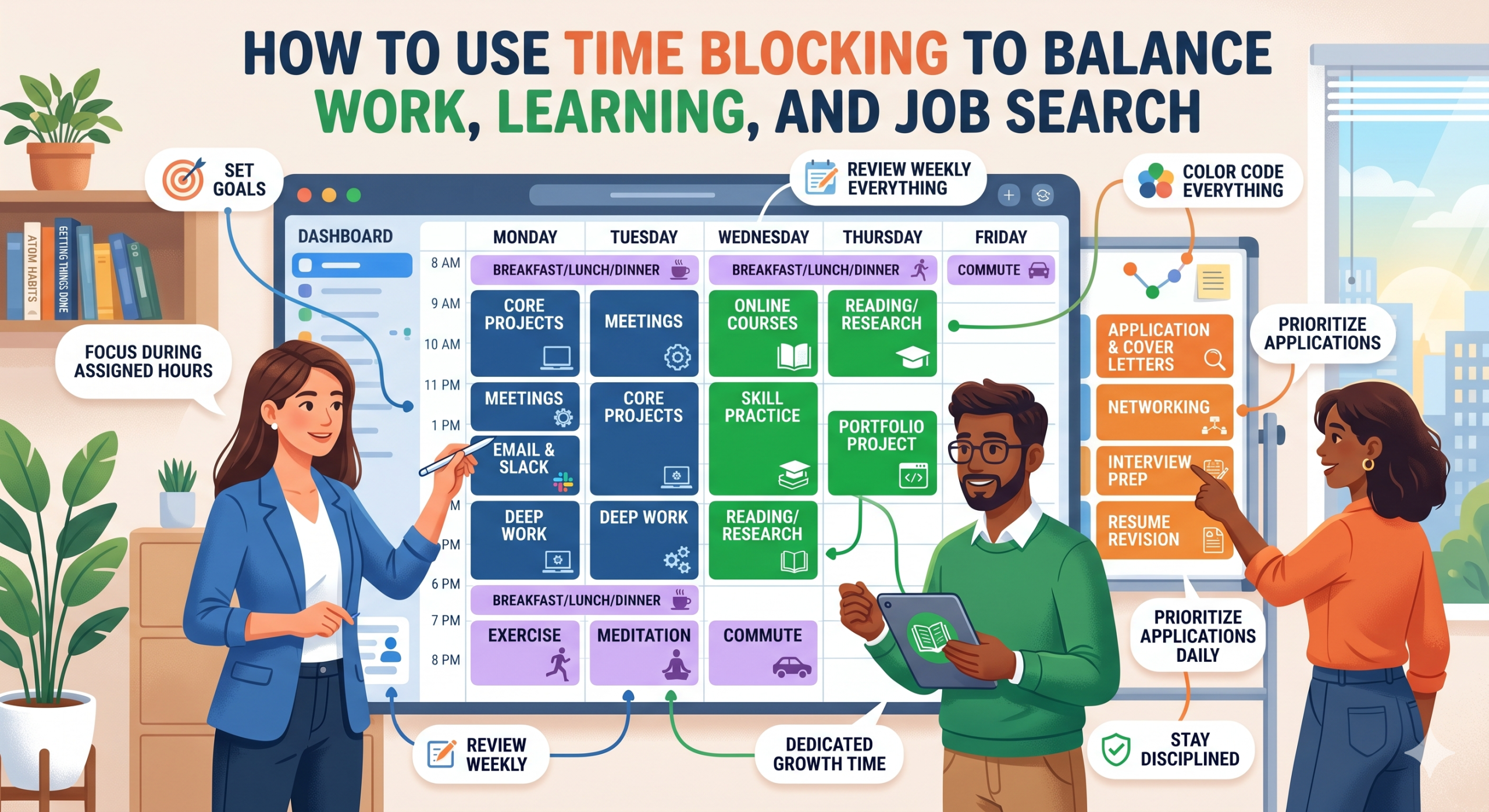
Time blocking is a productivity system where the day is divided into dedicated blocks for specific activities. Instead of multitasking constantly or switching between random priorities, professionals allocate focused time periods for work, learning, networking, job searching, and recovery.
For remote workers, freelancers, students, and career changers, time blocking creates structure and helps maintain progress across multiple goals without mental exhaustion.
What Is Time Blocking?
Time blocking is a scheduling method where each part of the day is assigned to a particular task or category of work.
Instead of creating long to-do lists, professionals reserve specific hours for focused activities.
For example:
- 8:00 AM – 10:00 AM → Deep work
- 10:00 AM – 11:00 AM → Meetings
- 6:00 PM – 7:00 PM → Skill learning
- 7:30 PM – 8:30 PM → Job applications
This structure reduces distractions and improves productivity because the brain focuses on one responsibility at a time.
Time blocking is especially useful for professionals balancing:
- Full-time work
- Online learning
- Remote job applications
- Freelancing
- Career transitions
- Networking
- Personal development
It helps create boundaries between responsibilities instead of allowing tasks to Work Habits overlap chaotically.
Why Most Professionals Struggle With Time Management
Many people believe they lack time when the real issue is uncontrolled attention.
Common productivity problems include:
- Constant multitasking
- Random task switching
- Endless notifications
- No clear priorities
- Reactive scheduling
- Poor focus management
This leads to:
- Mental fatigue
- Lower productivity
- Incomplete tasks
- Burnout
- Delayed career progress
For example, a professional may:
- Work while checking LinkedIn
- Watch learning videos while replying to emails
- Apply for jobs late at night while exhausted
These habits reduce focus quality significantly.
Time blocking improves efficiency because it encourages intentional concentration.
Benefits of Time Blocking for Career Growth
Professionals using time-blocking systems often experience:
- Better focus
- Stronger productivity
- More consistent learning
- Improved work-life balance
- Reduced stress
- Faster task completion
This becomes especially valuable for remote professionals because remote Work Habits environments contain constant digital distractions.
Key Advantages
Better Deep Work
Dedicated focus sessions improve task Work Habits Work Habits quality.
Improved Skill Development
Scheduled learning becomes more consistent.
Reduced Burnout
Structured schedules create mental clarity.
Stronger Job Search Consistency
Applications become more strategic instead of rushed.
Better Energy Management
Tasks align with natural productivity levels.
Time blocking transforms career growth into a manageable daily system instead of an overwhelming process.
How to Create an Effective Time-Blocking Schedule
A good schedule should be realistic, flexible, and focused on priorities.
Step 1: Identify Core Responsibilities
Start by listing your major responsibilities:
- Full-time work
- Freelance projects
- Skill building
- Job searching
- Exercise
- Personal responsibilities
This creates visibility into where time is currently spent.Work Habits
Step 2: Prioritize High-Value Activities
Not all tasks create equal value.
High-impact activities usually include:
- Deep work
- Learning valuable skills
- Networking
- Interview preparation
- Portfolio building
Low-value distractions should be minimized.
Step 3: Assign Dedicated Time Blocks
Schedule focused sessions for specific goals.
Example Schedule
Morning
- Deep work
- High-focus tasks
- Strategic planning
Afternoon
- Meetings
- Collaboration
- Administrative work
Evening
- Skill building
- Job applications
- Career development
This structure prevents important goals from being ignored.
Best Time Blocking Strategies for Learning New Skills
Skill development often gets delayed because professionals wait for “free time.” Unfortunately, free time rarely appears automatically.
Time blocking solves this problem by making learning a scheduled priority.
Effective Learning Blocks
Short Daily Sessions
Even 45–60 minutes daily creates major long-term improvement.
Dedicated Focus
Avoid multitasking during learning sessions.
Clear Learning Goals
Every session should focus on one objective.
Consistent Timing
Learning at the same time daily improves habit formation.
Examples of skills worth scheduling:
- Coding
- SEO writing
- Graphic design
- Data analytics
- Digital marketing
- Communication skills
- AI productivity tools
Professionals who schedule learning consistently usually outperform people relying only on motivation.
Using Time Blocking for Job Searching
Job searching without structure often becomes emotionally exhausting.
Candidates frequently:
- Apply randomly
- Spend hours scrolling job boards
- Rewrite resumes constantly
- Feel overwhelmed
Time blocking creates boundaries that improve both productivity and emotional balance.
Smart Job Search Time Blocks
Job Research
Identify quality opportunities instead of mass applying.
Resume Customization
Tailor applications strategically.
Networking
Schedule LinkedIn outreach and recruiter communication.
Interview Preparation
Practice communication and technical skills.
Application Tracking
Organize submissions and follow-ups.
This approach creates consistency without allowing job searching to consume the entire day.
Balancing Full-Time Work and Career Growth
Many professionals struggle because they already work full-time while trying to improve their careers simultaneously.
Time blocking helps balance both responsibilities realistically.
Example for Working Professionals
Before Work
- Learning session
- Reading industry updates
- Deep focus activities
During Work Hours
- Professional responsibilities
- Collaboration
- Productivity-focused execution
After Work
- Job search
- Portfolio building
- Networking
- Skill improvement
The key is sustainability.
Extreme schedules often fail because they create burnout quickly. Balanced systems usually produce better long-term consistency.
Why Recovery Time Matters
One major mistake professionals make is blocking every hour without including recovery.
Continuous productivity eventually reduces focus quality.
Strong schedules should include:
- Breaks
- Exercise
- Sleep
- Social time
- Mental recovery
Recovery improves:
- Creativity
- Focus
- Emotional stability
- Decision-making
Remote professionals especially need boundaries because work and personal life often overlap digitally.
Productivity improves when energy management is included in scheduling systems.
Common Time Blocking Mistakes
Creating Unrealistic Schedules
Overloading every hour usually creates frustration.
Ignoring Flexibility
Unexpected tasks always happen.
Blocking Too Many Small Tasks
Focus works better with larger categories.
Forgetting Recovery Time
Mental exhaustion reduces productivity.
Multitasking During Blocks
Dedicated focus is essential.
Time blocking works best when it remains practical and adaptable.
Tools That Improve Time Blocking
Several tools help professionals organize schedules effectively.
Useful Productivity Tools
- Google Calendar
- Notion
- Trello
- Asana
- Todoist
- Time-tracking apps
These tools improve organization and visibility.
The “Best Job Tool” mindset focuses on creating efficient systems that support both productivity and long-term career growth.
Conclusion
Learning how to use time blocking to balance work, learning and job search can significantly improve productivity, focus, and career consistency. Instead of reacting to endless responsibilities throughout the day, professionals can create structured schedules that support both immediate tasks and long-term goals.
Time blocking helps professionals:
- Manage work more effectively
- Learn skills consistently
- Reduce stress
- Improve focus
- Build better routines
- Maintain healthier work-life balance
In today’s remote and highly competitive professional environment, career growth depends heavily on organization and sustainable productivity systems. Small daily improvements often create larger long-term results than chaotic bursts of motivation.
Professionals looking to improve productivity, remote career readiness, and smarter job search systems can also explore platforms like “Best Job Tool” for modern career strategies, skill development insights, and professional growth opportunities.





Leave a Reply