Introduction
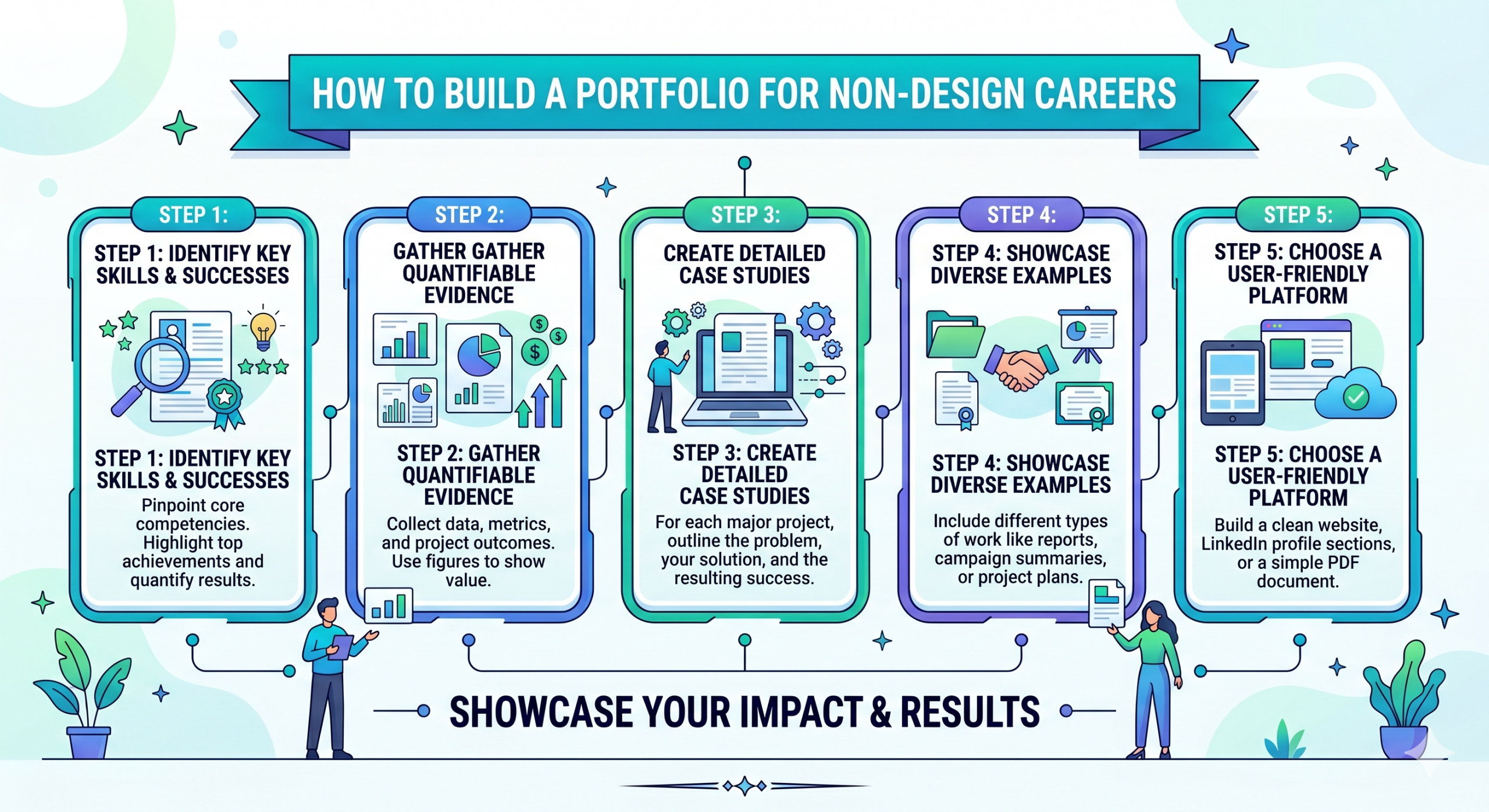
When people hear the word “portfolio,” they often associate it with graphic designers, photographers, writers, or creative professionals. However, in today’s competitive job market, portfolios are becoming valuable assets for professionals across nearly every industry. Whether you work in marketing, human resources, sales, finance, customer support, project Non-Design management, operations, or technology, a well-structured portfolio can help demonstrate your expertise far more effectively than a resume alone.
Employers increasingly want proof of skills rather than simply a list of responsibilities. A portfolio provides evidence of accomplishments, problem-solving abilities, and measurable results. It allows professionals to showcase their work, explain their impact, and stand out from candidates who rely solely on traditional application materials.
As remote work continues to expand and hiring processes become more digital, portfolios are becoming powerful tools for career growth. This guide explains how professionals in non-design careers can create portfolios that strengthen credibility and improve job opportunities.
Why Portfolios Matter Beyond Creative Industries
A resume tells employers what you have done. A portfolio shows them how well you have done it.
Hiring managers often review hundreds of applications for a single role. While resumes summarize experience, portfolios provide supporting evidence that helps candidates differentiate themselves.
A professional portfolio can:
- Demonstrate practical skills
- Showcase measurable achievements
- Highlight problem-solving abilities
- Build professional credibility
- Support interview discussions
- Strengthen personal branding
- Increase confidence during job applications
For professionals seeking remote opportunities, portfolios are Non-Design particularly useful because employers may never meet candidates in person before making hiring decisions.
A portfolio helps bridge that gap by providing tangible proof of competence and professionalism.
Identify the Work You Can Showcase
Many professionals assume they have nothing suitable for a portfolio because they do not create visual work. In reality, most careers involve projects, achievements, and outcomes that can be documented.
Examples include:
Human Resources
- Recruitment campaigns
- Employee engagement initiatives
- Training programs
- Onboarding processes
Marketing
- Campaign results
- Content strategies
- Lead generation projects
- Social media growth reports
Sales
- Revenue achievements
- Client acquisition strategies
- Sales process improvements
- Account management successes
Project Management
- Project timelines
- Team coordination frameworks
- Process improvements
- Delivery outcomes
Customer Support
- Service improvement initiatives
- Customer satisfaction results
- Workflow optimization projects
Focus on work that demonstrates value, measurable results, and professional growth.
Document Results Instead of Responsibilities
One of the most common portfolio mistakes is describing job duties rather than achievements.
Employers are more interested in outcomes than tasks.
Instead of writing:
- Managed customer support operations.
Write:
- Improved customer satisfaction scores by 25% through process enhancements and team training.
Instead of:
- Assisted with recruitment activities.
Write:
- Reduced average hiring time by 30% by implementing a streamlined screening process.
Strong portfolios emphasize:
- Business impact
- Quantifiable results
- Efficiency improvements
- Problem-solving capabilities
- Leadership contributions
Results make your work more credible and memorable.
Create Case Studies for Key Projects
Case studies are one of the most effective portfolio formats for non-design professionals.
They help employers understand your thinking process and professional capabilities.
A simple case study structure includes:
Challenge
What problem existed?
Actions Taken
What steps did you take?
Solution
How did you address the challenge?
Results
What measurable outcomes were achieved?
For example:
A project manager might explain how a delayed project was brought back on schedule.
An HR professional could showcase how a new onboarding process improved employee retention.
A marketing specialist may highlight a campaign that generated increased engagement and leads.
Case studies transform everyday work experiences into compelling professional evidence.
Include Remote Work and Digital Collaboration Experience
Remote work has become a permanent part of many industries. Employers increasingly seek professionals who can work effectively in distributed environments.
Your portfolio should highlight:
- Virtual project management
- Remote team collaboration
- Digital communication skills
- Productivity systems
- Online training initiatives
- Remote client management
Examples may include:
- Coordinating international teams
- Managing virtual meetings
- Leading remote projects
- Implementing digital workflows
Demonstrating remote work capabilities can significantly strengthen your portfolio, especially when applying for global opportunities.
Showcase Productivity and Process Improvement Skills
Organizations value professionals who can improve efficiency and optimize workflows.
Consider including examples of:
Productivity Improvements
- Reduced project completion times
- Improved team workflows
- Enhanced reporting systems
Process Optimization
- Automated repetitive tasks
- Streamlined communication channels
- Improved operational procedures
Performance Improvements
- Increased customer satisfaction
- Improved employee engagement
- Enhanced project outcomes
These examples demonstrate your ability to create measurable value for employers.
Professionals who can improve productivity often stand out during hiring decisions.
Add Financial and Business Impact Metrics
Whenever possible, include numbers.
Quantifiable achievements help employers understand the significance of your contributions.
Examples include:
- Increased revenue by 20%
- Reduced costs by 15%
- Improved retention rates by 18%
- Reduced hiring time by 25%
- Increased productivity by 30%
Financial and business metrics are especially powerful because they connect your work directly to organizational success.
Even if you do not work in finance, many projects contribute measurable business value.
Highlighting these outcomes strengthens your credibility and demonstrates strategic thinking.
Choose the Right Portfolio Format
Your portfolio should be easy to access and navigate.
Popular options include:
Personal Website
A professional website offers flexibility and strong personal branding opportunities.
LinkedIn Featured Section
LinkedIn allows users to showcase projects, presentations, articles, and achievements.
PDF Portfolio
A well-organized PDF can be shared easily with recruiters and hiring managers.
Online Portfolio Platforms
Professional portfolio tools can simplify organization and presentation.
Regardless of format, focus on:
- Professional design
- Clear structure
- Easy navigation
- Relevant content
- Updated information
The objective is to make it simple for employers to understand your capabilities quickly.
Keep Your Portfolio Updated
A portfolio should evolve throughout your career.
Set a schedule to review and update it regularly.
Add:
- New projects
- Certifications
- Training programs
- Promotions
- Achievements
- Client success stories
Remove outdated information that no longer represents your current expertise.
Maintaining an updated portfolio ensures you are prepared whenever new career opportunities arise.
Professionals who continuously document accomplishments often find it easier to apply for promotions, new roles, and leadership positions.
Use Career Platforms to Increase Portfolio Visibility
Creating a portfolio is only part of the process. Visibility is equally important.
Professional platforms can help showcase your expertise to recruiters, employers, and industry leaders.
Global job platforms such as BEST JOB TOOL allow professionals to explore career opportunities while understanding current employer expectations. By reviewing job requirements and industry trends, professionals can identify which projects and achievements should be highlighted within their portfolios.
BEST JOB TOOL also helps professionals stay informed about in-demand skills and evolving workforce needs, making portfolio development more strategic and aligned with market demand.
Combining a strong portfolio with active professional networking significantly increases career growth opportunities.
Conclusion
A portfolio is no longer reserved for designers and creative professionals. In today’s results-driven job market, professionals across industries can benefit from showcasing their achievements, skills, and business impact through a well-structured portfolio.
By documenting measurable outcomes, creating compelling case studies, highlighting remote work experience, demonstrating productivity improvements, and showcasing financial contributions, non-design professionals can build powerful portfolios that strengthen their professional brand.
As hiring processes become increasingly digital and competitive, employers are looking for evidence of capability rather than promises alone. A strong portfolio provides that evidence. Combined with career insights from platforms such as BEST JOB TOOL, it can become a valuable asset for securing new opportunities, advancing professionally, and standing out in a crowded marketplace.



Leave a Reply