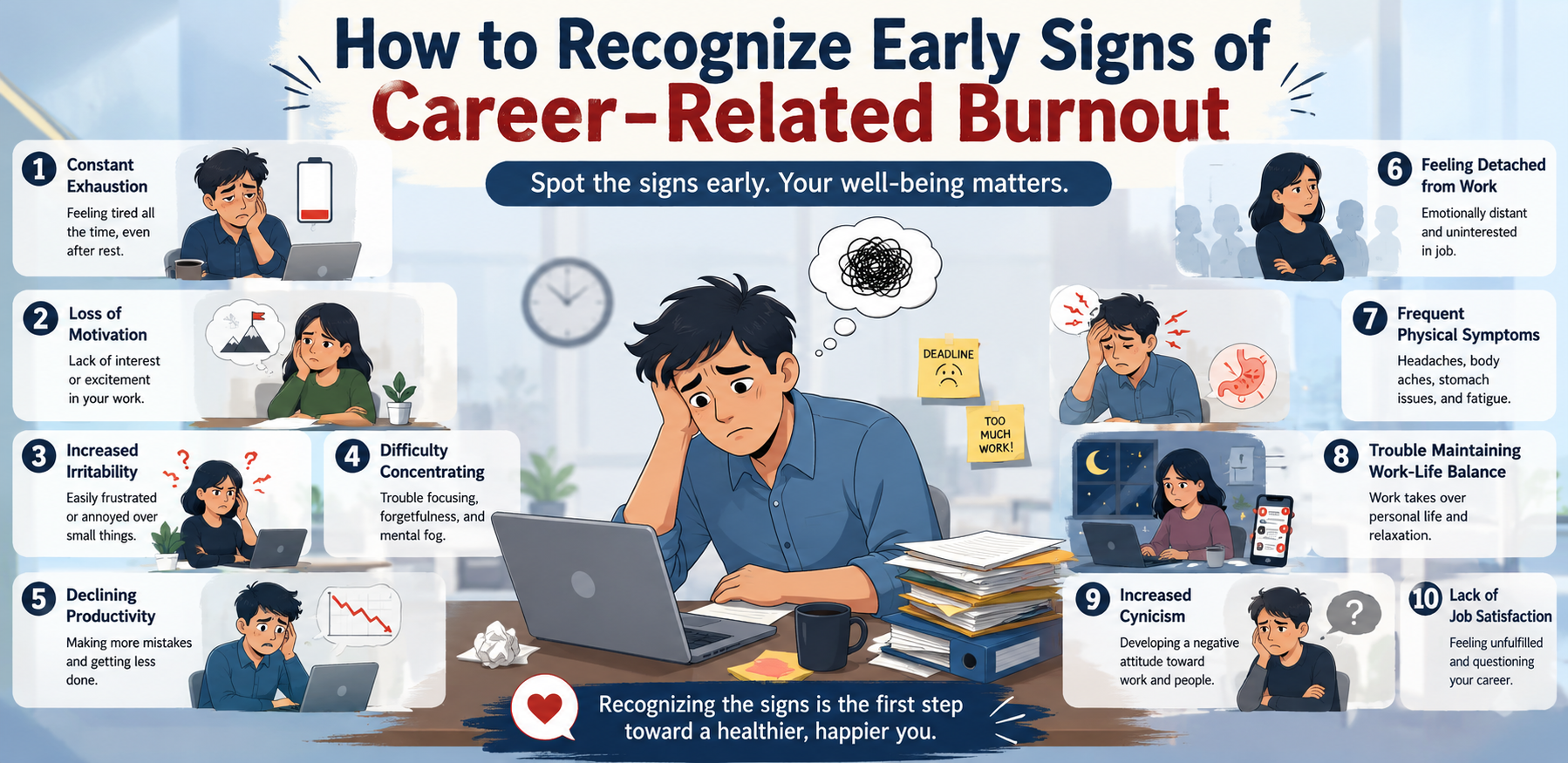
Introduction: Signs of Career-Related Burnout
If you are thinking that you need to change your career direction, then this is a signs of career-related burnout. It is a very big decision because it can change your entire life, and your future depends on it.
There are some common signs of career-related burnout that you need to identify before changing your career direction. If you are feeling those signs, then it can be a career-related burnout. But if you are making this decision in a hurry just because you are facing problems, then it is not the right solution. It may create more problems for you.
In this article, we are going to explore those signs. Read it carefully and notice whether you are experiencing those signs or not.
How to Recognize Early Signs of Career-Related Burnout?
1. You Feel Constantly Drained, Not Just Tired
Every job has problems and pressure, and everyone has to handle it in their own way. This can also cause stress. If you want to change your career just because you are facing a little pressure, then it is not a sign to change your career burnout.
But if you feel exhausted every single day, even after taking proper rest, then it is a serious issue.
Because in this situation, you will not be able to focus on your work or give your best. You may feel burnout, and your health can also get worse. Due to this, you may not be able to grow in your career.
That is why, if you are constantly feeling pressure and stress every day, then you should consider it as career-related burnout.
2. You’ve Lost Interest in Growth
When a person is interested in learning something, they feel excited about new skills, new projects, and growing in their field. This helps them grow and build a strong future.
But if you lose interest in learning anything and you are not willing to grow, then it is a sign that your current career no longer excites you, and you should consider changing it.
3. You Only Work for the Paycheck
Money is important, but if you choose a career only for a high salary, then in the long run you may feel stressed, burnt out, bored, and dissatisfied. That is why you should not choose any career just for money.
However, if you are working in a job only for money and not enjoying it, then your dissatisfaction keeps increasing over time. In that case, it is a career-related burnout because a fulfilling career offers more than just income. It provides growth, learning, and satisfaction.
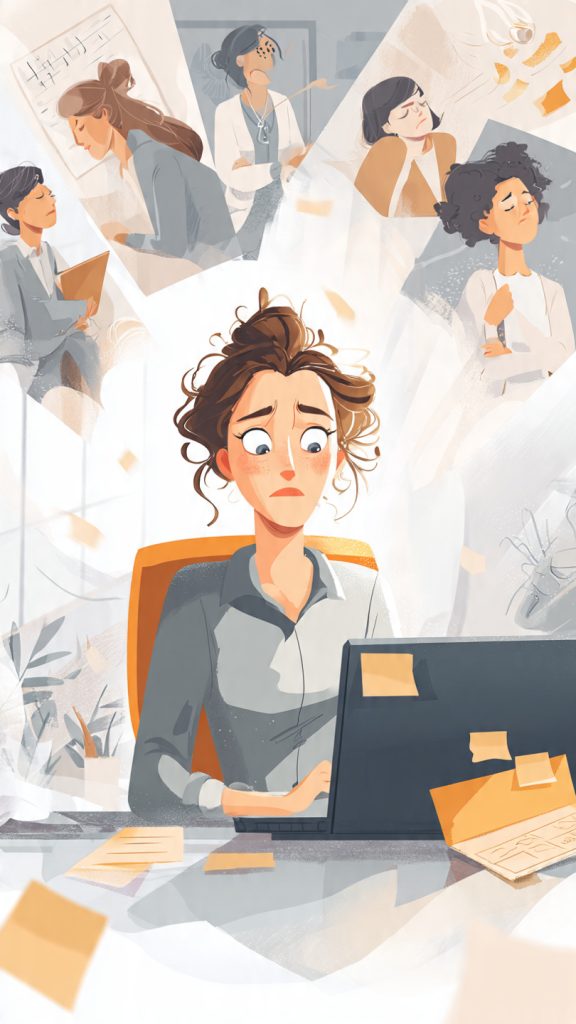
4. You Keep Thinking About “What If”
If you are doing a job but still keep thinking that you could grow more or perform better in some other field, then it can be a strong signal that you are having career-related burnout. This may show that you are not fully focused in your current job and your real interests lie somewhere else.
Repeated thoughts like this usually point toward unmet aspirations. That is why it is important to work in a job or career where you have genuine interest, so you can stay motivated and grow better.
5. Your Skills Are Underutilized
If your skills are underutilized, it means you know you are capable of doing more, but your current job does not give you the chance to use your full potential. Because of this, frustration can increase, your thinking may feel limited, and your focus can also get affected. Over time, this can also impact your confidence and motivation.
If your job or company is not allowing you to use your full potential, then it may be time to consider career-related burnout.
6. Work Feels Meaningless
Feeling that your work is valuable is very important. If your work does not match your personal values, it becomes harder to stay motivated. And when motivation is missing, stress and pressure can increase, and a person may feel burnout.
If your work does not feel meaningful or worth it to you, then it may be better to consider career-related burnout.
Conclusion: Signs of Career-Related Burnout
Career-related burnout rarely happens suddenly. It usually develops over time through ongoing stress, excessive workload, and a lack of proper rest. Paying attention to early warning signs such as constant exhaustion, reduced motivation, difficulty concentrating, irritability, and declining job satisfaction can help you identify burnout before it becomes a serious problem.
“Burnout rarely happens overnight. Recognizing the warning signs early can help you protect your health, performance, and long-term career success with Best Job Tool.”





Leave a Reply