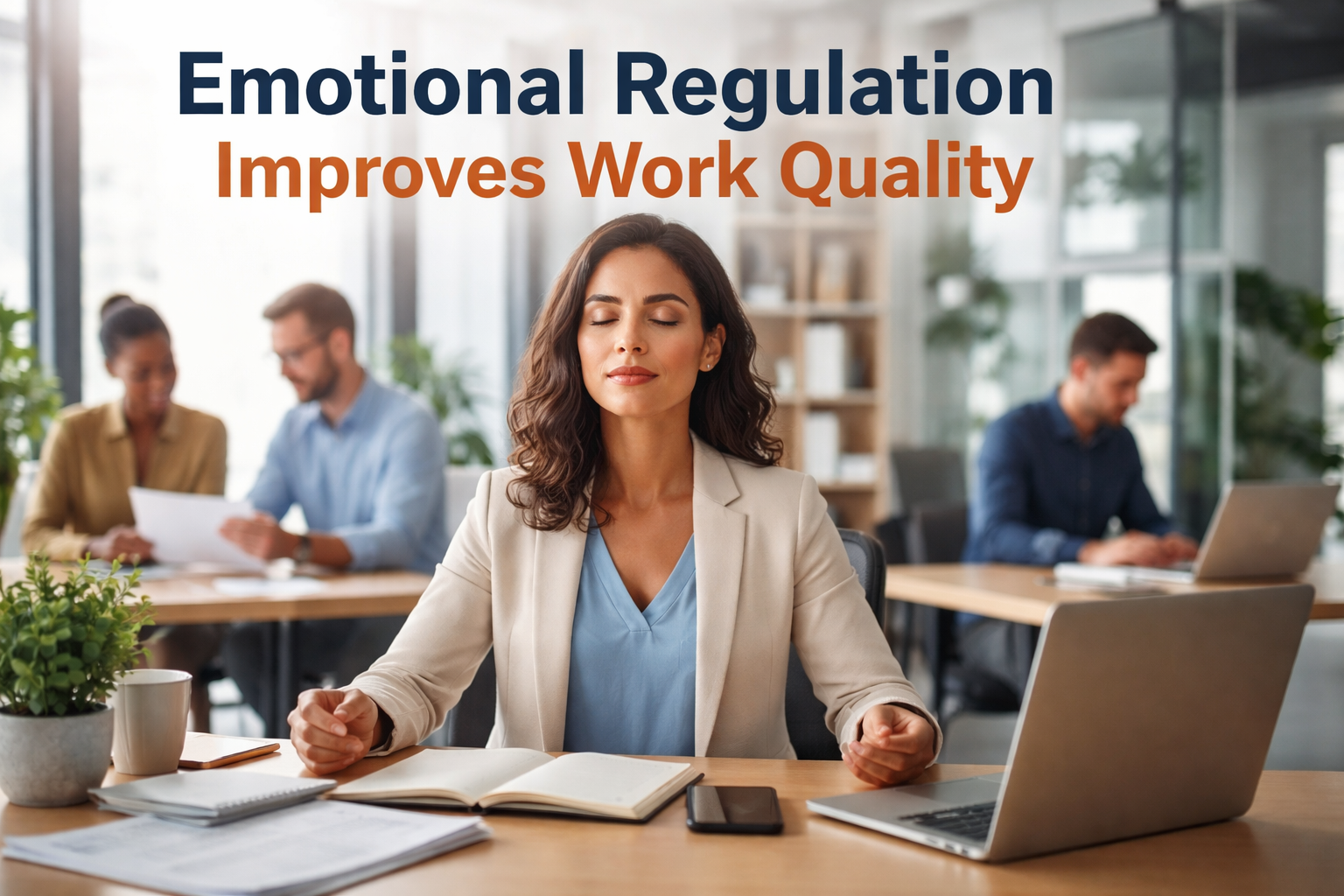
Introduction
In today’s fast-moving world, work is not just about skills, knowledge, or experience. It is also about how well you manage yourself—especially your emotions. Many people focus only on learning technical skills, but they often ignore one powerful ability that directly affects their performance: emotional regulation.
Emotional regulation means understanding your emotions, managing them effectively, and responding to situations in a balanced way instead of reacting impulsively. When you learn how to regulate your emotions, your work quality naturally improves.
Let’s understand this in a simple and practical way.
What Is Emotional Regulation?
Emotional regulation is the ability to:
- Stay calm under pressure
- Handle stress without losing focus
- Control anger, frustration, or anxiety
- Respond thoughtfully instead of reacting instantly
- Maintain consistency in behavior and performance
It does not mean suppressing emotions. It means managing them in a healthy and productive way.
For example, if you receive critical feedback, it helps you stay calm, understand the feedback, and improve your work—instead of getting defensive or upset.
Why Emotional Regulation Matters at Work?
Workplaces are full of challenges:
- Deadlines
- Team conflicts
- Unexpected changes
- High expectations
- Performance pressure
If emotions are not managed properly, even a skilled person can struggle. But when you regulate your emotions, you stay stable, focused, and productive—no matter what situation you face.
Why Emotional Regulation Improves Work Quality?
1. Improves Focus and Concentration
When emotions are out of control, your mind becomes distracted.
For example:
- Stress makes you overthink
- Anger breaks your concentration
- Anxiety reduces clarity
On the other hand, emotional regulation helps you stay mentally clear.
You can:
- Focus on tasks without distractions
- Think logically instead of emotionally
- Complete work faster and more accurately
Better focus automatically leads to better work quality.
2. Emotional Regulation Reduces Mistakes
When emotions take control, people often rush decisions or act impulsively.
Examples:
- Sending emails in anger
- Making decisions without thinking
- Ignoring important details due to stress
Emotional regulation creates a pause between feeling and action. This pause helps you think before you act.
As a result:
- You make fewer errors
- Your decisions become more thoughtful
- Your work becomes more reliable
3. Emotional Regulation Enhances Decision-Making Ability
Good decisions require a calm and clear mind.
When emotions are high:
- Fear leads to avoidance
- Anger leads to aggressive decisions
- Stress leads to confusion
But when you regulate emotions:
- You evaluate situations logically
- You consider long-term outcomes
- You avoid unnecessary risks
This improves not only your work quality but also your professional reputation.
4. Emotional Regulation Improves Communication
Communication is a big part of work quality.
If emotions are not controlled:
- You may speak harshly
- You may misunderstand others
- You may react instead of listening
With emotional regulation:
- You listen carefully
- You respond respectfully
- You express your thoughts clearly
Good communication leads to:
- Better teamwork
- Fewer conflicts
- Stronger professional relationships
5. Emotional Regulation Builds Consistency in Work
One of the biggest problems people face is inconsistency.
Some days they perform well, and some days they don’t. This often happens because emotions are unstable.
Emotional regulation helps you:
- Maintain steady performance
- Stay disciplined even when you don’t feel motivated
- Deliver consistent results
Consistency is a key factor in high-quality work.

6. Helps You Handle Feedback Positively
Feedback is important for growth, but many people struggle with it emotionally.
Without emotional regulation:
- Feedback feels like criticism
- You may feel hurt or defensive
- You may ignore useful suggestions
With:
- You see feedback as an opportunity
- You stay open to learning
- You improve your work based on suggestions
This mindset directly improves your output quality over time.
7. Reduces Stress and Burnout
Uncontrolled emotions increase stress levels.
Over time, this can lead to:
- Mental exhaustion
- Lack of motivation
- Poor performance
Emotional regulation helps you:
- Manage stress effectively
- Stay calm during pressure
- Protect your mental energy
When your mind is relaxed, your work naturally becomes better.
8. Strengthens Problem-Solving Skills
Work problems are common. What matters is how you respond.
If emotions control you:
- You panic
- You avoid problems
- You make quick but poor decisions
If you regulate emotions:
- You stay calm
- You analyze the situation
- You find practical solutions
This leads to higher-quality outcomes and better results.
9. Improves Time Management
Emotions often affect how you manage your time.
For example:
- Stress leads to procrastination
- Anxiety causes overthinking
- Frustration wastes time
Emotional regulation helps you:
- Stay focused on priorities
- Avoid unnecessary delays
- Use time effectively
Better time management means better productivity and better work quality.
10. Builds Professional Image
People are always observing how you behave at work.
If you:
- Lose temper easily
- React emotionally
- Get overwhelmed quickly
It affects your professional image.
But if you:
- Stay calm
- Handle pressure gracefully
- Respond maturely
People start seeing you as:
- Reliable
- Professional
- Leadership material
This not only improves your work quality but also creates more opportunities.
11. Encourages Better Teamwork
Work is rarely done alone. Teamwork is important.
Emotional imbalance can create:
- Conflicts
- Misunderstandings
- Negative environment
Emotional regulation helps you:
- Understand others’ perspectives
- Stay patient
- Resolve conflicts peacefully
A positive team environment improves overall work quality for everyone.
12. Increases Self-Awareness
Emotional regulation starts with self-awareness.
When you understand your emotions:
- You know your triggers
- You recognize your strengths and weaknesses
- You improve your reactions
Self-awareness helps you grow continuously, which directly impacts your work quality.
13. Supports Long-Term Growth
Success is not just about short-term performance. It is about long-term growth.
Without emotional regulation:
- You may give up easily
- You may struggle with challenges
- You may lose motivation
With emotional regulation:
- You stay patient
- You handle failures better
- You keep improving consistently
This leads to sustainable success.
Conclusion
Emotional regulation is not a soft skill—it is a powerful professional skill.
It affects:
- How you think
- How you act
- How you communicate
- How you perform
When you learn to manage your emotions, everything improves:
- Your focus becomes sharper
- Your decisions become better
- Your work becomes more consistent
- Your overall quality increases
In simple words, it turns effort into excellence.
No matter what field you are in, mastering your emotions can take your work quality to the next level.
You can explore more such blogs with the Best Job Tool.





Leave a Reply