Introduction
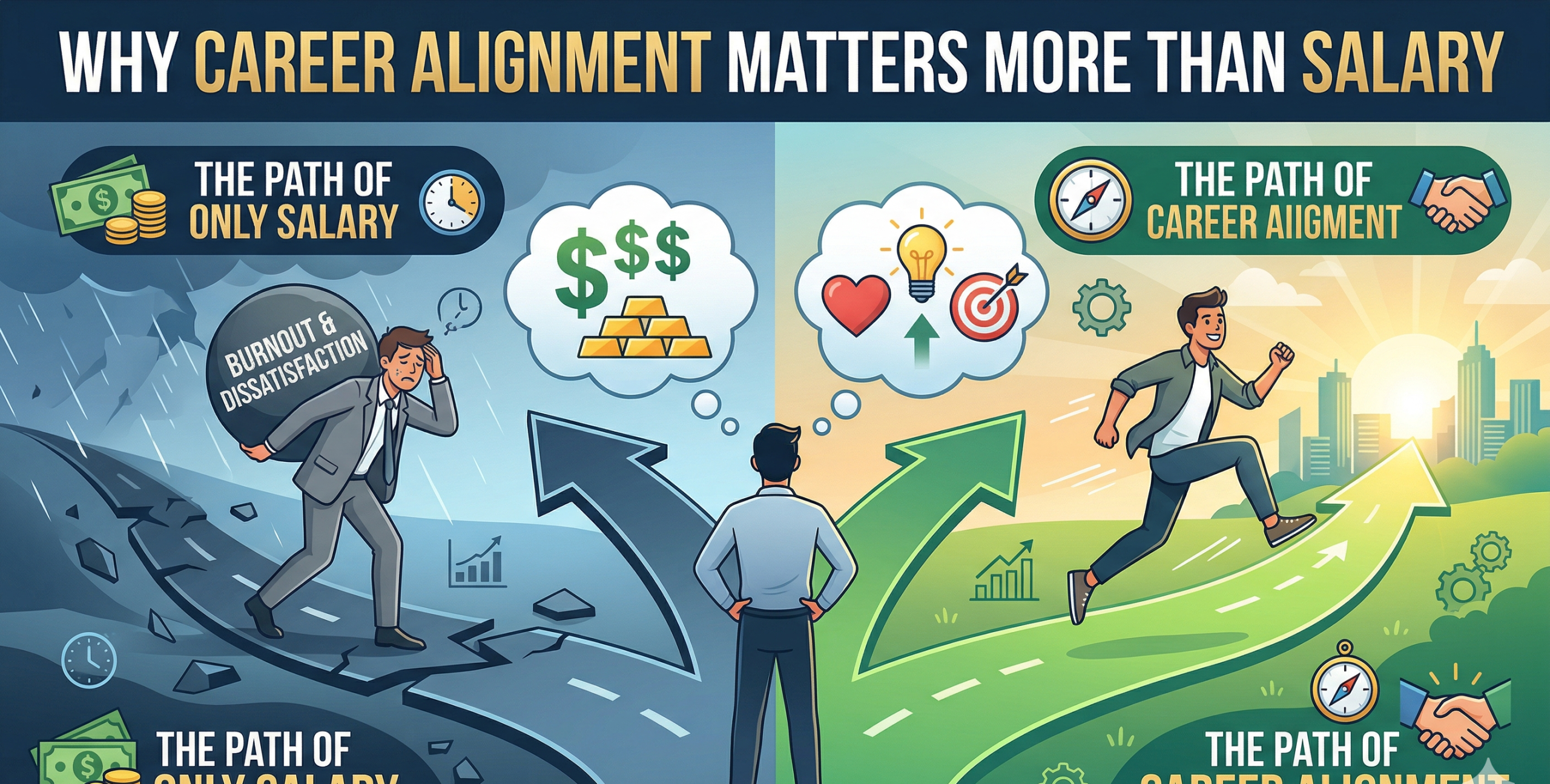
In today’s competitive job market, many professionals prioritize salary when evaluating opportunities. However, long-term success depends on more than financial rewards. Why career alignment matters more than salary is becoming increasingly evident as individuals seek purpose, growth, and fulfillment in their roles. A high-paying job may offer short-term satisfaction, but misalignment with personal goals and values often leads to dissatisfaction over time. Therefore, understanding the importance of alignment can help professionals make better career decisions. Career Alignmen this article explores why aligning your career with your strengths, values, and aspirations plays a more critical role than salary in achieving sustained success and professional satisfaction.
Understanding Career Alignment
Career alignment refers to how well your job matches your skills, values, interests, and long-term goals. When alignment exists, work feels meaningful and engaging. Employees are more motivated and committed to their roles.
On the other hand, a lack of alignment often leads to frustration and disengagement. Even if the salary is attractive, the absence of purpose reduces job satisfaction. Therefore, professionals must evaluate whether their roles align with their personal and professional aspirations.
Moreover, aligned careers create a sense of direction. Individuals understand their growth path and feel more confident in their decisions. This clarity becomes essential for long-term career stability and success.
The Limitations of Salary as a Motivator
Salary is undoubtedly important, but it has limitations as a long-term motivator. Initially, a higher salary can boost satisfaction. However, over time, its impact diminishes.
Many professionals experience burnout despite earning well. This happens because financial rewards cannot replace fulfillment or purpose. Therefore, relying solely on salary often leads to dissatisfaction.
Additionally, salary does not guarantee growth opportunities. A well-paying role may lack learning and development. As a result, professionals may feel stuck in their careers.
Thus, while salary addresses financial needs, it does not fulfill emotional and professional aspirations. This highlights why career alignment matters more than salary in the long run.
Role of Passion and Interest in Career Growth
Passion and interest significantly influence career success. When individuals enjoy their work, they naturally perform better. This leads to increased productivity and innovation.
Aligned careers allow professionals to pursue what they genuinely enjoy. As a result, they remain motivated even during challenges. This consistency contributes to long-term growth.
Moreover, passion-driven individuals continuously seek improvement. They invest time in learning and skill development. Therefore, they often outperform those driven solely by salary.
In contrast, lack of interest leads to disengagement. Even high-paying roles cannot sustain motivation without passion. Hence, alignment with interests plays a crucial role in achieving career success.
How Career Alignment Improves Job Satisfaction
Job satisfaction depends on multiple factors, including work environment, responsibilities, and growth opportunities. However, alignment remains a key contributor.
When roles match personal values and strengths, employees feel fulfilled. They experience a sense of purpose in their work. This leads to higher engagement and satisfaction.
Additionally, aligned professionals are less likely to experience stress. They handle challenges more effectively because they believe in their work.
Furthermore, job satisfaction improves retention. Employees are more likely to stay in roles where they feel aligned. Therefore, organizations also benefit from reduced turnover.
This reinforces the idea that why career alignment matters more than salary is not just a theory but a practical reality.
Impact on Long-Term Career Growth
Career alignment directly influences long-term growth. When individuals work in roles suited to their strengths, they develop expertise faster.
Aligned careers provide clear growth paths. Professionals understand the skills they need to develop. This clarity accelerates career progression.
Moreover, consistent performance builds credibility. Career Alignmen Leaders recognize individuals who deliver reliable results. This increases opportunities for advancement.
In contrast, misaligned roles slow down growth. Professionals struggle to perform consistently. This affects their confidence and career trajectory.Career Alignmen
Therefore, focusing on alignment ensures sustainable growth. It allows individuals to build careers that evolve with their goals and aspirations.
Work-Life Balance and Personal Fulfillment
Work-life balance is another critical factor influenced by career alignment. Roles that align with personal values often offer better flexibility and satisfaction.
When individuals enjoy their work, they experience less stress.Career Alignment: This improves overall well-being. As a result, they can maintain a healthier balance between professional and personal life.
Additionally, aligned careers contribute to personal fulfillment. Individuals feel a sense of achievement and purpose. This enhances overall happiness.
On the contrary, high-paying but misaligned jobs often lead to burnout. Long hours and dissatisfaction negatively impact personal life.
Thus, career alignment plays a vital role in maintaining both professional success and personal well-being.
Decision-Making: Choosing Alignment Over Salary
Making career decisions requires careful evaluation. While salary is important, it should not be the only factor. Professionals must consider alignment with their goals and values.
Before accepting a role, individuals should assess growth opportunities, work culture, and job responsibilities. These factors determine long-term satisfaction.
Additionally, short-term sacrifices in salary may lead to better opportunities in the future. Aligned roles often provide stronger career foundations.
Moreover, informed decisions reduce the risk of frequent job changes. Stability improves both professional growth and personal confidence.
Therefore, choosing alignment over salary is a strategic decision. It ensures long-term success rather than temporary financial gains.
Conclusion
In conclusion, why career alignment matters more than salary is evident in multiple aspects of professional life. While salary fulfills financial needs, alignment drives satisfaction, growth, and long-term success.
Aligned careers enable individuals to perform consistently, stay motivated, and achieve their goals. They also contribute to better work-life balance and personal fulfillment.
Therefore, professionals should prioritize alignment when making career decisions. Evaluating roles beyond salary ensures sustainable growth and satisfaction.
Ultimately, success is not defined by earnings alone. best job tool It is determined by how well your career aligns with your purpose, values, and aspirations. Focusing on alignment leads to a more meaningful and rewarding professional journey.





Leave a Reply