Introduction
In today’s fast-moving job market, new skills and technologies emerge almost every day. Social media, industry reports, and online courses constantly highlight trending skills that promise better career opportunities. However, not every trending skill leads to real career growth. What truly matters is whether a skill aligns with your role, industry, and long-term goals. This is exactly why skill relevance matters more than trends in building a sustainable career.
Chasing trends without context can lead to wasted effort and confusion. Instead, focusing on relevant skills helps professionals create meaningful impact and long-term value.
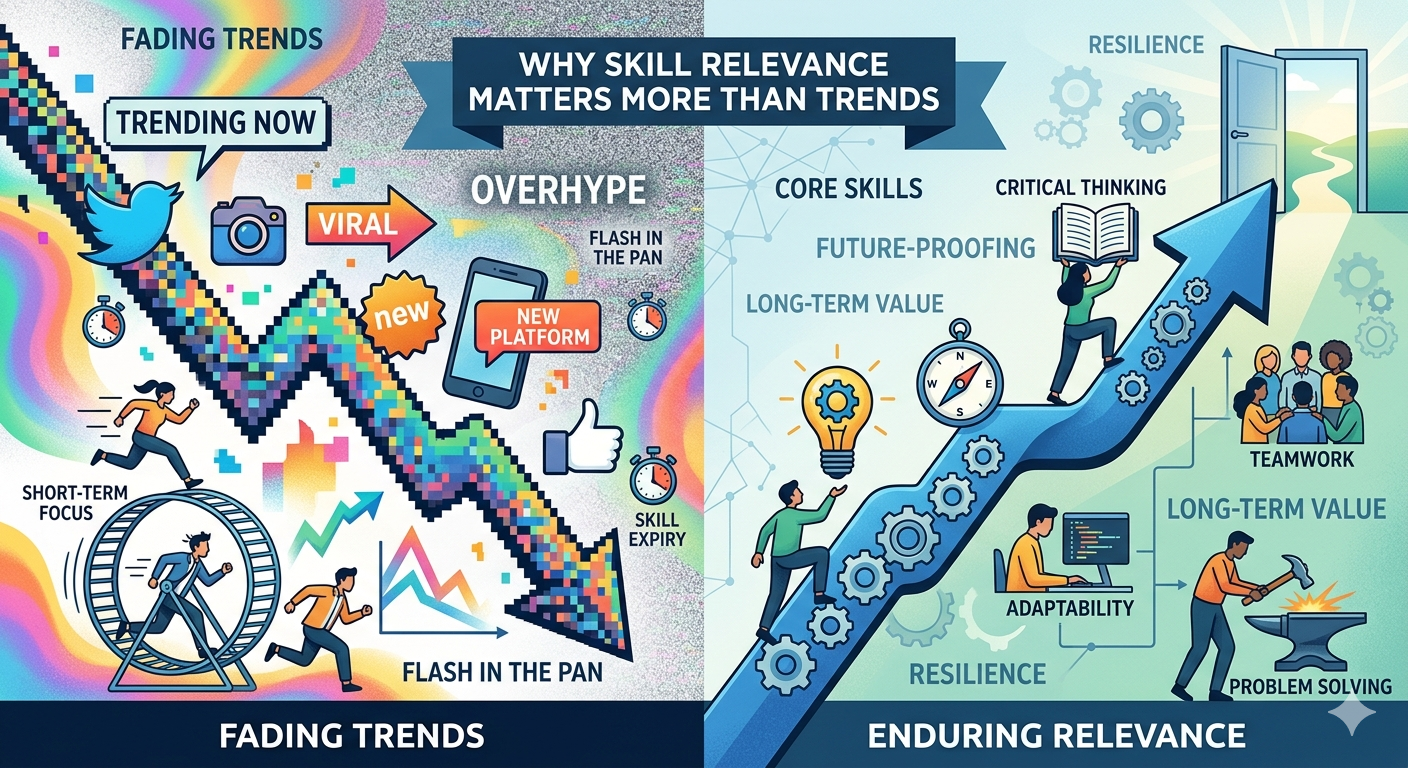
Trends often create short-term excitement
Trending skills usually gain popularity quickly. They appear in job discussions, online platforms, and industry news.
However, many trends fade just as fast. Professionals who invest time only in trending topics may struggle when demand shifts.
Relevant skills, on the other hand, remain valuable because they connect directly to real job requirements.
Relevance aligns with job requirements
Every role has specific skill requirements based on responsibilities and business needs. Employers look for candidates who can solve problems within that role.
When professionals focus on relevant skills, they match job expectations more closely. This increases their chances of getting hired and performing well.
Alignment with role requirements improves career stability.
Depth matters more than surface knowledge
Trending skills often encourage shallow learning. People may learn basic concepts quickly without developing deep expertise.
However, employers value professionals who understand skills in depth. Relevant skills allow individuals to build strong foundations and apply knowledge effectively.
Deep understanding creates long-term professional value.
Industry context determines skill value
Not all skills hold the same importance across industries. A trending skill in one field may have little relevance in another.
For example, a specific analytics tool may be popular in marketing but less useful in finance or operations.
Understanding industry context helps professionals choose skills that truly matter.
Relevance improves practical application
Skills become valuable only when applied in real scenarios. Trending skills may not always fit daily job tasks.
Relevant skills, however, directly contribute to solving real problems. Professionals can use them in projects, decision-making, and execution.
Practical application strengthens professional impact.
Employers prioritize role fit over trends
Hiring managers focus on whether a candidate can perform the job effectively. They rarely select candidates based only on trending skills.
Candidates who demonstrate relevant experience and skills aligned with the role often stand out more.
This is a key reason why skill relevance matters more than trends in hiring decisions.
Learning becomes more efficient
When professionals chase trends, they may jump from one skill to another without clear direction. This leads to fragmented learning.
Focusing on relevant skills creates a structured learning path. Each new skill builds on previous knowledge and supports career goals.
Efficient learning improves long-term growth.
Career growth depends on consistency
Building a career requires consistent progress over time. Trending skills may provide temporary advantages but lack long-term stability.
Relevant skills support continuous growth because they evolve with experience and industry needs.
Consistency leads to stronger career outcomes.
Relevance reduces career confusion
Following trends can create confusion about what to learn next. Professionals may feel uncertain about their direction.
Focusing on relevant skills provides clarity. It helps individuals stay aligned with their goals and avoid unnecessary distractions.
Clear direction improves confidence and decision-making.
Balance between trends and relevance
Trending skills are not completely useless. They can provide insights into industry changes and future opportunities.
However, they should complement relevant skills rather than replace them. Professionals should evaluate whether a trend aligns with their career path before investing time.
Balanced learning ensures both adaptability and stability.
Conclusion
In a rapidly evolving job market, it is easy to get distracted by new and popular skills. However, long-term success depends on choosing skills that align with your role, industry, and goals. That is precisely why skill relevance matters more than trends in building a strong and sustainable career.
Professionals who focus on relevant skills develop deeper expertise, improve job performance, and create lasting value. By combining strategic learning with practical application, they position themselves for consistent growth and better opportunities. To discover roles that align with your skills and career goals, use the best job tool to explore opportunities that truly match your potential.
Find Your Dream Job Today – Explore Endless Career Opportunities and Secure Your Next Role with Best Job Tool.




Leave a Reply