
Introduction: Systems to Keep Learning
If you think that having a job means your career is safe and you don’t need to learn anything new, that is not true. In today’s time, changes are happening very fast—sometimes new technology, sometimes new tools, and sometimes new roles. Because of this, jobs keep changing. If you do not keep learning and stay fixed on old skills, you can become outdated.
That is why continuous learning is very important. But there is one problem—you may face it. When you work a full-time job, your days are busy, so you don’t get time to learn new things.
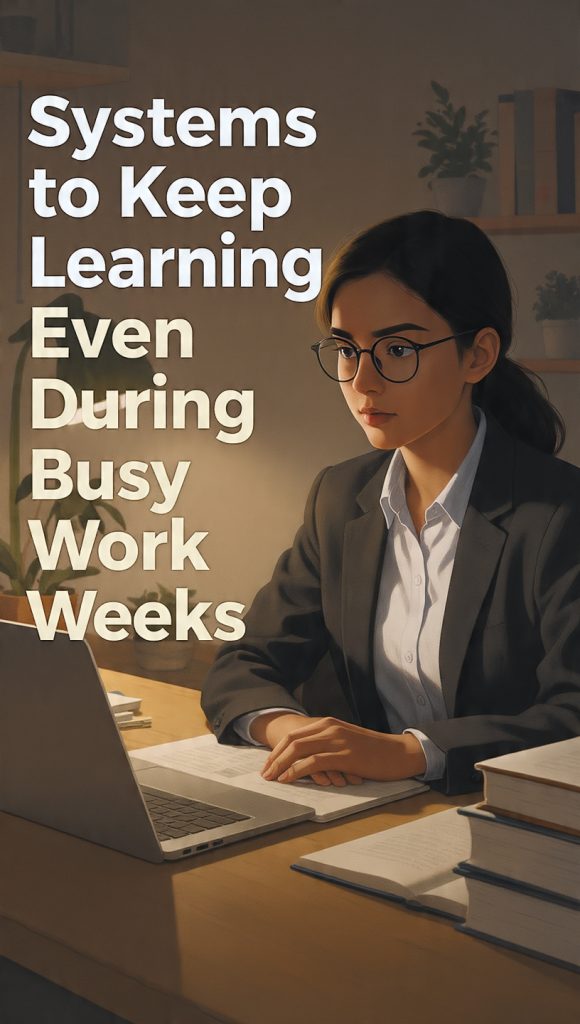
In this article, we will understand systems to keep learning even during busy work weeks.
Systems to Keep Learning Even During Busy Work Weeks
1. Microlearning Rule
If you think that after your full-time job you will do a long learning session every day or take out a lot of time to learn new things, then you may never actually find the time. Long study sessions after a full-time job are difficult because you are already very tired and may not be able to focus properly.
That is why you should break your learning into small parts. Whenever you get a little free time during the day, try to learn something new in that time. For example, during your break time or while commuting, you can watch a 10-minute video to learn a new skill. If you want to read a book, do not try to finish the whole book at once. Instead, read two or three pages every day.
This way, you will not feel burned out, and you will be able to learn new things easily along with your full-time job.
2. “Trigger-Based Learning” Habit
Trigger-based learning is another effective way to keep learning consistently.
Trigger-based learning means connecting learning with a habit that you already do every day. You add a small learning activity after your daily habit. For example, if you drink morning tea every day, then after your tea, make a habit of reading one article daily. Or after lunch, you can watch one short tutorial.
When you connect learning with your daily habits, it becomes easier to stay consistent and remember your learning sessions. It also does not make you feel too much pressure.
3. One-Topic Weekly Focus
Another system for consistent learning is to keep one topic as your weekly focus.
If you try to learn many things at the same time, it can increase pressure, make you confused, and divide your focus. Because of this, you may not learn anything properly. That is why focusing on one topic at a time is the best approach.
Choose one topic for one week and focus only on learning that topic during the week. Then, in the next week, you can choose a different topic. When you divide your learning topics week by week, you feel less pressure and can focus more easily on each topic.
That is why you should pick only one topic for the week and spend 20 to 30 minutes daily learning about it.
4. Audio Learning System
The audio learning system is another good way to learn new things. This system is especially helpful on days when you do not feel like learning anything or when you get bored of repeating the same learning routine.
In such situations, instead of skipping learning, you should switch your learning format. For example, if you usually read a book for 10 minutes after lunch but one day you do not feel like reading, then you can choose another method. You can watch a YouTube video or listen to an audiobook instead.
With these methods, you can continue learning new things easily without skipping your learning sessions.
5. Capture-and-Review Notes System
When you learn something new, you may try to remember every single thing, but this is the wrong approach. If you try to remember everything immediately, it can increase pressure and make learning difficult.
You do not need to remember every detail instantly. Whenever you learn something new or take a learning session, make notes of the important points that you find useful. Then review those notes daily or every two to three days.
This way, you can remember important things more easily, and you will not forget anything because you have already written it down in your notes.
6. “Minimum Viable Learning Day”
Minimum viable learning day means setting a very small learning goal on very busy days.
Sometimes you become very busy and have a lot of work to do. During those days, you may get very little time to learn something extra. But even if you have less time, you should not completely skip learning.
If you usually read a book for 15 minutes every day, then on busy days you can read for just 5 minutes. This way, you will not break your learning habit and you will stay consistent even during busy days.
Conclusion: Systems to Keep Learning
Learning during busy work weeks is possible when you stop depending only on motivation and start creating simple systems. Small daily actions, consistent routines, and realistic goals help you continue growing even when life feels hectic. You do not need perfect schedules or long study hours every day.
Even a few focused minutes can create long-term improvement when repeated consistently. The key is to make learning easy to continue, not difficult to maintain.
“Keep growing even during busy schedules and explore career opportunities on Best Job Tool where continuous learning creates long-term success.”






Leave a Reply