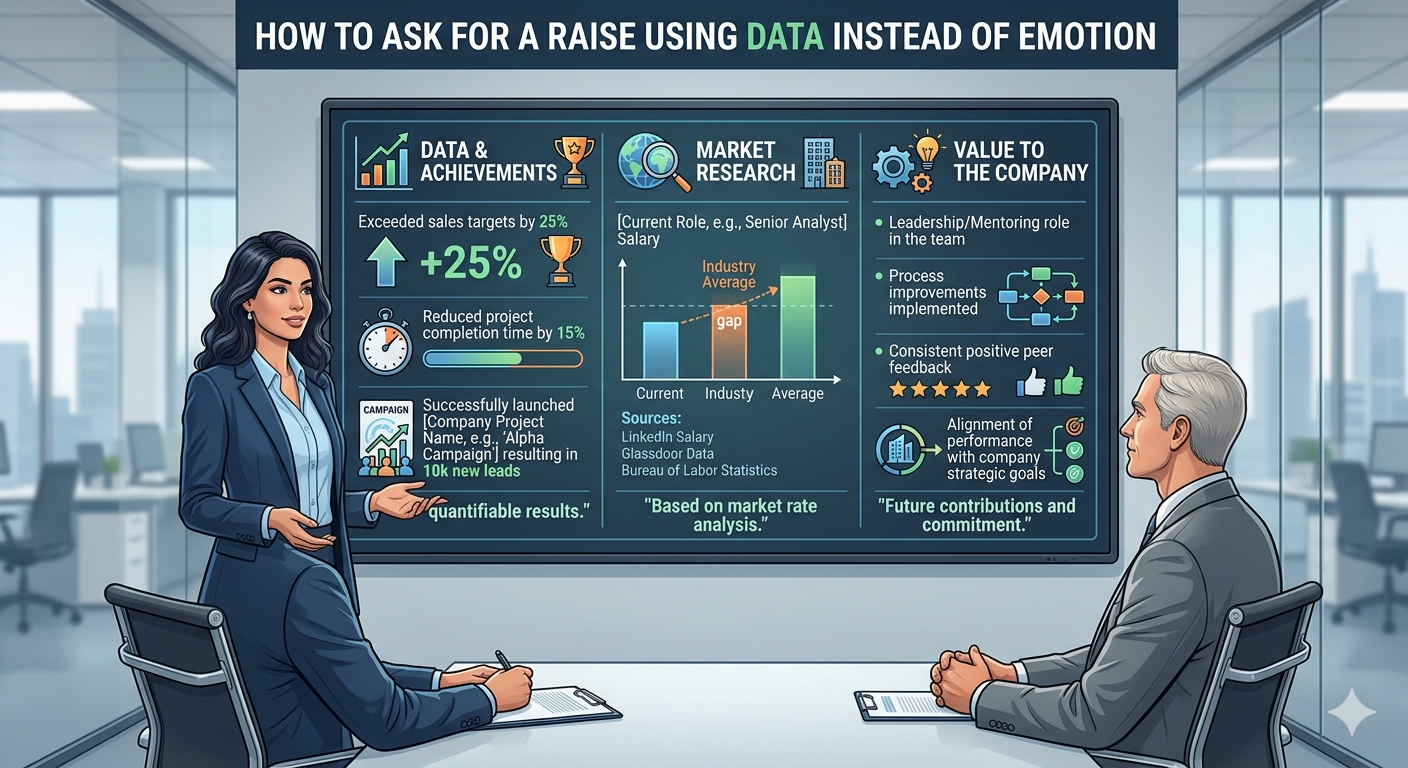
Asking for a raise can feel uncomfortable for many professionals. Data Instead Some employees avoid the conversation completely, while others approach it emotionally and become frustrated when managers do not respond positively. However, salary discussions become far more effective when they are based on measurable results instead of personal feelings.
Employers make compensation decisions using business logic, performance impact, market standards, and measurable contributions. This is why learning how to ask for a raise using data instead of emotion is an essential professional skill.
A data-driven approach helps employees communicate value clearly and professionally. Instead of saying, “I work very hard,” professionals can show actual achievements, business impact, revenue growth, productivity improvements, or leadership contributions.
Using facts and measurable outcomes creates stronger credibility and improves negotiation confidence. It also helps managers justify salary increases internally during approval discussions.
In this blog, we will explore why emotional salary discussions often fail, what data to collect before requesting a raise, how to structure the conversation professionally, common mistakes to avoid, and strategies that improve salary negotiation success.
Why Emotional Salary Discussions Usually Fail
Many employees approach raise discussions emotionally because compensation feels personal. They may talk about stress, financial pressure, personal responsibilities, or frustration about being underpaid.
Although these concerns are understandable, companies usually do not make salary decisions based on emotions alone.
Managers are more likely to respond positively to:
- Measurable performance
- Business contributions
- Increased responsibilities
- Market value data
- Leadership impact
- Productivity improvements
For example, saying:
“I need a raise because expenses are increasing.”
sounds less effective than:
“Over the last year, I increased client retention by 20% and successfully managed three major projects independently.”
The second statement focuses on business value instead of personal circumstances.
Professional salary discussions should remain calm, factual, and solution-oriented. Emotional frustration can reduce confidence and weaken negotiation impact.
Using data helps shift the conversation from personal feelings to professional contributions.
The Importance of Tracking Your Achievements
One of the biggest mistakes employees make is waiting until salary discussions to remember accomplishments. Strong negotiation requires preparation and documentation.
Professionals should regularly track:
- Revenue contributions
- Project results
- Client feedback
- Performance metrics
- Productivity improvements
- Leadership responsibilities
- Team achievements
- Skill development
Keeping a simple achievement record throughout the year makes salary discussions much easier later.
Examples of Valuable Performance Data
- Increased sales by 30%
- Reduced project delivery time
- Improved customer satisfaction scores
- Managed additional responsibilities
- Trained new employees
- Improved social media engagement
- Generated new business leads
Numbers make achievements more credible and easier for managers to evaluate.
Even non-sales roles can use measurable outcomes. For example, writers can track traffic growth, marketers can track conversion improvements, and customer support professionals can track satisfaction ratings.
Clear evidence strengthens negotiation confidence significantly.
How to Research Your Market Value
Before asking for a raise, professionals should understand industry salary standards. Market research helps employees determine whether their compensation aligns with current trends.
Useful salary research sources include:
- Job platforms
- Industry reports
- Professional communities
- LinkedIn salary insights
- Recruiter discussions
- Networking conversations
Market research helps answer important questions:
- What do similar roles pay?
- How valuable are your skills currently?
- Are your responsibilities above your pay grade?
- How competitive is your compensation?
This information helps employees create realistic and informed salary expectations.
For example:
“Based on market research and the expanded responsibilities I’ve taken on, I’d like to discuss aligning my compensation more closely with industry standards.”
This sounds professional and data-driven.
Research also prevents unrealistic salary expectations that may damage negotiations.
Best Time to Ask for a Raise
Timing plays a major role in salary negotiation success. Even strong performance data may not help if the timing is poor.
Good Times to Request a Raise
- After successful project completion
- During performance reviews
- After measurable achievements
- Following expanded responsibilities
- During strong company performance periods
- After positive client or leadership feedback
Avoid asking during:
- Company financial struggles
- Organizational layoffs
- High-stress periods
- Immediately after mistakes
- Random emotional moments
Managers respond better when discussions happen professionally and strategically.
Planning the conversation carefully increases confidence and improves the likelihood of productive outcomes.
How to Structure the Raise Conversation
Salary discussions should remain organized and professional. Rambling explanations or emotional comparisons can weaken your position.
Simple Structure for Raise Discussions
- Express appreciation
- Highlight contributions
- Present measurable results
- Discuss market alignment
- Request salary review professionally
Example:
“Over the past year, I’ve taken on additional project responsibilities, improved campaign performance by 25%, and consistently met key deadlines. Based on these contributions and current market standards, I’d appreciate the opportunity to discuss a compensation adjustment.”
This sounds confident without becoming demanding.
Professional structure helps managers understand your reasoning clearly.
It also demonstrates preparation and maturity.
Common Mistakes Employees Should Avoid
Many professionals unintentionally weaken salary discussions through poor communication habits.
Common Raise Negotiation Mistakes
- Comparing yourself negatively to coworkers
- Using emotional pressure
- Threatening resignation immediately
- Arriving unprepared
- Asking without evidence
- Sounding defensive
- Focusing only on personal expenses
For example:
“I deserve more because I’ve worked here for years.”
This sounds weaker than discussing measurable contributions.
Another mistake is waiting too long to discuss career growth. Employees should communicate career goals regularly instead of only during frustration.
Professional confidence comes from preparation and clarity, not emotional intensity.
How Managers Typically Evaluate Raise Requests
Understanding the manager’s perspective helps employees communicate more effectively.
Managers often evaluate:
- Employee performance
- Business impact
- Reliability
- Leadership potential
- Team contribution
- Market competitiveness
- Budget availability
Even supportive managers may need approval from higher leadership or HR departments.
This is why documented evidence matters. Strong data helps managers justify compensation increases internally.
Employees should also understand that not every raise discussion leads to immediate approval. Sometimes companies need time for budgeting or performance cycles.
If a raise cannot happen immediately, employees can ask:
- What goals should I achieve for future salary growth?
- What timeline should we revisit this discussion?
- Are there alternative benefits available?
Keeping the conversation collaborative improves long-term career relationships.
Alternatives to Salary Increases
Sometimes companies genuinely cannot increase salaries immediately. In these situations, professionals can negotiate alternative benefits.
Negotiable Alternatives
- Flexible schedules
- Remote work options
- Performance bonuses
- Additional leave days
- Learning budgets
- Leadership opportunities
- Promotion pathways
- Equipment support
These benefits can still improve career satisfaction and work-life balance significantly.
Professionals who remain flexible during discussions often create stronger long-term opportunities.
Negotiation is not only about money. It is also about career development, growth, and sustainability.
How Confidence Impacts Salary Negotiations
Confidence strongly affects salary discussions. Employees who communicate clearly and professionally are often perceived as more prepared and credible.
Confidence does not mean aggression. It means:
- Speaking calmly
- Using evidence
- Maintaining professionalism
- Understanding personal value
- Staying solution-focused
Preparation naturally improves confidence. Employees who know their achievements and market value usually communicate more effectively.
Practicing conversations beforehand can also reduce nervousness significantly.
Strong negotiation skills often improve other professional communication areas as well, including leadership, networking, and project discussions.
Conclusion
Learning how to ask for a raise using data instead of emotion can improve salary negotiation success significantly. Employers respond more positively to measurable contributions, business impact, and professional communication than emotional frustration or personal financial concerns.
Tracking achievements, researching market value, preparing strong examples, and choosing the right timing all help create stronger and more productive discussions. Data-driven communication builds credibility and demonstrates professional maturity.
Salary negotiations should feel collaborative rather than confrontational. Employees who remain calm, confident, and solution-focused often create better long-term career opportunities.
Even when immediate salary increases are not possible, professional best job tool discussions can open doors to future promotions, flexibility, bonuses, or growth opportunities.
Career success depends not only on hard work but also on the ability to communicate value effectively. Professionals who understand their impact and present it clearly are often better positioned for long-term financial and professional growth.


Leave a Reply