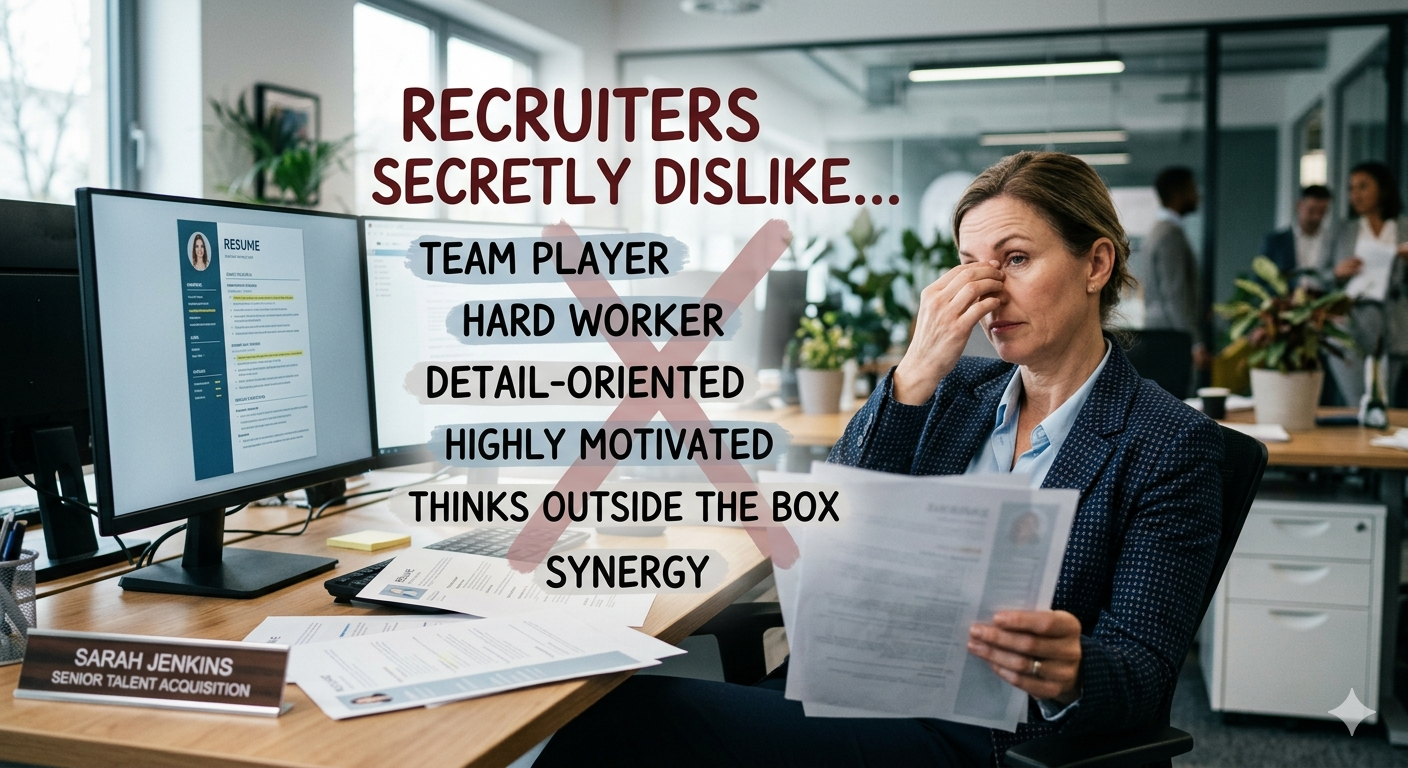
A resume is often the first impression a recruiter has of a candidate. Within just a few seconds, hiring managers decide whether a resume feels relevant, professional, and Common Resume worth further attention. Because of this, the language used in resumes matters more than many job seekers realize.
One of the biggest mistakes candidates make is relying on overused resume phrases and generic buzzwords. These expressions may sound professional initially, but recruiters see them so frequently that they often lose meaning completely.
Learning which common resume phrases recruiters secretly dislike can help candidates create stronger, more authentic resumes that stand out in competitive job markets.
Recruiters prefer resumes that show measurable achievements, clear communication, and real impact instead of vague claims. Strong resumes focus on evidence and outcomes rather than empty descriptions.
In this blog, we will explore the most overused resume phrases, why recruiters dislike them, how they weaken applications, and what candidates should use instead.
Why Generic Resume Language Hurts Your Chances
Recruiters review hundreds of resumes regularly. Because of this, they quickly notice repetitive language and vague statements.
Generic phrases often fail because they:
- Lack measurable proof
- Sound copied from templates
- Do not show real skills
- Reduce authenticity
- Waste valuable resume space
For example, almost every candidate claims to be:
- Hardworking
- Team-oriented
- Motivated
- Detail-oriented
- Results-driven
When everyone uses the same descriptions, these phrases stop adding value.
Recruiters are more interested in evidence than adjectives. Instead of saying you are “hardworking,” showing project achievements or measurable outcomes communicates much stronger credibility.
Strong resumes focus on actions, impact, Common Resume and results.
“Hardworking” and “Dedicated”
These are among the most common resume phrases recruiters see.
While positive, these words are too vague because they provide no proof.
Instead of writing:
- “Hardworking marketing professional”
Write:
- “Managed social media campaigns that increased engagement by 40%.”
The second example demonstrates effort through measurable outcomes instead of empty claims.
Recruiters trust evidence more than self-description.
Showing accomplishments automatically communicates dedication without needing to say it directly.
“Team Player”
“Team player” is another extremely Common Resume overused phrase. Almost every professional role involves teamwork in some form, so recruiters expect collaboration naturally.
Instead of simply saying:
- “Excellent team player”
Show collaboration through examples:
- “Collaborated with cross-functional teams to launch a product campaign ahead of schedule.”
This provides context and demonstrates actual teamwork experience.
Specific examples create stronger credibility than generic personality labels.
“Results-Driven”
Many resumes use the phrase “results-driven,” but very few explain the actual results achieved.
Recruiters often ignore this phrase unless measurable outcomes support it.
Weak version:
- “Results-driven sales professional.”
Strong version:
- “Exceeded quarterly sales targets by 25% for three consecutive quarters.”
The second statement proves performance clearly.
Whenever possible, resumes should include:
- Percentages
- Revenue numbers
- Growth metrics
- Project outcomes
- Time improvements
Numbers immediately strengthen credibility.
“Excellent Communication Skills”
Almost every resume includes communication claims. However, recruiters prefer proof instead of broad statements.
Instead of writing:
- “Strong communication skills”
Use examples like:
- “Presented weekly campaign performance reports to senior leadership.”
- “Managed client communication across multiple international projects.”
These statements demonstrate communication ability naturally.
Strong resumes show skills through responsibilities and achievements instead of listing soft skills separately.
“Responsible For”
“Responsible for” is one of the weakest phrases in resume writing because it focuses on duties instead of impact.
Recruiters care more about contributions and results.
Weak example:
- “Responsible for managing social media accounts.”
Better example:
- “Managed social media accounts that grew audience engagement by 60% within six months.”
Action-oriented language feels more professional and energetic.
Strong action verbs improve readability significantly.
Better Alternatives to “Responsible For”
- Managed
- Led
- Coordinated
- Developed
- Improved
- Implemented
- Increased
- Delivered
These words create stronger impact immediately.
“Fast Learner”
Many candidates describe themselves as fast learners, especially beginners and students.
While adaptability is valuable, recruiters prefer evidence.
Instead of saying:
- “Fast learner with strong adaptability.”
Show learning through experience:
- “Learned SEO tools independently and applied strategies that improved website traffic.”
This demonstrates initiative and learning ability naturally.
Practical examples always feel more believable than self-proclaimed traits.
“Self-Motivated”
“Self-motivated” sounds positive but often lacks substance without supporting achievements.
Recruiters want to see initiative demonstrated through actions.
Better examples include:
- “Built freelance client portfolio independently.”
- “Created and managed personal content projects alongside full-time work.”
- “Completed advanced certifications while managing full-time responsibilities.”
These examples show motivation through measurable effort.
Real experiences communicate professionalism more effectively than buzzwords.
“Detail-Oriented”
Another extremely common phrase recruiters see repeatedly is “detail-oriented.”
Although attention to detail matters, candidates should demonstrate it through accomplishments instead of stating it directly.
For example:
- “Reduced reporting errors by implementing improved quality-check processes.”
This demonstrates precision and attention naturally.
Recruiters trust examples far more than generic personality descriptions.
Why Recruiters Prefer Simplicity and Clarity
Many candidates try to sound impressive by using corporate buzzwords and complicated language. However, recruiters usually prefer simple and clear communication.
Overly formal or exaggerated phrases can make resumes feel artificial.
Resume Writing Should Focus On
- Clarity
- Measurable impact
- Readability
- Simplicity
- Relevance
- Results
Short and direct statements are easier to scan quickly.
Recruiters often spend only a few seconds reviewing resumes initially, so concise wording improves visibility.
Strong resumes communicate value immediately without unnecessary filler.
How to Replace Weak Resume Phrases
The best way to improve resumes is replacing vague statements with evidence-based achievements.
Weak vs Strong Resume Examples
Weak:
- “Hardworking customer support representative.”
Strong:
- “Resolved over 95% of customer inquiries within target response times.”
Weak:
- “Excellent leadership skills.”
Strong:
- “Led a team of five designers during successful product launch campaigns.”
Weak:
- “Results-oriented professional.”
Strong:
- “Increased email marketing conversion rates by 22%.”
Results-focused writing creates stronger professional impressions.
The Importance of ATS-Friendly Resume Writing
Modern hiring processes often use Applicant Tracking Systems (ATS) to scan resumes automatically.
While buzzwords alone do not improve ATS performance, relevant keywords connected to real experience can help.
Candidates should focus on:
- Relevant skills
- Industry terminology
- Job-specific keywords
- Measurable accomplishments
For example, instead of writing generic terms like “dynamic professional,” use role-specific skills such as:
- SEO optimization
- Project management
- Data analysis
- Content strategy
- Customer relationship management
Specificity improves both ATS compatibility and recruiter engagement.
How Authenticity Helps Resumes Stand Out
Authenticity has become increasingly important in modern hiring. Recruiters appreciate resumes that feel genuine and focused on real contributions.
Candidates do not need exaggerated language to appear impressive.
Strong resumes usually:
- Focus on impact
- Use simple language
- Include measurable achievements
- Highlight relevant skills
- Avoid unnecessary buzzwords
Honest and clear communication creates stronger trust during hiring processes.
Candidates who present achievements naturally often appear more confident and credible.
Conclusion
Understanding the common resume phrases recruiters secretly dislike can help job seekers create stronger and more effective applications. Overused buzzwords such as “hardworking,” “team player,” “results-driven,” and “self-motivated” often fail because they lack measurable proof and authenticity.
Recruiters prefer resumes that demonstrate skills through accomplishments, metrics, and real examples instead of vague self-descriptions. Action-oriented language and measurable outcomes create stronger credibility and improve readability significantly.
Simple and clear communication is far more powerful best job tool than complicated corporate wording. Candidates who focus on impact, relevance, and results often stand out more effectively in competitive job markets.
A strong resume should quickly answer an important question: What value can this candidate bring to the company?
By replacing weak resume phrases with real achievements and evidence-based statements, professionals can improve recruiter interest, ATS performance, and interview opportunities. Small wording changes can create a major difference in how resumes are perceived.




Leave a Reply