Introduction: Business Decisions
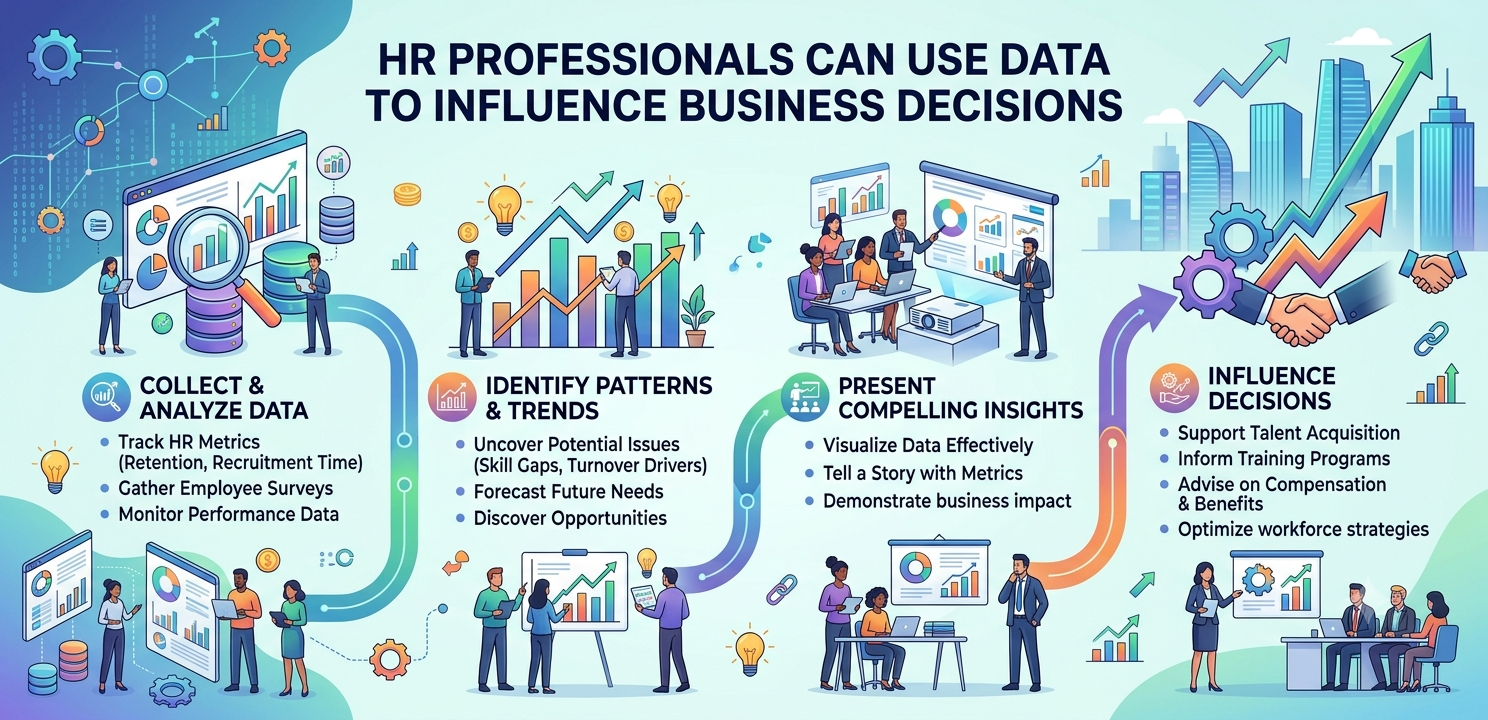
Human resources management is no longer just another department that deals with recruitment, attendance, and internal issues. Modern HR practices play a vital role in influencing business decisions. Thus, the ability of HR professionals to leverage data to affect business choices is one of their most important qualities.
How HR Professionals Can Use Data To Influence Business Decisions?
1. Start With Good Questions About the Business Needs
HR professionals need to make sure that the questions they ask about the workforce and business needs actually matter.
For example, if the organization experiences a high turnover rate, it is important to look at the issue from various angles. HR professionals may ponder whether salaries are too low, the management practices are inappropriate, or the workload is too taxing.
They may go as far as asking the employees who leave the company for feedback. Instead of simply notifying the management that the rate at which employees are departing is high, HR professionals can present them with relevant information and influence their business decisions.
2. Use Employee Turnover Data to Help Predict Future Business Needs
One of the most important ways in which HR professionals can influence business decisions is by analyzing employee turnover and retention data.
For example, they can review the pertinent statistics and see whether certain departments have higher turnover rates than others, compare figures across different positions, and do a close analysis of voluntary and involuntary separations. If the Human Resource Management department identifies the primary cause of high turnover, they can help the company leadership make informed business decisions. For instance, if they learn that the high turnover rate is related to the compensation and benefits package, they may recommend its adjustment.
3. Make Better Recruitment Decisions
HR professionals can utilize recruitment data to help the company make better business decisions. They can analyze such recruitment figures as cost per hire, time to fill vacancies, the number of applications, and the ratio of interviewing candidates to making job offers.
For instance, HR professionals may find that one online job board yields great results, whereas others are virtually useless. They may advise the company to reallocate funds and invest more in the most effective job board. At the same time, recruiters can examine which sources of job applicants result in longer retention and better work performance.
4. Link HR Practices and Business Outcomes Through Relevant Data
HR professionals can influence business decisions by linking business outcomes to human resource practices.
For instance, instead of tracking how many employees graduate from a particular training course, Human Resource Management professionals can analyze the effect of these courses on work performance, productivity, sales, and customer satisfaction. They may go as far as developing recommendations for action based on the outcomes of their analysis.
By linking training, engagement, and retention, HR professionals can help company executives see how employee engagement drives revenues. The same approach can be applied to such issues as workforce diversity, employee retention, and engagement.
5. Make Sound Decisions About Workforce Costs
Since workforce costs comprise the largest portion of any company’s expenses, the Human Resource Management department must influence business decisions regarding this area.
HR professionals can analyze compensation and other costs related to the workforce, namely, overtime, benefits, recruitment, and absenteeism. By analyzing this data, HR professionals can offer the company executive management credible recommendations.
For instance, if overtime turns out to be too costly, the Human Resource Management department may suggest hiring more employees instead of allowing the existing ones to work overtime. Using data about the workforce and related costs, HR professionals can influence business decisions and make their company more competitive.
6. Make More Informed Decisions About Workforce Planning
When a company’s growth strategy, technological development, and new product or service offerings, demand new skill sets, HR professionals can aid the company leadership in making informed decisions about their workforce needs.
Human Resource Management professionals can analyze the current state of the workforce, identify gaps, and determine the company’s future staffing requirements. The department may find that the company will need more specialists in a given area or that it can utilize certain skills from its current workforce to achieve its goals. The ability to analyze and predict future staffing needs allows an HR department to influence business decisions and make this vital contribution to their company’s success.
Conclusion: Business Decisions
Data gives HR professionals the credibility that they need to impact business processes. Not only do they have information about their company’s workforce, but they also realize how their own department fits within the company. They can utilize this knowledge to influence business decisions, as evidenced by their ability to make recommendations regarding employee recruitment, retention, engagement, cost management, and workforce planning.
The future of human resource management is about making informed business decisions through data. In essence, the ability of HR professionals to leverage data to affect business decisions is what makes them essential to their company or organization’s success.
Ready to turn HR data into smarter business decisions? Use the right tools to analyze workforce trends, measure performance, and make confident, data-driven choices. Explore Best Job Tool to discover opportunities, build your professional skills, and take the next step in your career.

Leave a Reply