Introduction: Legal Tech
The legal industry is undergoing a significant transformation driven by technology. Law firms, courts, corporations and government agencies are turning to digital solutions to better organize, manage and analyze documents, contracts, legal research, compliance and clients. As a result, there are now new career opportunities for lawyers, as well as experts in technology, business, finance, data and communication.
Careers in Legal Tech for non-lawyers are on the rise as many of these technology-driven roles do not necessarily require a Juris Doctor degree
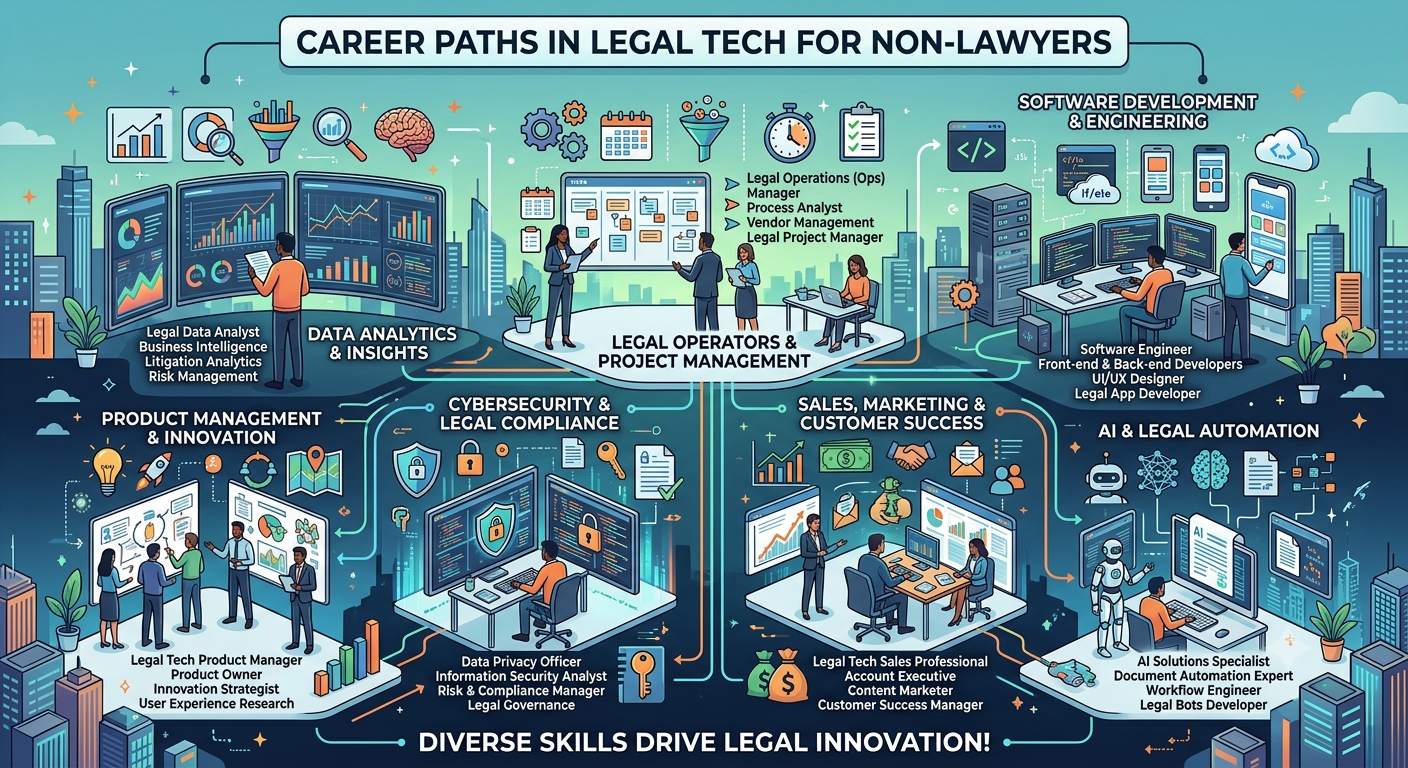
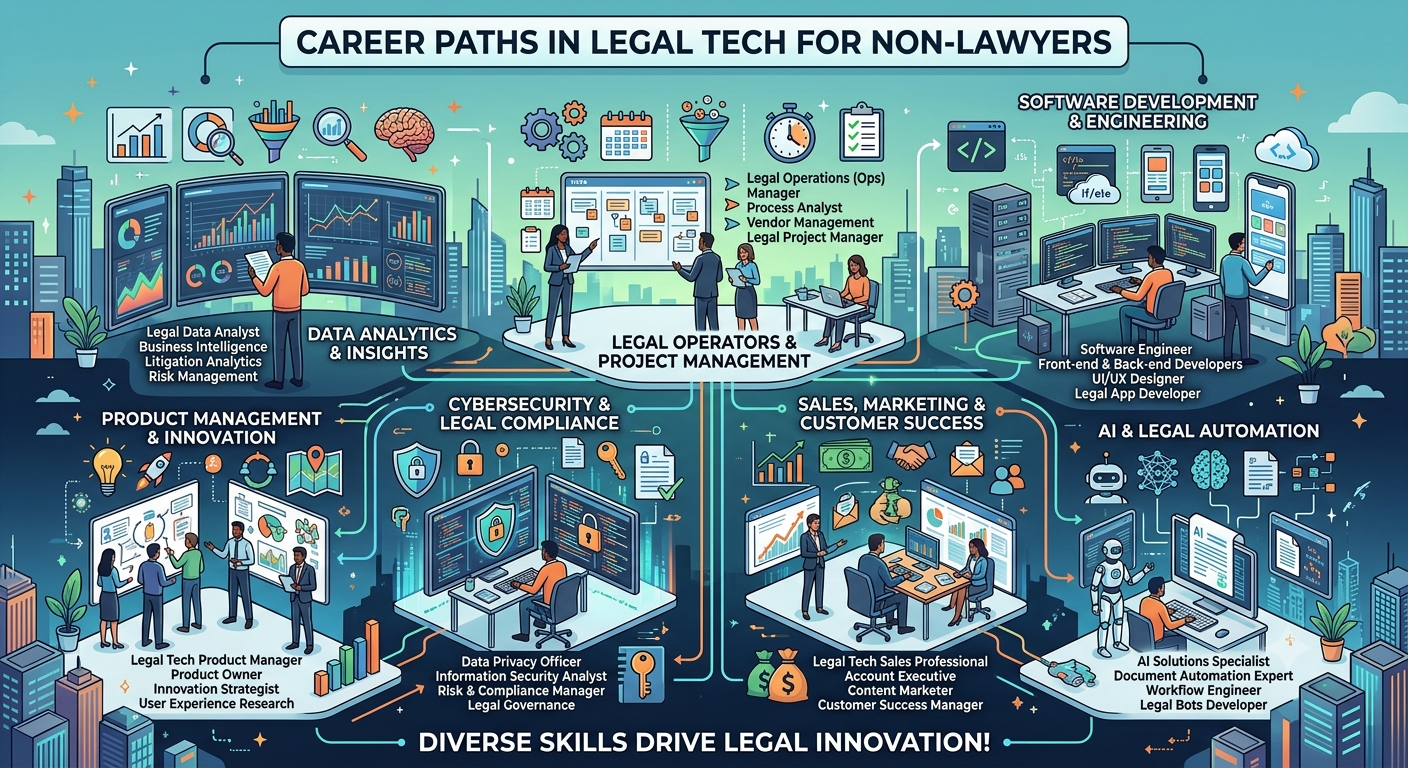
Career Paths in Legal Tech for Non-Lawyers
1. Legal Tech Product
One of the most sought-after legal tech careers is product management. Legal tech firms and law tech startups hire product managers to design and develop products that address the legal industry’s needs.
Individuals with business, technology or management backgrounds can join the legal industry as product managers. In this role, one would be responsible for defining product requirements, overseeing research and development, working with engineers to design legal tech solutions, and managing customer feedback, among other duties.
While anyone can join the legal tech space without a JD degree, product managers need to understand the basics of the law and how technology can be leveraged to improve the practice of law.
2. Legal Operations
The emergence of legal tech solutions has led to the rise of legal operations – a function that focuses on helping legal professionals streamline and optimize their operations.
Legal operations managers and specialists typically handle matters such as budget analysis, process improvement, software selection, vendor management and business intelligence, among others.
This career path is a good fit for individuals with business and operational management backgrounds.
A legal operations manager, for instance, could determine the most suitable contract management technology solution based on a company’s requirements and industry. They might also help to implement and deploy such systems within the organization.
3. Legal Tech Implementation Specialist
Law firms and corporations always require assistance when adopting new software and technologies. Implementation specialists are professionals who handle the onboarding, setup, configuration and support of potential users of a technology product. They usually work directly with customers to install and customize the new system according to the end-user’s specifications and support them throughout the transition process.
Implementation roles in legal tech often require customer success, sales or technical backgrounds. Some tech skills and excellent communication abilities are usually advantageous in this specialty.
4. Compliance Technology
Legal departments and law firms are under increasing pressure to ensure they remain compliant with the ever-changing legal, regulatory and internal policies. As a result, technology is being leveraged to help with tasks such as monitoring, evaluating and analyzing compliance needs within an organization.
Careers related to compliance technology utilize technology to automate compliance processes, identify gaps and vulnerabilities, and ensure organizations meet the highest standards of governance. Some of the key areas within compliance technology include compliance operations, risk management and regulatory technology (RegTech).
Careers in compliance tech are a good fit for lawyers with experience in compliance, legal operations and governance, as well as non-lawyers with finance, technology or data analysis backgrounds.
Although compliance officers and analysts usually do not deal with intricate legal issues, they need to have a good grasp of the fundamental compliance concepts and how technology can be used to support these functions.
5. Skills Needed
Anyone interested in building a career in this should start by studying the fundamentals of the legal practice. It is important to understand the basic legal terminology as well as how the legal institutions work.
Individuals should also consider developing technical skills, including proficiency in various electronic tools. Technology has changed the legal industry forever and legal professionals, including paralegals, must have the skills to use these solutions.
Professionals also need excellent communication skills, including the ability to present information and recommendations in a manner that is easy to understand by lawyers. Problem-solving, research, data analysis, presentation, organization and attention to detail are some of the other soft skills that would be useful in this field.
Conclusion: Legal Tech
Legal technology is a rapidly growing field that is full of exciting career opportunities. Although most tech careers in the legal space do not require law degrees, they do need people with a blend of technical know-how, operational, business and legal experience to fill specialty roles. Any individual with an interest in operations, data analysis, finance, sales, project management, and technology can join the legal industry and contribute towards the much-needed digital transformation in the sector.
Ready to explore a career in legal tech without a law degree? Identify your transferable skills, explore roles in legal operations, compliance, legal technology, and AI, and start building the right expertise for your target role. Use Best Job Tool to discover relevant job opportunities, understand employer requirements, and take the next step toward a career in legal tech.




Leave a Reply