Introduction: Rebuilt My Career
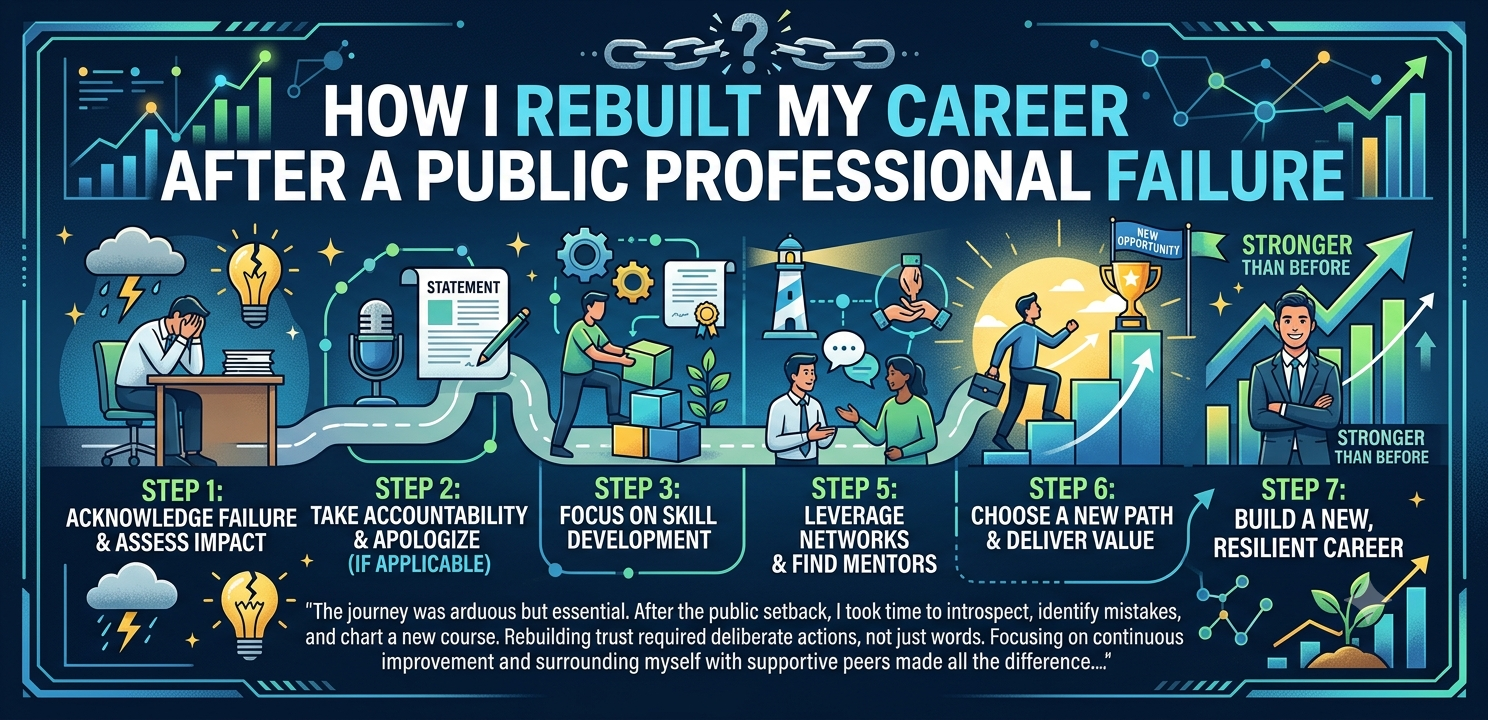
A professional failure that occurs in front of other people may be much more difficult to overcome compared to a private mistake. A mistake on the job may break your confidence, make you doubt your skills and cause you to fear new opportunities. How I rebuilt my career after a public professional failure is the story about overcoming professional failure, learning from it and rebuilding my self-confidence.
How I Rebuilt My Career After a Public Professional Failure Essay?
1. Accepting What Happened
The first step of rebuilding my career after the failure was accepting the fact that there was a failure. My initial reaction to the whole situation was explaining how unfair the situation was and what others were responsible for the mistake. However, spending too much time on justifying the mistake and blaming others did not help me at all.
I forced myself to admit what exactly went wrong and what I could have done differently. Asked myself a number of questions concerning the situation and my role in it. I was not trying to find an excuse but to understand the situation clearly. And I realized that my career was not over because of one mistake.
2. Understanding the Difference Between Failure and Identity
After accepting my role in the situation, I had to understand the difference between failure and identity. I was not a failure as a person or a professional just because one project failed or one deal fell apart. A company may fail, relationships may be broken off, a business plan may be rejected, a client may walk away or a promotion may be denied. All those situations do not define me as a failure.
Treating this incident as a valuable experience from my career helped me realize that I am not defined by it. I started asking myself not what is wrong with me but rather what should I do differently in the future.
3. Taking Responsibility
Once I understood the difference between failure and identity, I had to accept responsibility for what had occurred. I did not explain the situation and justify myself to others but I also did not make it the centre of my universe. I realized that I should not be preoccupied with explaining what happened, but rather start focusing on my next career steps.
When I was approached on the topic of the failure, I could clearly and concisely explain what occurred, what I realized and what I would do differently in the future. For instance, I should not blame the project’s failure on the lack of management support that I received but rather accept that I made wrong assumptions and decisions.
4. Rebuilding My Skills
I realized that I would need to rebuild my skills if I wanted to regain my lost confidence. I made a list of all the skills that I needed to be better at in order to move forward. My list included communication skills, planning and presenting skills, and decision-making skills among others.
I started focusing on a few necessary skills that I truly enjoyed learning. Took the time to study and prepare myself for the future challenges. I was able to show myself that I had improved considerably by taking online courses and practicing regularly. I realized that the more I was learning and practicing, the more confident I became.
5. Starting With Small Opportunities
After rebuilding my skills, I needed to start looking for new opportunities. It is not impossible to move forward right away after a professional failure. There is nothing wrong about starting with small opportunities that allow you to demonstrate your abilities without risking too much. I was willing to take on small tasks, deliver them with quality, be attentive to details, and meet deadlines. All those things helped me realize that I was truly capable of demonstrating my abilities once again.
6. Repairing Professional Relationships
My experience also taught me that those who matter to me would want me to move forward and succeed just as much as I do. My colleagues, business contacts, and other people I met on my way were concerned with what happened and wanted me to be alright. I did not believe that I should rush into repairing the relationships but I tried to be attentive to those around me.
Started behaving professionally by maintaining a good correspondence, meeting all obligations, and asking for advice from people I respect. I realized that I could regain trust and respect from others by being a mature professional.
Conclusion: Rebuilt My Career
Rebuilding a career after a public professional failure takes time, self-awareness, and consistent effort. A setback may affect your confidence and reputation, but it does not have to define your entire career. By acknowledging what went wrong, learning from the experience, rebuilding professional relationships, and focusing on meaningful progress, you can gradually regain trust and create new opportunities.
The goal is not to erase the failure but to use it as a turning point that helps you become more prepared, resilient, and intentional about your future career.
A career setback does not have to define your professional future. Learn from your experience, rebuild your confidence, and take practical steps toward your next opportunity. Use the Best Job Tool platform to explore relevant job opportunities, strengthen your job search, and move forward with a clearer career strategy.

Leave a Reply