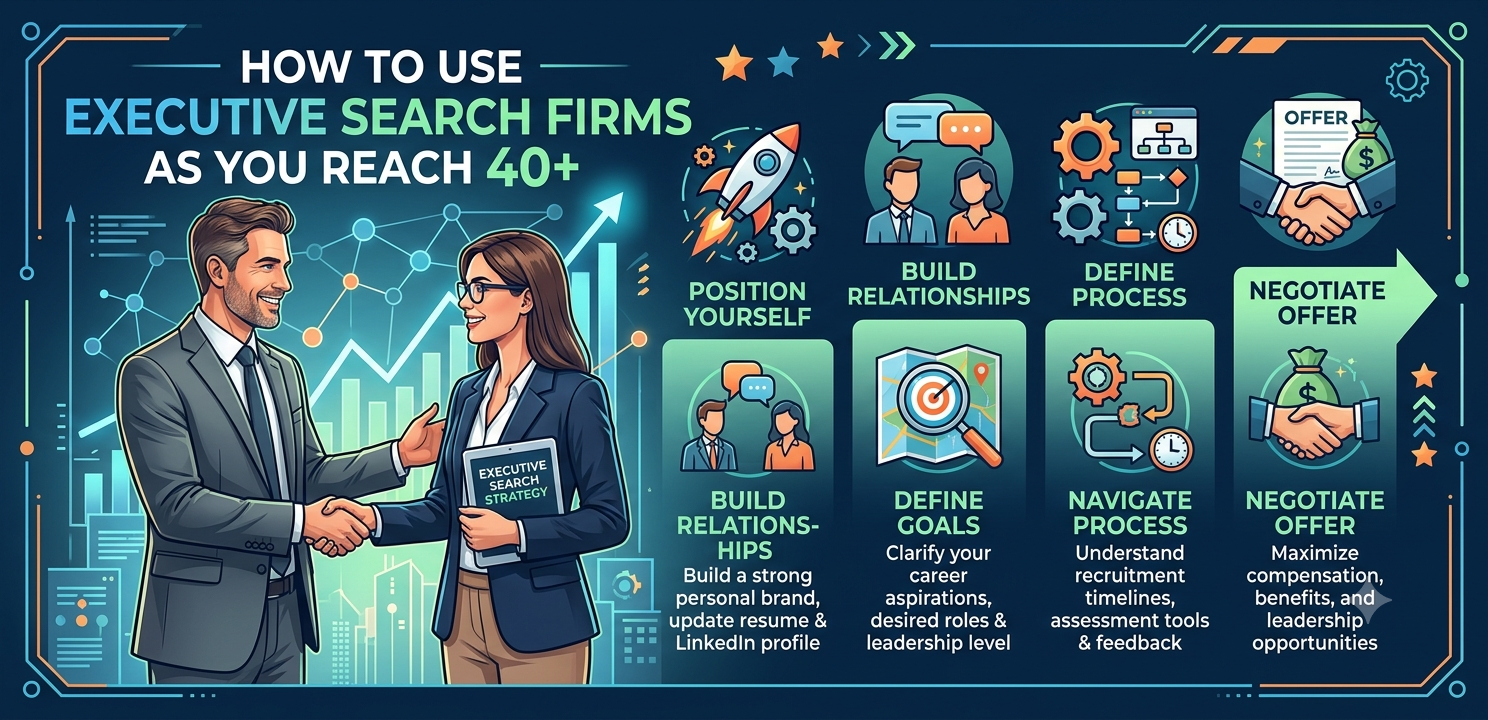
Introduction: Executive Search Firms
Job hunting after the age of 40 is not the same as it was in your 20s or early 30s. People typically have many years of valuable experience at this stage in their careers. They are also usually much clearer on what they want in terms of where they want to be professionally. On the other hand, jobs at the senior level are notoriously difficult to find because many of them are not advertised.
This is where executive search firms come in. Executive search firms, sometimes called headhunters, help companies fill hard-to-cast positions by finding the best specialists. The following guide will assist you in learning how to use executive search firms effectively after 40 to land a well-paying senior position.
How to Use Executive Search Firms as You Reach 40?
1. Understand What Executive Search Firms Do
Unlike more traditional recruitment agencies, executive search firms help fill hard-to-cast managerial, director-level, specialist, and executive positions. Often, you can get noticed by the right people even if you did not apply for a specific posting.
Recruiters at executive search firms usually represent the company that is hiring, not the candidate. That is why it is so important to take the conversation seriously and know that you will only be recommended for a position if the recruiter thinks you fit the brief.
2. Choose the Right Search Firms
Do not waste your time contacting every single search agency in your area. Try to narrow the list to those firms that specialize in placing people in the industry, function, and level you are targeting.
For example, if you are a finance professional, look for agencies that specialize in filling senior finance and accounting positions. If you are a tech professional, look for agencies that work with tech companies and have experience filling technology director roles.
Visit the websites of these firms and see if they have the right briefs for you. You may also want to research the professionals who work at these agencies and their backgrounds. In many cases, a small agency with a specialization can be a better fit than a large general agency.
3. Update Your Resume
Your resume should highlight not your daily tasks but the impact you have had in the roles you held. At this level, most people have a similar set of responsibilities. However, recruiters will be more interested in seeing your value and influence.
For instance, instead of stating that you managed a team, write that you have led a team of XX professionals and describe what they accomplished. Instead of stating that you handled business operations, look to quantify the impact you made, unless such information is confidential.
Remember that the resume should be focused, not generic. You do not need to list every single thing you did in your career; highlight the relevant skills and experience. This way, it will be easier for recruiters to shortlist your application.
4. Improve Your LinkedIn Profile
Most recruiters and headhunters use professional social networks to identify potential candidates. That is why it is so important to optimize your LinkedIn profile in a way that it will get you noticed. First, write a good headline that communicates who and what you are. Then, describe your experience briefly in the About section.
Make sure to highlight the major accomplishments, areas of expertise, any certifications, and relevant skills. If you have experience across different industries and functions, try to show how these areas overlap. This way, recruiters will better understand the value of your background.
5. Build a Relationship With Recruiters
Many candidates make the mistake of contacting recruiters only when they need a job urgently. Instead, you should invest time in cultivating professional relationships with recruiters at agencies that specialize in the area you want to move into.
Write a short introduction, talk a bit about your background, and attach your resume and LinkedIn profile. If the recruiter does not have an urgent need for someone with your background, they will keep your application on file. You can then follow up every few months to let the recruiter know what projects you have been working on.
The more you network with recruiters, the more they will know about you. This way, you will not have to explain everything from scratch every time a new opportunity opens up.
6. Be Clear About Your Career Goals
It is important to understand what you want at this stage in your career. You need to narrow your search to specific industries, titles, company sizes, locations, salaries, and other factors. It is good to let recruiters know what you are looking for so that they can advise you on the best opportunities.
Remember that just because a company offers a senior-level position, it does not mean it is the right fit for you. At the same time, you should be realistic about your goals and what you are willing to compromise on.
Conclusion: Executive Search Firms
Finding work after the age of 40 requires a different approach to the job-hunting process. You need to focus on finding the right executive recruitment agencies, updating your resume and LinkedIn profile, and building lasting relationships with recruiters. This way, you will maximize your chances of being considered for senior roles, even if they are unadvertised.
Ready to take the next step in your career? Use executive search firms strategically as you approach 40, and explore the Best Job Tool platform to discover relevant opportunities, strengthen your job search, and connect with roles that match your experience.



Leave a Reply