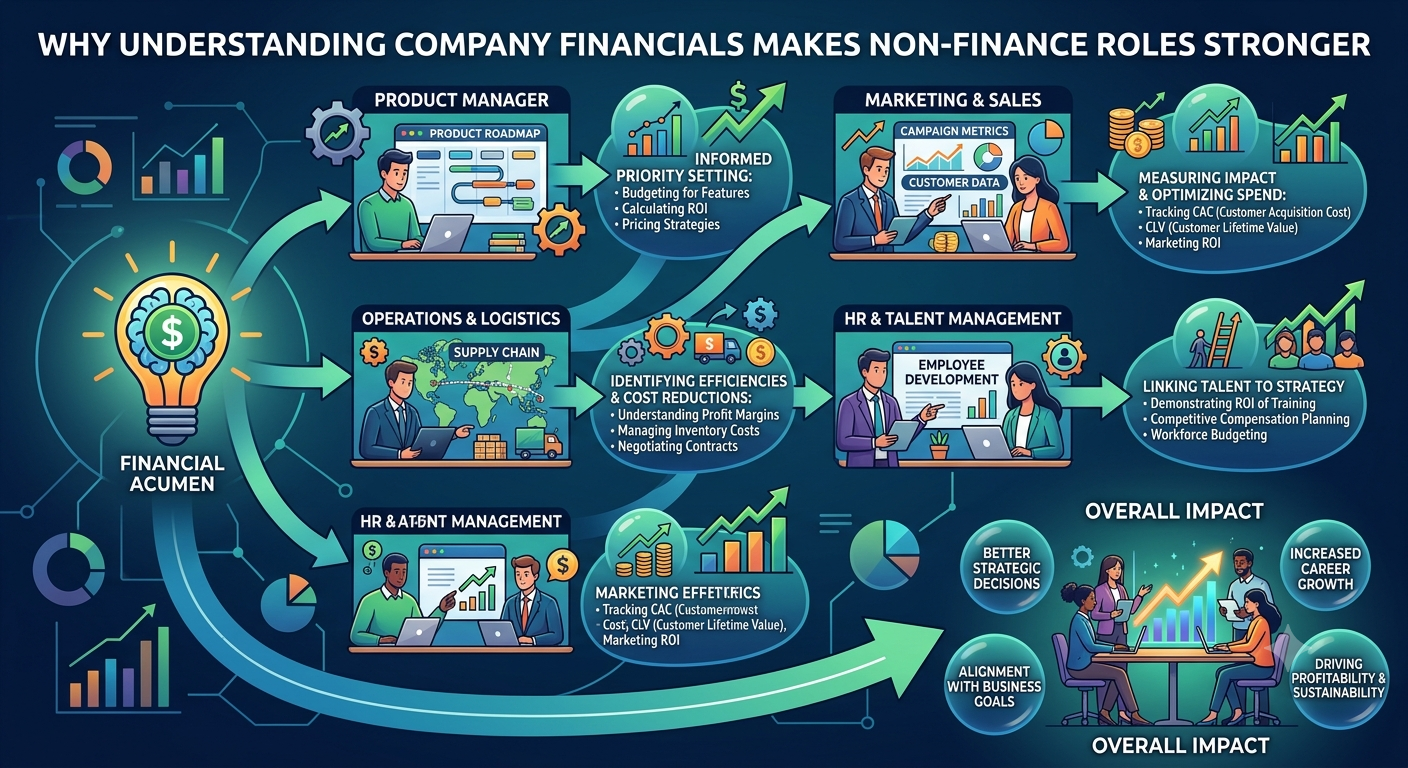
Introduction: Understanding Company Financials
Many professionals believe that financial knowledge is only necessary for accountants, finance managers, or business analysts. However, financial awareness can benefit employees in almost every department. Whether you work in marketing, human resources, sales, operations, technology, or customer service, understanding how a company makes and spends money can help you make better professional decisions. Understanding Company Financials can help employees see how their daily responsibilities contribute to revenue, expenses, and overall business performance. A basic understanding of a company’s finance can help employees see how their daily responsibilities affect revenue, expenses, and overall business performance.
Why Understanding Company Financials Matters?
Understanding Company Financials is an important part of developing business awareness, even for professionals who do not work in finance. It is an important question for modern professionals because businesses increasingly expect employees to understand how their work contributes to overall performance.It an important question for modern professionals because businesses increasingly expect employees to understand how their work contributes to overall performance. You do not need to become a financial expert, but knowing basic financial concepts can make you more confident, strategic, and valuable at work.
1. It Helps You Understand How the Business Works
Every company has a financial structure. It earns revenue, pays expenses, invests in resources, manages cash flow, and aims to generate sustainable profits.
Employees who understand these basics can see the bigger picture behind their daily responsibilities. For example, a marketing professional may understand that increasing website traffic is useful, but generating qualified leads and revenue is ultimately more important.
Similarly, an HR professional can recognize why reducing employee turnover matters financially. Replacing employees requires recruitment, training, and onboarding costs. Understanding financials helps employees connect everyday activities with business outcomes. Understanding Company Financials allows employees to connect their daily responsibilities with the company’s financial performance and long-term goals. When employees understand a company’s finance, they can better recognize the connection between business activities, financial performance, and long-term growth.
2. It Improves Decision-Making
Professionals make decisions every day. They may decide which project to prioritize, which software to purchase, how much time to spend on a task, or whether a new initiative is worth pursuing. Financial knowledge provides another perspective when making these decisions.
For example, suppose a team wants to introduce a new software tool. Instead of simply asking whether the software has useful features, an employee with financial awareness may also consider its cost, expected benefits, productivity gains, and potential return on investment. This approach encourages more practical and business-focused decisions.
3. It Makes You Better at Budget Management
Budgeting is not limited to the finance department. Many employees manage departmental budgets, project expenses, advertising spending, travel costs, or technology investments. Understanding basic financial concepts can help professionals use these resources responsibly.
For instance, a marketing employee who understands a campaign budget can make better decisions about advertising channels. An operations manager can compare supplier costs and identify unnecessary expenses. A team leader can determine whether additional resources are justified by the expected results.
Financial awareness encourages employees to treat company resources as valuable assets rather than unlimited funds. Understanding a company’s finance also helps employees make more responsible choices when managing budgets and business resources. Understanding Company Financials also helps employees make better decisions when managing budgets and using business resources.
4. It Strengthens Communication With Leadership
Senior leaders frequently discuss revenue, costs, profitability, margins, budgets, cash flow, and business performance. Employees who understand these terms can participate more confidently in strategic conversations.
Instead of presenting an idea only from a departmental perspective, they can explain how it could affect the company’s financial performance. For example, rather than saying, “This project will improve customer satisfaction,” an employee might explain that better customer satisfaction could increase retention and potentially reduce customer acquisition costs.
This type of communication demonstrates business awareness and can help employees build credibility with managers and executives. Knowledge of a company’s finance allows employees to discuss ideas in terms of costs, benefits, risks, and potential business value.
5. It Helps You Measure the Impact of Your Work
One of the biggest advantages of financial knowledge is that it encourages professionals to think beyond activity and focus on results. Completing tasks does not always mean creating value. A social media manager may publish hundreds of posts, but the more important questions are whether those posts increase engagement, generate leads, strengthen the brand, or contribute to sales.
Similarly, an HR team may organize training programs, but it can also examine whether those programs improve productivity, employee retention, or performance. Financial understanding helps employees identify measurable outcomes and explain why their work matters.
6. It Makes Career Growth Easier
Employees who understand both their professional specialty and the business side of an organization can become stronger candidates for leadership positions. Managers need more than technical expertise. They need to understand budgets, resources, risks, priorities, and business objectives.
A professional who combines functional knowledge with financial awareness may therefore be better prepared to take responsibility for larger projects and teams. For example, a future marketing manager needs to understand more than content and advertising. They may also need to manage campaign budgets, evaluate returns, and justify spending decisions to senior management. Financial knowledge can become an important part of leadership development.
7. It Helps You Understand Company Performance
Company financial statements can provide useful information about organizational health. Employees do not necessarily need to analyze every financial statement in detail. However, learning the basics of an income statement, balance sheet, and cash flow statement can help them understand how a business is performing.
Revenue can show how much money a company generates. By learning the basics of a company’s finance, employees can better understand why management makes certain financial and strategic decisions. Expenses indicate where money is being spent. Profit provides insight into whether the company is financially successful, while cash flow shows how money moves through the organization.
This knowledge can help employees understand why companies sometimes reduce costs, delay investments, change strategies, or restructure teams.
8. It Encourages a Business-Oriented Mindset
Financial awareness changes the way professionals think about their roles. Instead of asking only, “What is my responsibility?” employees can begin asking, “How does my responsibility contribute to the company’s goals?”
This shift can encourage greater ownership and accountability. For example, a customer service professional may recognize that resolving customer problems quickly can improve satisfaction and retention. An IT professional may understand that preventing system downtime protects productivity and revenue. When employees understand the financial consequences of their work, they are more likely to think strategically.
9. You Do Not Need to Become a Finance Expert
Learning about company financials does not mean becoming an accountant. Understanding Company Financials does not require advanced accounting skills; basic knowledge can still improve workplace decision-making. Learning about a company’s finance does not require advanced accounting knowledge; even basic financial awareness can improve workplace decision-making. Non-finance professionals can start with basic concepts such as revenue, expenses, profit, margins, cash flow, budgets, return on investment, and operating costs.
They can also ask finance colleagues questions, attend internal business meetings, read company reports, and learn how their department’s performance affects financial results. Even a basic understanding can make a significant difference.
Conclusion: Understanding Company Financials
Financial knowledge is becoming increasingly valuable across modern workplaces. Professionals in non-finance roles can use it to make smarter decisions, manage resources, communicate effectively, measure results, and prepare for leadership opportunities.
Ultimately, Why Understanding Company Financials Makes Non-Finance Roles Stronger comes down to one simple idea: employees become more effective when they understand not only what they do, but also how their work contributes to the success of the entire business.
Understanding Company Financials can give non-finance professionals a clearer view of business priorities and help them contribute more effectively to organizational success You do not need advanced financial expertise to develop this ability. Start by learning the basic financial terms, understanding your company’s goals, and connecting your daily work with measurable business outcomes.
Understanding a company’s finance can give non-finance professionals a clearer view of business priorities and help them contribute more effectively to organizational success. Over time, this knowledge can strengthen both your professional performance and your long-term career prospects.
Ready to strengthen your career beyond your core job skills? Explore the Best Job Tools to improve your professional skills, make smarter career decisions, and stay prepared for new opportunities. Start building your business and financial awareness today





Leave a Reply