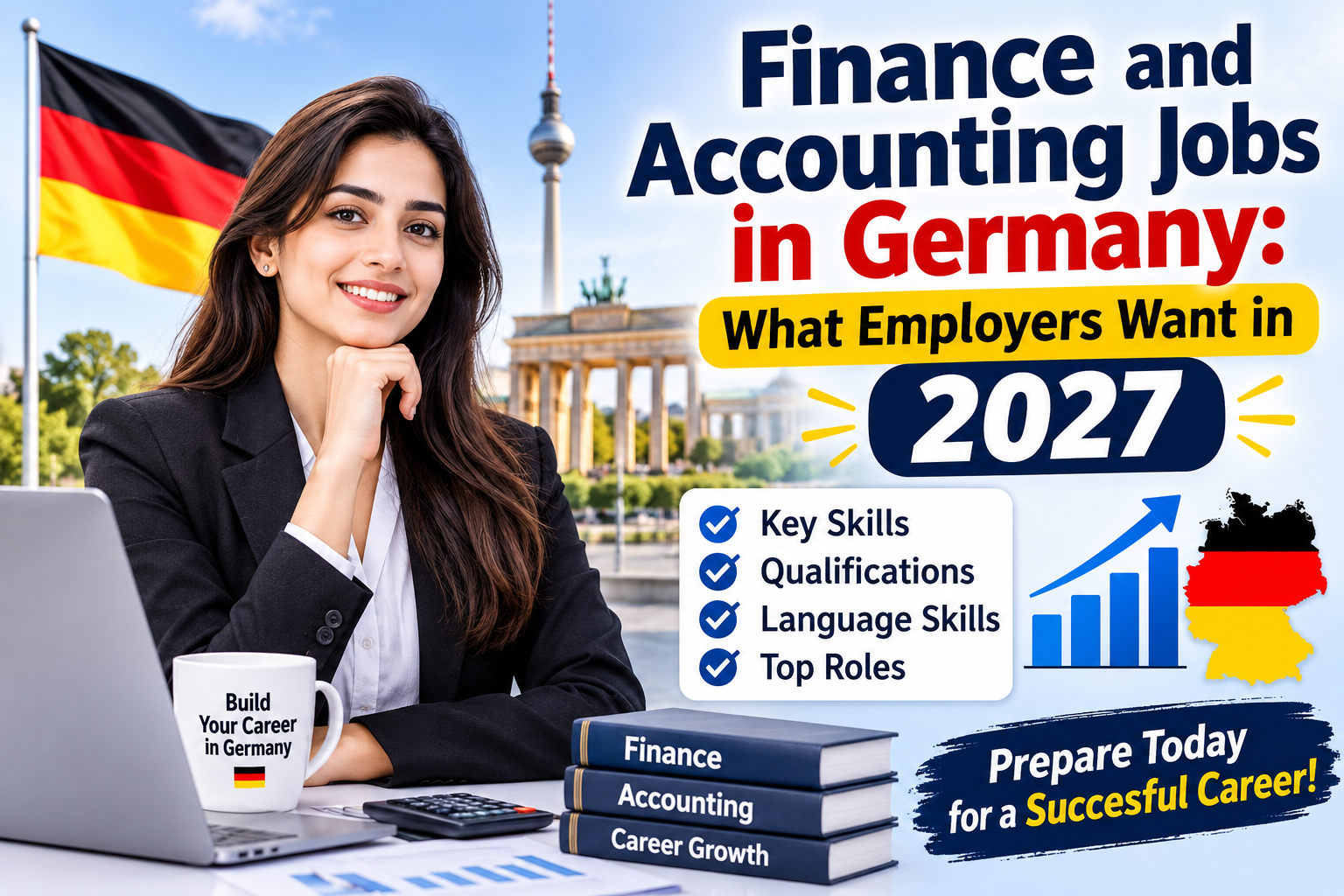
Introduction: Finance and Accounting Jobs
As Germany has one of the strongest economies in Europe, there are many opportunities for professionals within various industries. Within businesses in Germany, professionals with skills in finance and accounting are required to effectively manage budgets, maintain records and analyse how well a business is doing, and ensure that they are compliant with financial regulations. As businesses change with new technologies, expectations from finance professionals in Germany are also increasing.
In 2027, those applying for Finance and Accountancy Jobs in Germany should have many skills above just basic accounting. Employers are looking for professionals with knowledge of financial technology, data analysis, international accounting regulations and compliance. Whether you are newly qualified or have experience in your field, understanding what employers are looking for in candidates can allow you to prepare for working in Germany.
Why there is a high demand in Finance & Accounting professionals in Germany?
There is a varied business environment in Germany, including manufacturing, automotive, banking, technology, health and international trade. Within all of these industries, finance professionals are required to support businesses.
Due to increased digital financial systems, and strict reporting requirements, roles in accounting are changing. In order to manage financial information efficiently and identify efficiencies, businesses require employees to have these skills. Therefore there can be many opportunities in Finance and Accounting Jobs in Germany for candidates with the right qualifications, knowledge and experience.
What are The Finance and Accounting Jobs in Germany?
1. Relevant qualifications and accreditation
Generally, employers in Germany will be looking to employ professionals with a degree in Finance, Accounting, Business Management, Economics or similar. This gives an understanding of managing finances, tax, audit and business. Having professional accreditations can be very useful in increasing your employability. Depending on the role and organisation, having ACCA, CPA, CFA and/or CIMA qualifications could be useful.
If applying for accountancy roles within Germany, it may be useful to understand how accounting works in Germany. For example, knowledge of Handelsgesetzbuch (HGB). If working with international businesses, knowledge of International Financial Reporting Standards (IFRS) may be beneficial. International candidates may increase their employability by having recognised qualifications, and an understanding of how their qualification aligns with qualifications in Germany.
2. Understanding of accounting standards in Germany and internationally
Within accounting roles, it is important to understand the financial regulations and standards within the business. Many businesses in Germany will follow national accounting standards. However many international businesses in Germany follow IFRS. Employers will be looking for candidates with an understanding of financial statements, balance sheets, profit and loss accounts, tax regulations and financial reporting.
Knowledge of HGB and IFRS can be very useful to apply for roles with multinational companies. Those looking to work in Finance and Accounting Jobs in Germany should understand these standards. Candidates with an understanding of these standards will be valued, as they will be able to produce accurate reports, and ensure compliance.
3. Digital literacy and knowledge of Accounting Software
With new technologies emerging, many businesses in finance rely on digital systems. It is common for businesses in Germany to utilise digital accounting systems, online financial systems and Enterprise Resource Planning (ERP) systems. Employers may be looking for candidates with knowledge in using software such as SAP, DATEV, Microsoft Excel, Oracle and other financial management systems.
Excel skills such as formulae, pivottables and data analysis can be very useful in accounting. Knowledge of digital automation and AI systems can be advantageous in this sector. Those able to use digital systems to improve accuracy, reduce repetitive tasks, and organise financial data, are likely to be of interest to employers.
4. Problem solving and analytical skills
As you work with lots of data in financial roles, it is important to be able to analyse data, look for discrepancies, spot trends, and generate useful insights to inform business decisions. These analytical skills are highly required within financial analyst roles, auditors, accountants, and financial managers. Employees within companies are expected to create financial forecasts, understand where money in the business is going, and understand current cash flow in order to highlight any potential risks in money.
Problem solving skills are also much appreciated within this sector. For example, accountants may be required to investigate discrepancies in financial records, or identify why costs have incurred unexpectedly. Candidates who can independently solve these issues within finance can be very valuable additions to a finance team.
5. German and English language skills
As German is heavily used in business operations, financial documents, tax and with local authorities, it is important to have language skills. Many employers will be looking for candidates who have at least B2 level German skills, especially in accounting, payroll, and tax. However, in international companies, and multinational businesses, there may be roles for which English is the main language.
If considering Finance and Accounting Jobs in Germany, it may be useful to improve German communication skills alongside gaining professional English skills. Being fluent in both languages can be helpful to communicate with colleagues, clients, suppliers and international business partners.
6. Taxation and compliance understanding
Understanding taxation and ensuring compliance with financial regulations is a key part of finance roles. Within German businesses, employees must comply with national tax laws, accurately document financial records, and meet reporting deadlines. Employers would value candidates with an understanding of taxation within businesses. This could include corporation tax, VAT and tax in payroll.
Having an understanding of German tax regulations can be very beneficial for those applying for tax accountancy or financial reporting roles. Employees may be required to support internal audits, create documentation for external audits and identify any risk in compliance. Having up-to-date knowledge on regulatory changes means professionals can help businesses to avoid financial mistakes, and make reports transparent.
7. Communication and cooperation skills
Finance professionals rarely work alone. They frequently communicate with senior management, HR, auditors, clients and other professionals in business. Therefore, employers will be looking for candidates with good communication skills. For example, financial analysts may have to communicate budget forecasts to senior management, and accountants may need to communicate discrepancies in payments to another department.
Having good communication, cooperation, attention to detail and time management skills can greatly benefit you in the workplace. In particular, in international companies in finance, having good communication skills can be very useful working within teams from diverse professional and cultural backgrounds.
8. Understanding of Sustainable Reporting and ESG
With increasing importance placed on Environmental, Social & Governance (ESG) reporting, many businesses are needing to collate, manage and report on their environmental and social impacts. Within finance, professionals may support sustainable reporting, by verifying correct information, maintaining documentation and supporting businesses to include non-financial information in their reports. Knowledge of European sustainable reporting requirements can be very useful in this field. Those with an understanding of ESG reporting and financial reporting for sustainability could find opportunities in corporate reporting, auditing, financial consultancy and compliance.
Conclusion: Finance and Accounting Jobs
Finance and Accountancy jobs are available in Germany. Employers in 2027 will be looking for candidates with digital capabilities, analysis skills, awareness of compliance and communication.
To qualify for finance and accountancy roles in Germany, candidates should look to improve their accounting knowledge, learn software, gain an understanding of German financial compliances and become fluent in the language. This can allow applicants to stand out and get ahead in the growing finance industry within Germany.
Looking for Finance and Accounting Jobs in Germany? Explore the Best Job Tool, prepare your CV, and develop the skills German employers value. Start your job search today and take the next step towards building a successful finance career in Germany!





Leave a Reply