Introduction: Understanding User Behavior
When the word user is mentioned, the majority of professionals never associate it with their work. Designers and developersconstantly analyze user behavior to improve experiences. However, understanding user behavior can benefit almost any profession.
Professionals in marketing, sales, customer service, content writing, HR, and business development regularly communicate and work with people. This skillful interaction can be enhanced by understanding what people need and want.
Why Understanding User Behavior Improves Non-Design Roles?
1. It Helps Professionals Understand Real Needs
The reality is that the needs and wants are rarely explicitly stated. People tend to voice what they desire in favor of what they need. Understanding user behavior provides the professional with an opportunity to observe and research beyond what people state. This behavior, speech, and reaction can all be telling signs of what a person truly wants or does not want.
For example, a writer may understand that their message is not being relayed effectively by observing what people are reacting to in their writing. A content writer can see if the people have lost interest in reading the text. These observations are possible only if the writer analyzes the actions of the readers on the page, where the writer can see the place where the audience drifts away.
They can then dig deeper into the specific part of the writing to understand the context, length, word choice, and other aspects that may be responsible for the lack of engagement. The same understanding of the audience can be implemented by any professional in any profession.
2. It Improves Communication
A successful communication process is the basis of almost any relationship. All professionals work with an audience of some kind. For example, salespeople talk with customers, managers communicate with the employees, and marketers share information with the entire market.
What all these professionals have in common is that they must be able to effectively deliver the message to the audience, and understanding the basic wants and needs of the people can provide the insight needed to communicate better. For example, the communicator can understand who the audience is, their preferred way of obtaining the message (long-winded explanations or short points), and what they want to know or need to be informed of.
Instead of speaking from a place of self-interest, these professionals can share information with people considering their needs and, therefore, increasing the effectiveness of the delivery. This may show in almost any conversation, report, advertisement, email, presentation, and other tools used by professionals to communicate with an audience.
3. It Strengthens Problem-Solving Skills
Most of the problems faced by professionals are due to the fact that they do not serve the people in their environment. For example, the human resource department may implement a system that is unexplainable and difficult to use, and the employees are then asking constant questions with frustration.
A professional who understands the behavior of these employees can analyze the way the system works and see where these people encounter difficulties and how the system can be redesigned to provide a better experience.
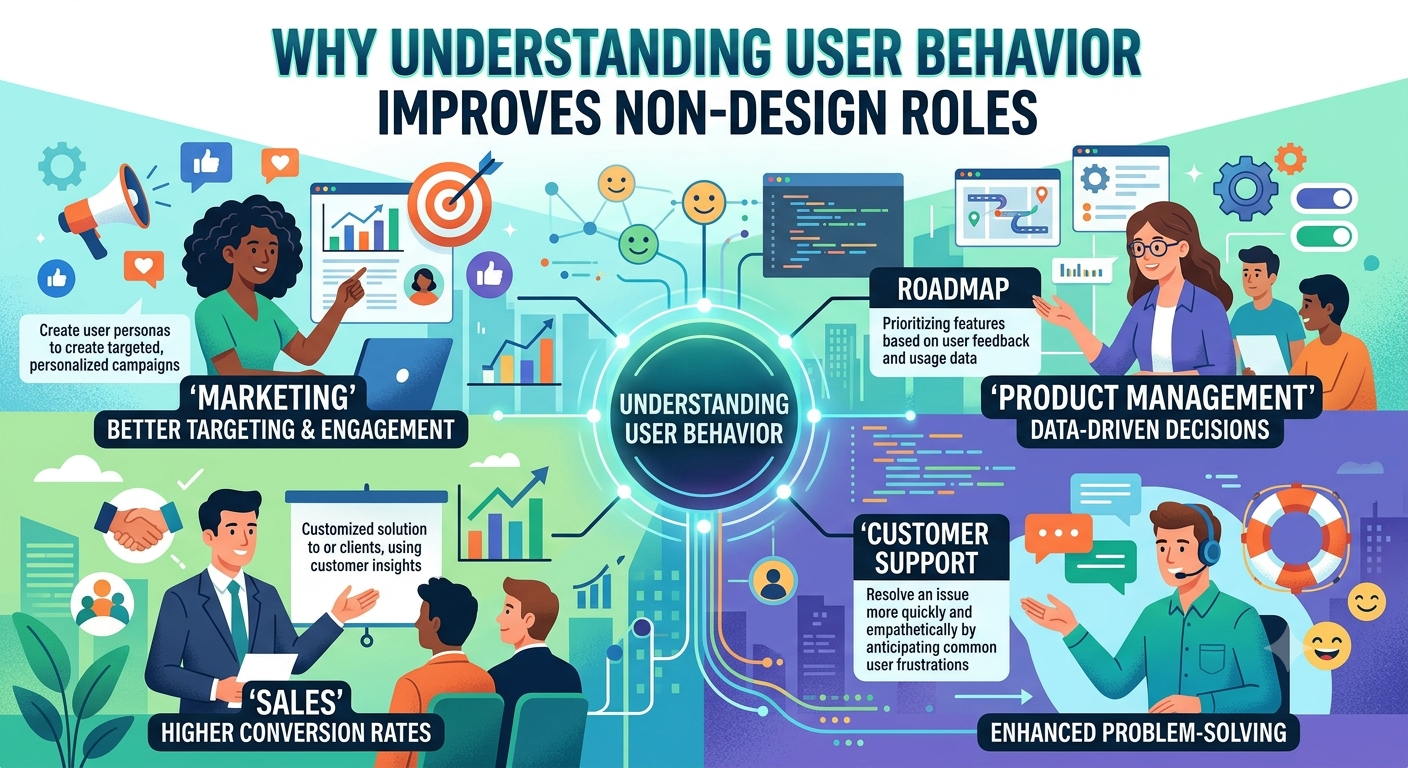
4. It Makes Marketing More Effective
Marketing is an area where understanding the user is crucial, as it is impossible to get results without knowing what the target audience wants. However, people are fickle, and demographics tend to shift with time, so relying solely on what the audience wants or does not want can be misleading.
Understanding user behavior can assist marketers in getting an idea of what the market truly wants. For example, they can see why some people react negatively and positively to certain content and then analyze that content to see what is it that repels or attracts people. Marketers can use this information to focus on what the majority want instead of making assumptions based on their personal preferences.
5. It Helps Sales Professionals Build Trust
Selling products and services is often about building a relationship between the seller and the buyer. A sale will happen only if the buyer feels heard and understood throughout the process. People tend to buy products and services when they feel that the right choice has been made. However, what some buyers fail to realize is that not all things are chosen out of preference.
People tend to ask questions about the things they are unsure of. For example, a customer may ask about the price of a product when they are certain that the money will be worth it, whereas another buyer may question the same price, having doubts about the value they will receive for the spent money.
A sales professional can learn about the concerns of the buyer by analyzing the questions asked and then addressing them specifically. In most cases, the objections raised by the buyers will indicate what they perceive to be the problems with their decision. This way, sales professionals can customize their monologues according to the needs and wants of the buyer instead of delivering the same speech to every client.
6. It Improves Customer Support
Customer support reps work directly with the audience of a company, speaking with people and finding solutions to their problems. Naturally, these professionals have the ability to observe what people tend to ask about and, therefore, seeing what their problems are. The questions asked by the audience are an insight into their concerns, which, again, point to their wants and needs. For example, there may be several customers who ask the same questions, which indicates that the problem is common.
However, in most cases, there is no reason for an entire customer base to have the same problems. These problems tend to emerge from a single part of the process. For example, the user interface of a product, the instructions, or the customer onboarding processes may be confusing. Therefore, instead of having dozens of customers with the same complaints, the customer support reps can notify the relevant departments of the issue and work together to find the cause and solve it.
7. It Supports Better Project Management
Project managers have the responsibility of ensuring that the end result of a project is satisfactory. However, the satisfaction of the stakeholders depends on how well the project serves their purpose.
Understanding user behavior can greatly impact the decisions made by project managers, as they can take into account the actual needs and concerns of the stakeholders. For example, a PM can ask their team to address specific questions while developing a system, such as:
Who will be using the system?
What problems will they encounter?
Will it confuse them?
There wants?
What will they not want?
What will they need?
How will they benefit from this?
8. It Encourages Empathy
Empathy is a skill that is extremely important for any professional, team lead, manager, or leader. However, most professionals never work on their empathy or develop it to a sufficient level.
The reason for this issue is that many professionals form their opinion on the actions of people based on their own needs and wants. Naturally, the wants and needs are rarely aligned, so people will reject or oppose the actions and words of others. Understanding the behavior of users teaches professionals to put themselves in the shoes of other people and ask themselves why would they act this way instead of why shouldn’t they act this way.
Conclusion: Understanding User Behavior
User behavior analysis is an important skill for any professional that works in the field of design and development, but what many people fail to realize is that it is just as important for almost any other profession. All professionals across industries and fields are required to make hard decisions with a lasting impact on other people. Understanding user behavior can assist any professional in making these decisions. That is why understanding user behavior improves non-design roles.
Developing skills like communication, problem-solving, empathy, and user behavior analysis can help you stand out in today’s competitive job market. Use Best Job Tool to explore relevant job opportunities, improve your professional profile, and take the next step toward your career goals.





Leave a Reply