Introduction: Hybrid Work
The traditional office setting is changing. Companies are allowing employees to split their time between home and the office.
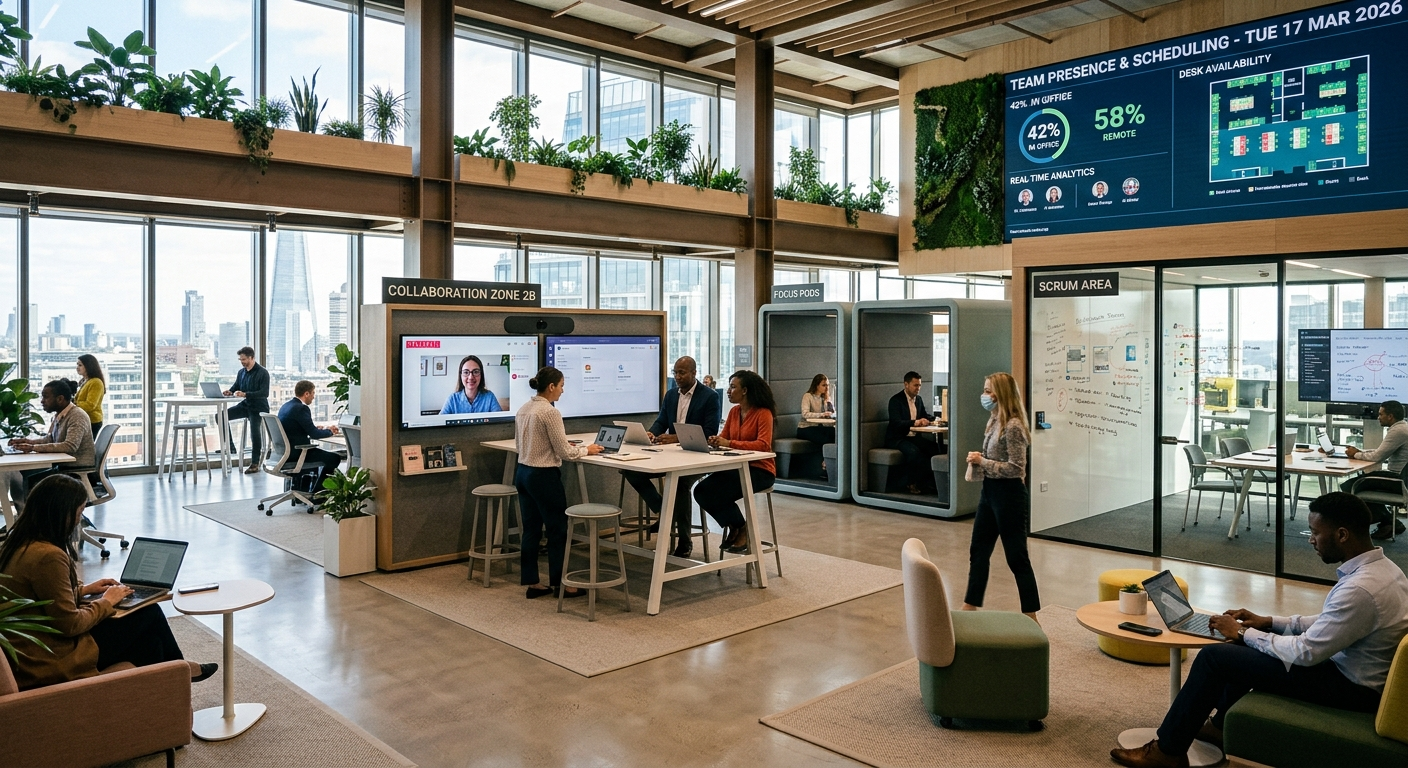
How Hybrid Work Is Changing Office Spaces in 2026 shows how companies are creating flexible, tech-enabled workplaces that promote collaboration.
The contemporary office environment has evolved beyond a space for individual productivity and now entails collaboration and interaction. Employers are redesigning office layouts, furniture, and technology to improve productivity and employee engagement.
How Hybrid Work Is Changing What Office Spaces Look Like in 2026?
1. Offices Are Becoming More Flexible
Hybrid work allows employees to choose between working from home and the office. As a result, the necessity for permanent workstations located in corporate offices is being reconsidered. Employers are encouraging collaboration by providing shared desks and flexible seating for hybrid employees who visit the office a few days a week.
Flexible seating saves office space while encouraging communication and collaboration among employees. Furthermore, the ability to customize the layout promotes adaptability as the office grows and evolves.
2. Collaboration Spaces Are Gaining Importance
Offices promote social interaction through meeting rooms, collaborative spaces, brainstorming areas, and lounges.
Hybrid workspaces promote teamwork and social connections through collaborative seating areas that replace traditional rows of desks. These changes can be implemented through alterations to the office layout or design where meeting areas are more emphasized. Collaboration-focused office designs help restore informal conversations that hybrid work reduces.
3. Technology Is Becoming Essential to Office Design
A crucial aspect of the evolution of office environments is technology. Flexible, hybrid, and remote workers all depend on technology for seamless collaboration, communication, and coordination. Offices need reliable technology to ensure smooth and efficient collaboration between on-site and remote employees.
Modern offices use video conferencing, collaboration tools, and presentation equipment to support meetings and teamwork. In particular, conference rooms allow in-office and off-site workers to join the same meetings using online platforms. Smart booking systems let hybrid employees reserve workstations before arriving at the office.
Finally, occupancy sensors and workplace data analytics can help the company track and analyze office usage patterns. Smart technology reduces booking conflicts and unused desks while improving office space utilization, productivity, and collaboration.
4. Quiet Zones and Private Workspaces Are Increasing
While open-plan offices and co-working areas in the office might support collaboration, they can hinder tasks requiring intense concentration that demand uninterrupted focus. Moreover, distractions, interruptions, and general noise and stress from open offices impede focus. Therefore, some employers are constructing private offices or rooms, conference sections, soundproof areas, and other quiet zones for employees to have confidential discussions or to focus on tasks that demand a high amount of concentration and cognitive effort.
Variations in workspaces are crucial for flexibility and personalization; instead of attempting to make everyone comfortable in the same setting, employers can make multiple areas available for purposes such as meetings, individual tasks, and collaborative efforts. Some employees, for instance, might be required to prepare a presentation or a report for a client, and reserving a quiet and isolated office can provide a much-needed escape from the open-plan office.
For creative industries, concentrated and isolated work areas or zones might inspire new ideas compared to a setting that induces noise and stress. Other meetings require a more laid-back yet dedicated space to ensure free communication between meeting participants. Thus, these changes can result in a balanced and flexible office work environment where employees can switch from collaborative activities to concentration-intensive tasks and vice versa.
5. Employee Comfort and Well-Being Are Priorities
Attracting and retaining hybrid, flexible, and remote employees depends on whether companies can provide desirable office settings, particularly compared to home office environments. Similar to individualistic and personalized workspaces discussed above, contemporary offices are increasingly including furniture, interior, and equipment that cater to worker comfort and well-being. Aesthetically pleasing workplaces are now being supplemented or replaced with environments that genuinely invest in the physical health and well-being of employees.
For instance, in addition to ergonomic furniture, comfortable seating and eating areas, plants, and natural light, some companies have invested in wellness centers for workers to relax during the workday. Such adjustments can be applied in small ways, such as replacing underfloor heating or artificial lighting with natural lighting and air conditioning. Alternatively, companies might redesign the entire office space to integrate more fitness equipment, rest areas, and recreational facilities. These changes reflect employers’ recognition that individuals only come to the office a few times per week, hence, such minimal investment towards an environment that supports overall wellness is needed to invest in an attractive and effective office work setting.
6. Companies Are Rethinking Office Space and Costs
The rise of flexible and remote work also prompts organizations to consider whether current office environments are necessary. When a majority of an organization’s workers are only present a few times per week, it might be pointless to maintain such a large office, particularly with assigned workstations in place. As a result, corporations are considering alternative office environments, including co-working spaces, reduced office square space, and flexible workstations suitable for different tasks. Such strategies allow businesses to focus less on the number of available workstations but rather on the effectiveness of the layout and furniture. At the same time, the changes align with broader trends in flexible and remote work.
For instance, a company might reduce the overall size of its office space to save costs, or it might move closer to a high-growth area where employees live or where transportation is more accessible. Such office transformations enable firms to still offer on-site meetings and interactions with coworkers despite reduced office visitations.
However, such substantial alterations require thorough considerations since these changes might entail substantial costs before providing any benefits. In particular, analyzing how much office visitation the firm currently hosts and projecting expected future visitations is crucial before considering any significant reductions to the office space, equipment, and furniture. Ultimately, substantial alterations to office environments are a matter of cost-benefit analysis, particularly as hybrid and remote work arrangements become more common.
7. Sustainability Is Influencing Workplace Design
In addition to personalization and comfort, sustainability in the workplace is another growing concern in modern office design. As a result, employers are trying to limit environmental damage and reduce waste by optimizing their utilization of office resources, including the size of the office space to furniture and supplies. Flexible and remote work arrangements might assist in these sustainability initiatives, as reduced worker visitations would reduce the consumption of electricity. Furthermore, companies might invest in smaller workstations and shared desks to further reduce the total size of the office space. Finally, hybrid and remote employees can reduce carbon emissions, especially if their home office is close to their residence.
The changes that reflect employer concerns regarding environmental sustainability also include occupancy-sensing systems that only heat up and light conference rooms and quiet zones when they are in use. Furthermore, similar to a reduction in office space, a more unified yet multi-functional layout can reduce the total amount of office space needed, which is particularly useful for larger companies requiring multiple offices to accommodate its workforce. Overall, such sustainable office environments reflect broader trends as companies attempt to reduce overall spent on office space, particularly when such expenditures are no longer needed under flexible work procedures.
Conclusion: Hybrid Work
As companies continue to shift towards a more flexible system in 2026, contemporary organizations are beginning to reconsider their approach to office environments with an emphasis on worker productivity, cooperation, and connection. Businesses invest in alternative workstations that promote individual and collaborative productivity, encourage employee interactions through quiet zones, lounges, and flexible seating, and enhance overall wellness while minimizing environmental impact. In effect, employers begin to understand that a significant reduction to office space or the complete elimination of on-site work is only justified if it offers benefits to employees who would otherwise work from home. As a result, contemporary businesses emphasize collaboration and connection within the office environment while giving employees more flexibility, choice, and freedom.
Explore the best job tools to find new opportunities, improve productivity, and manage your job search more efficiently. Take the next step toward your career goals today!

Leave a Reply