Introduction: Hiring in Saudi Arabia
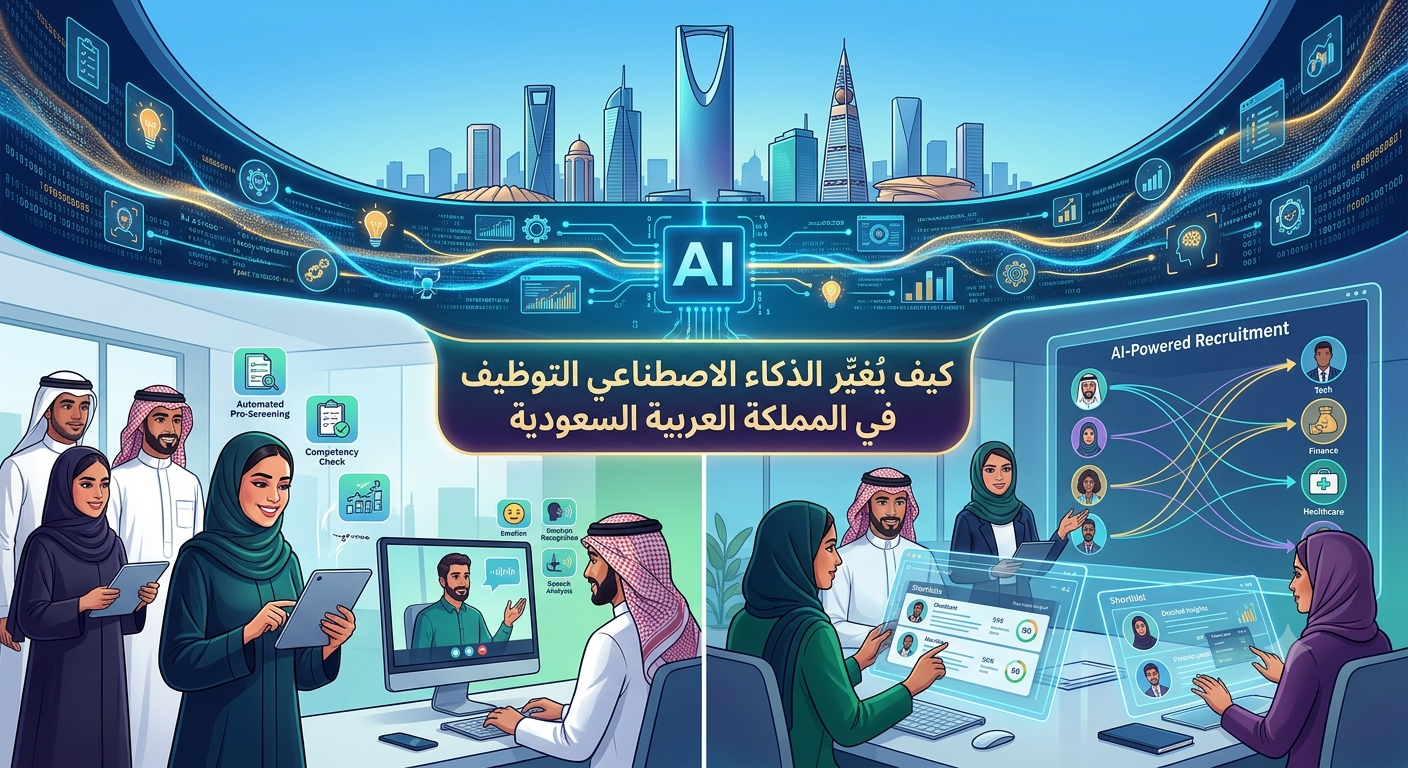
As organizations adopt new technologies to meet talent acquisition needs, the recruitment process is transforming. How AI Is Changing Hiring in Saudi Arabia is an emerging area of interest as companies across the Kingdom seek to embrace digital disruption. From reviewing CVs to conducting interviews, artificial intelligence (AI) can streamline the hiring process.
Saudi Vision 2030 promotes innovation, technology, and private-sector growth. In this environment, employers seek to leverage the power of AI to transform human resource practices. By exploring how AI is changing hiring, job seekers can gain insight into the evolving recruitment landscape and increase their employability.
How AI Is Changing Hiring in Saudi Arabia?
1. Automated Cv Screening
A critical application of AI in recruitment is automated CV screening. In many organisations, recruiters spend weeks on end poring over applications before selecting shortlisted candidates. However, as an employer receives hundreds of CVs for one vacancy, it may be challenging to identify the most suitable applicants.
With AI-enabled applicant tracking systems (ATS), recruiters can quickly scan through resumes to identify applicants with the required competencies. These recruitment technologies can learn to recognize patterns in candidate qualifications and match them against job descriptions. As a result, employers can easily find applicants who meet their standards.
However, to get the most out of ATS in Saudi Arabia, candidates should ensure that their CVs are scannable. Using keywords and an ATS-friendly format helps the application get past the initial screening in automated recruitment. Although AI recruiting tools can scan through hundreds of CVs, recruiters should ensure that they do not miss any potential applicant.
2. Faster Candidate Shortlisting
Using AI to shortlist candidates can enable faster hiring. In addition, these technologies can help recruiters identify the most competent applicants. AI-powered shortlisting tools can analyze an applicant’s work experience, education, technical skills, and qualifications to create a shortlist of candidates.
This emerging technology demonstrates how AI is changing hiring in Saudi Arabia by enabling faster and more objective decision-making in recruitment. For instance, a firm looking to hire software developers in Riyadh can use AI-powered shortlisting to find applicants with the required IT competencies. These AI recruiting tools can allow the recruiter to interview and test the most suitable candidates. Additionally, faster candidate shortlisting can enable organisations to fill multiple vacancies. With AI recruitment technologies, recruiters can easily sort through hundreds of applicants to find the best talent to fill their vacancies.
3. Improved Matching of Jobs and Candidates
AI-driven recruitment solutions can recommend the most suitable jobs to fit an applicant’s profile. Such tools can analyze an individual’s skills, work experience, qualifications, and interests to recommend relevant vacancies. This technology is particularly useful in helping job seekers identify the most appropriate jobs in the competitive Saudi job market.
For instance, AI-powered recruitment tools can help match candidates with healthcare, finance, construction, engineering, hospitality, and information technology jobs. At the same time, employers can use these technologies to find candidates with the appropriate skill set for their vacancy. In addition, using AI recruiting tools to match jobs and candidates can help an organization consider non-traditional skills that qualify an applicant for a certain vacancy. For instance, construction expertise can make an applicant suitable for engineering jobs.
However, to avoid misrepresentation, an applicant should carefully review the job description before submitting an application. Similarly, before hiring using AI recruiting tools, an organization should ensure that it has thoroughly evaluated the candidate’s profile to guarantee a suitable fit for the vacancy.
4. AI-Powered Interviews
Modern AI technologies can help organizations conduct virtual interviews. Some virtual interviewing platforms can even help schedule interviews, take notes, and organize interviews. This emerging technology in recruitment can save time and effort, especially when an organization needs to hire individuals from different cities or countries. As a result, international applicants seeking to work in Saudi Arabia can use these technologies to connect with potential employers. These applicants can avoid the stress of travel as they would be able to attend a preliminary interview by video conferencing.
However, not all employers are using AI-driven recruitment technologies to conduct interviews. Additionally, each organization has different guidelines for conducting interviews. As such, apart from preparing for an interview using an AI-powered platform, an applicant should also be ready to answer questions in a traditional interview setup. Understanding AI’s role in the recruitment process can help a candidate get employed.
5. Better Recruitment Decisions Using Data
AI systems can collect, organize, and analyze data to help recruiters make better hiring decisions. For instance, an organization can use an AI-powered recruitment tool to collect data on the most productive channels for recruiting talent. This data can help an organization modify its recruitment strategy to improve its chances of filling its vacancies. In addition, an organization can use data on candidate drop-offs to improve the recruitment process so that it can attract more suitable candidates.
For instance, a business in Jeddah can identify the most effective recruitment channel for its customer service vacancies. It can then use this data to improve its recruitment strategy for its upcoming vacancies to attract the most suitable candidates.
Although AI tools can help organizations make data-driven recruitment decisions, they should complement human skills in the recruitment process. An organization should consider qualitative factors when making hiring decisions. At the same time, AI-driven recruitment only considers quantitative data, which may be inadequate for making appropriate hiring decisions.
6. Personalized Communication With Candidates
In the recruitment process, recruiters usually spend a lot of time communicating with applicants. As a result, recruiters in Saudi Arabia are using chatbots to respond to applicants’ inquiries about the vacancy, interview, and application process.
For instance, an individual who has applied for a finance job can use a recruitment chatbot to answer their questions about the interview and application process. These bots can help recruiters communicate more efficiently with candidates while minimizing the time spent on repetitive tasks. As a result, the recruitment team can dedicate its time and energy to more complex activities in the hiring process. However, an organization should ensure that all applicants can reach a human during the hiring process. Some applicants may have unique concerns that a chatbot may not address, thereby causing frustration.
7. Mitigating Bias in Recruiting Processes
Artificial intelligence can help reduce bias in the hiring process by ensuring that all applicants are assessed using the same standards. As such, responsible AI can help create a level playing field in the recruitment process. This consideration is particularly relevant in Saudi Arabia, where there is a drive to embrace equality in employment.
However, at the moment, most AI technologies do not consider how bias may affect their operations. As such, if a biased system is used in the recruitment process, it may cause unintended consequences. For instance, an organization may invest in an AI recruitment tool that promotes certain competencies and qualifications. As a result, applicants who do not meet these specific requirements may be eliminated from the hiring process.
In Saudi Arabia, employers must ensure that their AI technologies are free from bias to eliminate discrimination in employment. In addition, the organizations should invest in these technologies to guarantee data privacy and integrity while supporting ethical recruitment practices.
8. Enhancing Skills That Employers Value
As organizations in Saudi Arabia continue to embrace AI-driven recruitment solutions, job seekers should invest in skills that will help them get hired. Such competencies include digital literacy, effective communication, adaptability, and critical thinking. In addition, an applicant should consider how AI can be applied in their area of specialization.
For instance, a marketing expert should invest in AI-assisted marketing technologies. At the same time, a human resource (HR) professional should consider AI-driven recruitment solutions. By acquiring these competencies, an individual can get a competitive advantage over other applicants.
As a result, an individual should update their CV frequently to highlight their relevant skills, certifications, and areas of specialization. As an individual applies for a job, they should ensure that they only use qualification-based applications. Similarly, an applicant should avoid using AI-generated content or embellishing their credentials when applying for a job.
9. Limitations of Ai in Recruitment
Even though AI is transforming the hiring landscape, there are still limitations associated with its use in recruitment. For instance, organizations must consider cost-effectiveness when implementing new technologies in their recruitment strategy. These organizations should also ensure that they comply with data protection regulations when storing applicants’ personal data. As such, AI-driven recruitment solutions may pose financial and legal challenges, particularly for small-scale businesses.
Additionally, applicants may feel that they are being unfairly discriminated against if they are not provided with sufficient feedback on their applications. As such, an organization should ensure that it explains automated decisions to individual applicants. In Saudi Arabia, an organization must ensure that its recruitment practices comply with relevant labor laws and regulations. The future of AI in hiring will be determined by how effectively these technologies can be implemented while considering the need for equality and protecting individuals’ rights.
Conclusion: Hiring in Saudi Arabia
Artificial intelligence is changing how employers conduct the recruitment process. As businesses in Saudi Arabia seek to embrace digital technologies, they are adopting AI-driven recruitment solutions. Using these technologies can help organizations automate and expedite the hiring process. However, such companies must ensure that they do not discriminate against potential employees.
As such, to stay ahead in the competitive job market, an individual should consider how they can prepare for an AI-powered recruitment process. The most effective way for a candidate to increase their chances of getting hired is to update their skills and acquire the necessary professional competencies. At the same time, an employer can use AI-driven recruitment solutions to improve its hiring outcomes while ensuring that it does not eliminate the need for human resource experts in the recruitment process.
Looking for your next career opportunity in Saudi Arabia? Use the Best Job Tool to explore relevant vacancies, identify suitable roles, and take the next step towards your professional goals.


Leave a Reply