Introduction: Hybrid and Remote Work
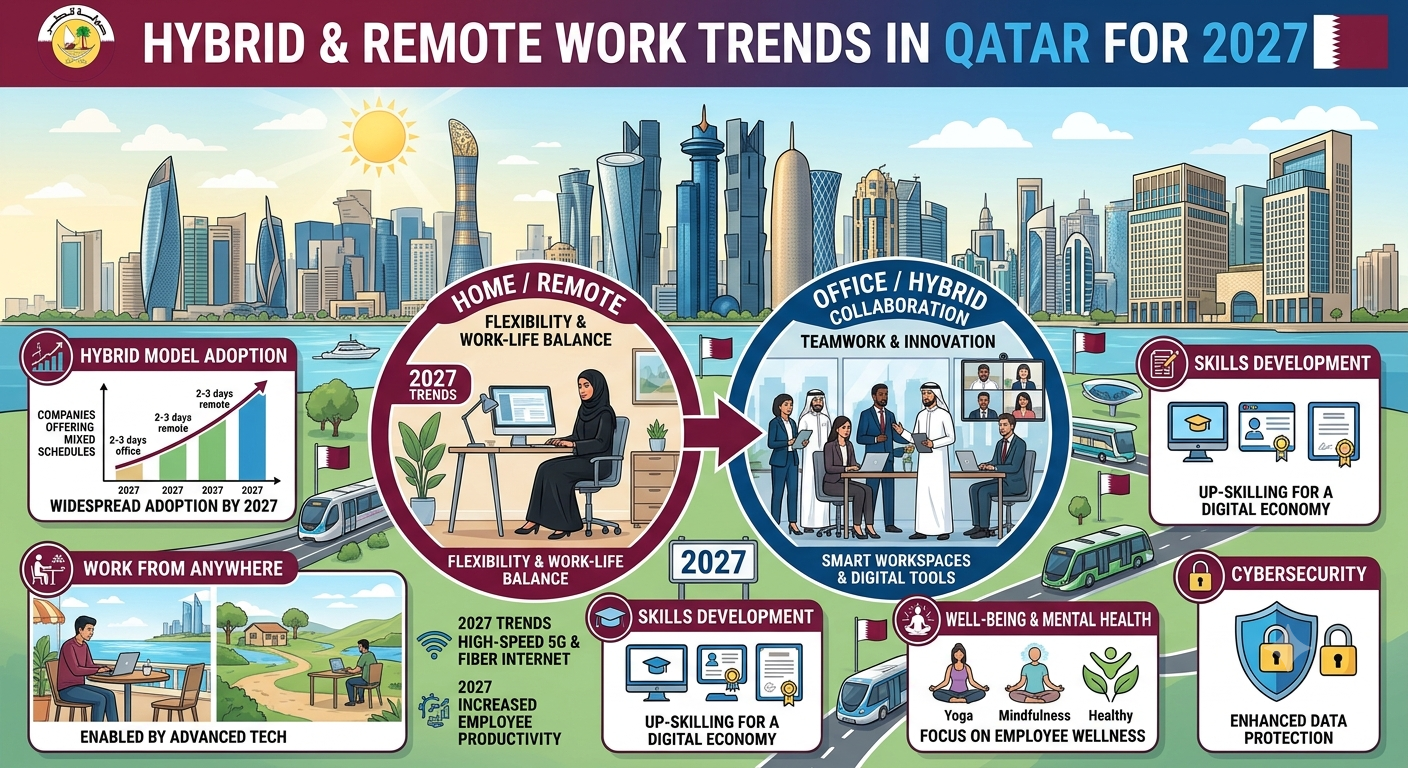
Work trends are constantly evolving as organisations become more reliant on digital technologies and innovative approaches to enhance productivity and meet the demands of the modern labour force. Employers in Qatar are considering hybrid and remote work options to attract talent while ensuring that operations run smoothly. Hybrid and Remote Work Trends in Qatar for 2027 will be determined by the demand for digital competencies, the need for employee flexibility, and workforce management strategies.
While most organisations are considering hybrid work options, some employers are considering granting staff flexibility in working hours and locations for specific roles. The 2026 labour reforms also legalised part-time and freelance work in Qatar and set out formal procedures for implementing such contracts, which may also shape the hybrid work trends in Qatar in 2027.
Hybrid and Remote Work Trends in Qatar for 2027
1. Increasing Demand for Hybrid Work Schemes
Hybrid work enables employees to split their time between working in the office and at home. It can benefit firms by promoting collaboration while allowing staff to work flexibly. Organisations in Qatar are considering hybrid and remote work options in 2027, as they seek to balance employee flexibility with operational needs.
They include employees in consulting, marketing, technology, and other fields that do not require staff to be in the office. However, the extent to which firms adopt hybrid work schemes depends on the requirements of specific roles and broader labour laws.
2. Embrace of Remote Work in Technology
Technology will continue to play a critical role in promoting hybrid and remote work trends in Qatar in 2027. Digital solutions such as cloud computing, cyber security platforms, artificial intelligence, digital collaboration tools, and other related technologies enable employees to perform their duties from their location conveniently. Professionals in software development, data analytics, digital marketing, information technology, and other related fields stand a better chance of landing remote jobs if employers embrace hybrid work schemes.
Employers can also use technology to execute their operations effectively, monitor performance, and ensure remote workers adhere to organisational guidelines when performing their duties. As a result, individuals with strong digital skills and proficiency in using related technologies will have greater chances of landing remote jobs in Qatar.
3. Industries Likely to Adopt Hybrid Work Options in 2027
Most industries do not allow remote work because employees need to be present in the workplace to perform their duties. As a result, organisations in healthcare, construction, hospitality, and other industries are unlikely to embrace remote work.
However, organisations in the following industries can consider hybrid work options:
- Information technology: software development, cyber security, and IT support
- Marketing: content creation, search engine optimisation (SEO), and social media management
- Finance: financial analysis, accountancy, and specific administrative roles
- Education: online teaching, virtual learning, and related roles
- Consulting: business analysis, research, and virtual meetings
- Customer service: online customer support and specific contact centre roles
Similarly, administrative roles in on-site industries such as healthcare, hospitality, construction, and other fields can be performed remotely while still supporting organisational objectives. Employers must consider the needs of their employees, industry needs, and other factors such as the roles’ level of digitalisation before embracing hybrid work schemes.
4. Impact of Digital Transformation
Digital transformation will play a critical role in shaping hybrid and remote work trends in Qatar in 2027. The changes will enable firms to adopt virtual meetings, cloud computing, project management software, recruitment platforms, and other digital tools to facilitate work from any location conveniently.
Such technologies can also help promote organisational productivity, ease communication, and reduce physical distances between remote employees and their managers. However, employers must invest in effective digital infrastructure and ensure that employees have the skills to use such tools securely and effectively.
5. Key Skills in Demand for Remote Jobs in Qatar 2027
Candidates seeking remote jobs in Qatar must consider acquiring key skills that will make them stand out against other applicants. Such expertise includes digital literacy, technical competencies required in specific fields, effective communication, and organisational skills to ensure that they can operate successfully while working remotely.
Other critical skills for remote employees include cybersecurity skills, self-learning, accountability, adaptability, and related qualities. In addition, potential employers often look for professional skills such as problem-solving, analytical abilities, and leadership qualities, as remote employees must demonstrate their ability to work independently while still contributing to organisational objectives.
6. Hybrid and Remote Work Schemes in Qatar 2027 and Work-Life Balance
The increasing need for flexibility in work location and hours is a critical advantage of hybrid and remote work schemes. Employees benefit from avoiding traffic jams and have more time to take care of their personal needs and engage in recreational activities.
However, remote workers may struggle to attain a proper work-life balance, especially where managers keep expecting employees to deliver results continuously. Employers can invest in flexible working hours and help remote staff set aside time for their personal life.
Such companies are likely to witness increased employee retention and productivity in 2027. Firms considering hybrid and remote work schemes must also understand that flexibility is a double-edged sword and should invest in creating suitable working conditions for their employees.
7. Labour Laws Governing Remote Work in Qatar 2027
An understanding of relevant labour laws is critical for individuals seeking remote jobs, as they ensure that both employees and employers uphold their obligations throughout the employment lifecycle. For example, Qatar’s Labour Law was amended in June 2026 to formalise the procedures related to part-time and freelance work, with additional regulations still being developed to guide the implementation of such policies.
Individuals seeking remote jobs must ensure that the proposed working arrangements and hours align with their understanding of the law and clarify such terms with their potential employers before joining the new organisation. Hybrid and Remote Work Trends in Qatar for 2027 will also differ for government and private organisations, meaning that job seekers must research further before submitting their job applications.
8. Limitations of Remote and Hybrid Employment
While remote work has numerous advantages, it poses several risks to employees and employers, including poor collaboration, weak security, and other related concerns. Employers considering hybrid work schemes must establish suitable remote work guidelines to ensure that employees operating from their location can perform their duties satisfactorily.
Such organisations must also invest in digital infrastructure, such as collaboration platforms, to maintain constant connection with remote staff and ensure that they can monitor their performance continually. In addition, businesses must set clear performance expectations, roles, and responsibilities for remote workers and hold them accountable for delivering optimal results consistently. On the other hand, job seekers must carefully consider the potential limitations of remote jobs, including the lack of appropriate training and development opportunities, before accepting such positions.
9. How Job Seekers Can Prepare for Hybrid and Remote Work in 2027
Individuals seeking hybrid and remote jobs in Qatar can enhance their chances of landing such opportunities by considering various factors when looking for job vacancies. For example, they should update their curriculum vitae (CV) and other relevant documents, enhance their digital skills, and ensure that they have strong professional networks in their chosen field. In addition, it is crucial for prospective remote employees to conduct extensive research on potential organisations and the requirements of specific roles before submitting their job applications.
Such professionals should also identify advertisements for hybrid or remote positions and utilise reliable digital tools to apply for such opportunities. If an individual is shortlisted for an interview, it is essential to test the internet connection and other tools that will be used during the interaction with the recruiter. Networking is also vital, as it can help job seekers learn about recruitment requirements, including the remote work policies of potential employers, before applying for advertised vacancies or engaging in interviews. However, it is also critical for individuals considering hybrid or remote jobs to understand that such opportunities are not guaranteed, and they must be prepared to seek traditional on-site employment if remote work opportunities become unavailable.
Conclusion: Hybrid and Remote Work
Hybrid and remote work trends in Qatar for 2027 will depend on technological advancements, employer needs, workforce skills, and other factors, including relevant labour laws. While such work options can benefit both employers and employees, remote jobs are only available for specific roles and industries.
Job seekers can increase their chances of landing remote employment opportunities by acquiring digital proficiency, understanding relevant legal requirements, and conducting extensive research on potential employers’ requirements for remote work. Employers, on the other hand, must ensure they utilise effective digital infrastructure while also establishing appropriate policies and guidelines for remote and hybrid employment.
By embracing hybrid and remote work options, organisations in Qatar will be able to attract and retain skilled professionals, benefiting both workers and employers in the long run.
Looking for your next career opportunity in Saudi Arabia? Use the Best Job Tool to explore relevant vacancies, identify suitable roles, and take the next step towards your professional goals.



Leave a Reply