Introduction: Cover Letter for Jobs
Finding a job in Canada can be an exciting opportunity to grow your career. Finding a job in Canada will require creating an impressive resume, however, it is also important to create a great Cover Letter. This will help you introduce yourself to the employer and will help showcase your professional skills and why you are the right candidate for the role.
Creating a well structured Cover Letter can give you a great first impression and will make recruiters want to read your resume. Whether you are a graduate, professional, or international candidate it is important to know how to write a Cover Letter for jobs in Canada. Understanding the Canadian job market and employer expectations can help you create a stronger application. Learning how to write a Cover Letter for jobs in Canada will also help you present your qualifications, demonstrate your interest in a position and stand out from other applicants.
How to Write a Cover Letter for Jobs?
1. Know Why Employers Want a Cover Letter
It is important to know why employers in Canada ask for a Cover Letter. This is to give you the opportunity to tell them why you are interested in the role and why your skills match up with the employers requirements. Whilst your resume will include information about your education, work experience and qualifications your Cover Letter will give employers a better insight into your professional background.
Do not copy your resume word for word. Focus on highlighting your most relevant accomplishments, skills and experience. You want to make sure employers know what you can offer the organisation. A well-written Cover Letter also allows you to explain career changes, employment gaps or transferable skills that may not be immediately clear from your resume. This additional information can help Canadian employers better understand your professional journey.
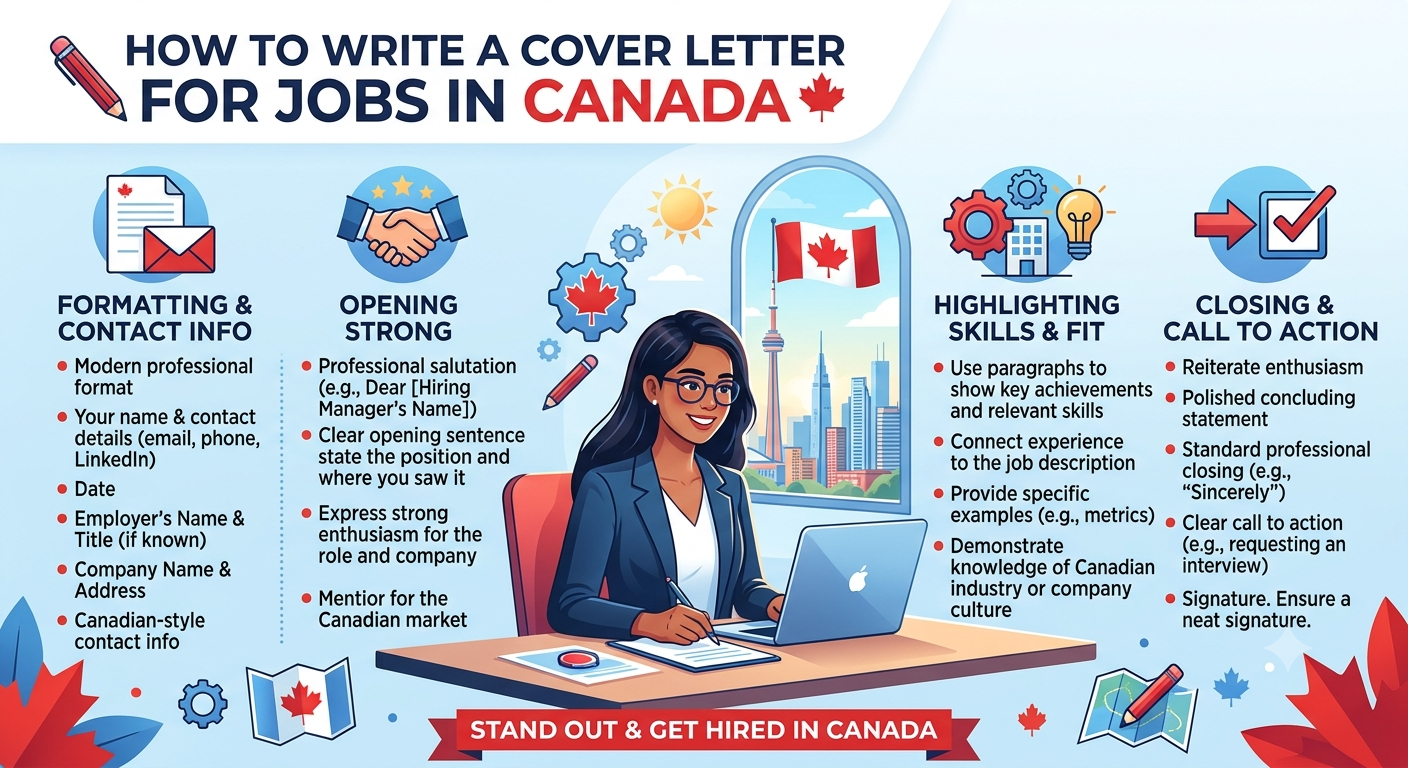
2. Add Your Contact Information
The first section of your Cover Letter should include your contact information and the employers. This will give your application a clean and professional look.
Information to include:
Full name
Phone Number
Professional Email Address
City and Province (if applicable)
Date of Application
Hiring Managers Name (If known)
Company Name
Include your LinkedIn Profile if relevant.
Ensure your contact information is correct and professional. If you are applying from outside of Canada then you can mention where you are from and that you are happy to relocate if needed. If you are an international applicant, make sure your contact details clearly show how employers can reach you. You should also ensure that your email address and LinkedIn profile present a professional image.
3. Write an Interesting Introduction
Your introduction should tell employers why you are applying for the role straight away. Include the title of the role and where you found the vacancy. You can also include some information about your professional background and one relevant qualification.
For example:
“I am writing to express my interest in the Marketing Specialist position at ABC Company. With three years of experience in digital marketing, content development, and campaign management, I believe my skills and professional background would allow me to contribute effectively to your marketing team.” When learning how to write a Cover Letter for jobs in Canada, remember that your opening paragraph should be specific to the position. Mentioning a relevant achievement or professional strength can make your introduction more engaging and encourage recruiters to continue reading.
Avoid any generic statements and aim to give your Cover Letter a more interesting introduction. This will make recruiters want to read more.
4. Showcase Your Skills and Experience
This is one of the most important parts of knowing how to write a Cover Letter for jobs in Canada. Employers want to know how your previous experience relates to the role. Carefully read through the job description and note down any essential qualifications, technical skills and soft skills required.
If you are applying for an administration role then you could mention your communication, organisational, time management and computer skills. Instead of just listing your skills give examples of how you have used them. Rather than stating “I have excellent leadership skills,” explain how you have led a team, managed projects or improved productivity within the workplace.
Try to include any quantifiable achievements. Using numbers will make your contributions seem more credible. You should also highlight transferable skills if you are applying for a different industry or changing your career. Skills such as problem-solving, teamwork, communication and adaptability can demonstrate your ability to succeed in a new professional environment.
5. Research the Company
A personal Cover Letter will show employers you have taken the time to research the company. Before submitting your application research the company by visiting their official website. Find out what services they offer, their company values, culture and any recent news. You can also mention why you want to work with this employer. Perhaps they have a great focus on innovation, customer service, staff development and sustainability.
Avoid using the same generic Cover Letter for multiple employers. Personalising your application will show you are genuinely interested and will help you understand what the employer is looking for. Understanding the company’s goals and current projects can help you explain how your experience aligns with its needs. This approach makes your Cover Letter more relevant and demonstrates that you have a genuine interest in the organisation.
6. Keep it Professional
Most employers in Canada will appreciate a professional letter. Keep your Cover Letter brief and relevant. Aim for one page and 3-5 paragraphs. Use simple, professional language. Avoid using any unnecessary technical terms. Keep your sentences short and meaningful. Be confident but polite in your tone. Ensure your spelling, grammar and punctuation are correct. Keep your formatting consistent and use easy to read fonts.
You will generally want to use Canadian English. This includes words like organise, centre and analyse. A clear and organised layout also makes your application easier for recruiters to review. Before sending your Cover Letter, save it in a commonly accepted format such as PDF, unless the employer requests a different file format.
7. Finish with a Strong Conclusion
Your conclusion should remind employers why you are interested in the role. Summarise why you are the right candidate. You can also mention you would be happy to talk about your qualifications and experience during an interview.
“Thank you for considering my application. I would welcome the opportunity to discuss how my experience and skills could contribute to your organisation. I look forward to hearing from you.”
Finish your Cover Letter with a professional sign off such as Sincerely or Best regards. Include your full name. Avoid sounding too demanding and overly confident. Keep your tone professional and respectful. Your closing paragraph should leave a positive impression without repeating everything mentioned earlier. A polite expression of interest in an interview can show confidence and enthusiasm for the opportunity.
8. Avoid Common Mistakes
Sometimes even qualified candidates will make mistakes that can ruin their application. When writing a Cover Letter for jobs in Canada please ensure you:
Use the same Cover Letter for everything – This will not show employers you are interested in working with them. Personalise your content for each role.
Copy your whole resume – Your Cover Letter should include relevant qualifications.
Spelling and Grammar Mistakes – This can give a bad impression. Always check your Cover Letter for any errors.
Too much information – Long paragraphs and too much information can make your application hard to read.
Not relating to the role – Your Cover Letter should clearly show how your experience and skills match up with what the employer is looking for.
Avoiding these mistakes will make your application more professional. Another common mistake is forgetting to update the company name, job title or hiring manager’s details when reusing an existing Cover Letter. Always review these details before submitting your application to avoid unnecessary errors.
9. Use Online Tools
Using online tools can help with your application. Grammar checkers can help you find any spelling issues and sentence structure issues. AI writing assistants can help you organise your ideas. There are professional resume builders and job search sites to help you create your application documents and find suitable vacancies in Canada. However, do not fully rely on these. Check all suggestions and ensure your Cover Letter accurately shows your qualifications, experience and professional ambitions.
Conclusion: Cover Letter for Jobs
Creating a good Cover Letter is an important part of finding jobs in Canada. It will help you introduce yourself, highlight your relevant accomplishments and tell employers why you are interested in the role. By knowing how to write a Cover Letter for jobs in Canada, researching employers, keeping your language professional and avoiding common mistakes you will create a more effective application.
Ensure you personalise your cover letters, keep them brief and focus on what the employer is looking for. Take the time to check your application before submitting. Remember that every job application is an opportunity to present your professional value to a potential employer. By following these tips on how to write a Cover Letter for jobs in Canada, you can create a personalised application that communicates your strengths and increases your chances of making a positive impression.
Ready to start your job search in Canada? Use the Best Job Tools to find vacancies, create a professional resume, Improve Your Cover Letter and take the next step towards your career goals in Canada.



Leave a Reply