Introduction: Skills-Based Hiring in Singapore
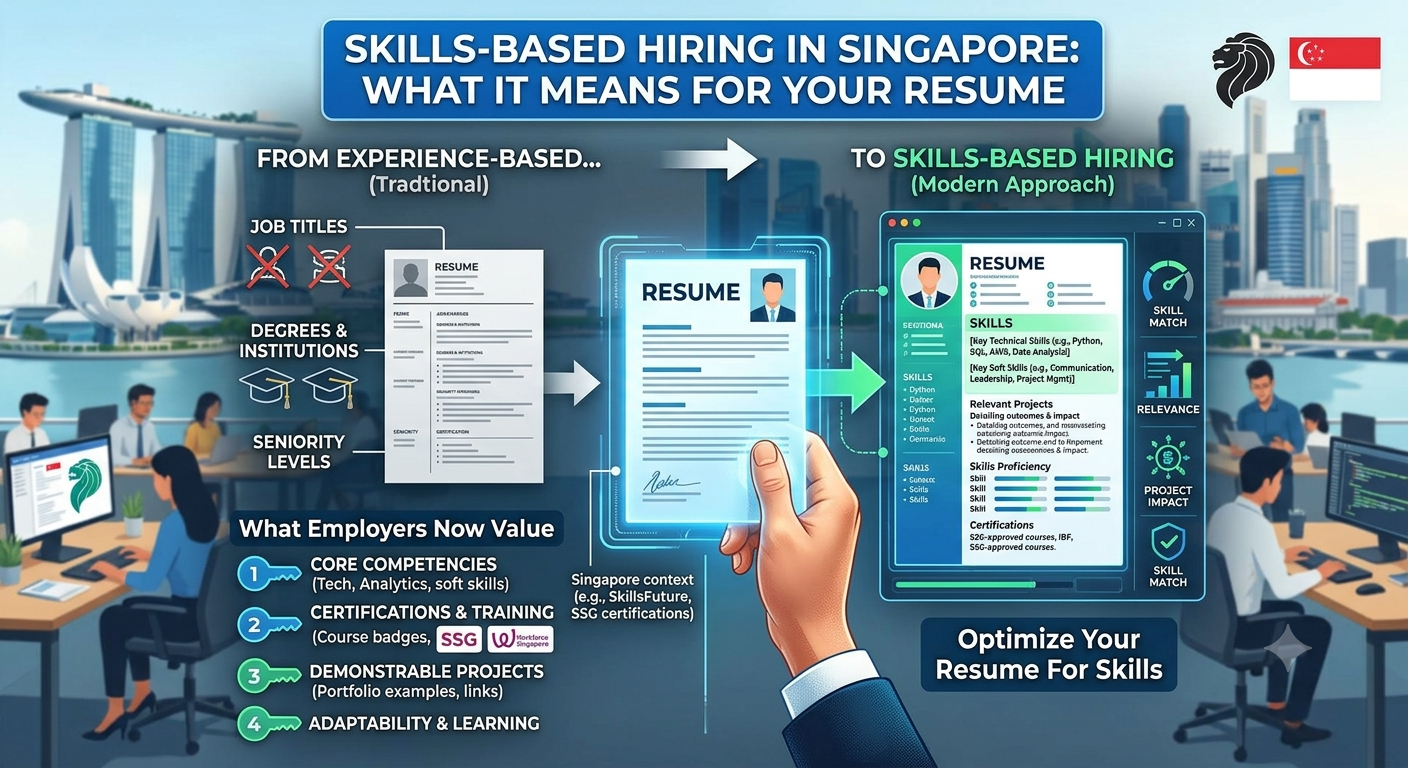
The job market in Singapore is evolving, with more employers looking to employ individuals based on their practical skills, professional knowledge and experience. This is referred to as skills-Based Hiring. Employers will be able to find talented individuals based on what skills they have.
Whilst this presents opportunities for individuals who may not have a traditional education or much work experience, IT means that Your Resume must include relevant skills, accomplishments, certifications and practical experience. “Skills-Based Hiring in Singapore is creating new opportunities for job seekers by allowing employers to assess candidates based on their practical abilities, industry knowledge and relevant experience.”
By understanding what Skills-Based Hiring in Singapore means for Your Resume, you can craft a better application and stand out to employers whilst increasing your chances of finding the right job.
What are Skills-Based Hiring in Singapore?
1. What is Skills-Based Hiring?
Skills-Based Hiring refers to employers focusing on an individual’s skills rather than their traditional qualifications. Instead of looking at traditional qualifications such as your university degree, recruiters will look at whether the candidate has the skills required for a certain role. For example, a company may be hiring for a digital marketing executive and therefore may look for someone with SEO knowledge, content creation skills, social media management and analytical skills.
This is relevant in many industries in Singapore including information technology, financial services, healthcare, digital marketing, engineering and customer service. Employers are looking for employees that can solve problems and are adaptable to the changing needs of the workplace. As a result having practical skills has become a large part of the application process. “Understanding Skills-Based Hiring in Singapore can help job seekers prepare a resume that highlights their strengths and demonstrates their ability to meet employers’ expectations.”
2. Why are Employers in Singapore Adopting Skills-Based Hiring?
There are several reasons why employers in Singapore are looking to adopt a skills-based approach.
Changing needs in the workplace
Technology and digital transformation are changing the way that employers run their businesses. They will therefore be looking for employees with up-to-date technical and digital skills.
Specialist skills needed
Industries such as cyber security, artificial intelligence, finance and data analytics all require specialist skills. Many employers will therefore look for candidates who can demonstrate these skills.
More inclusive
Skills-Based Hiring will allow employers to look at candidates from various backgrounds. Fresh graduates, career changers and individuals with non-traditional qualifications may have opportunities.
Employers want employees that can manage their responsibilities well. Having practical knowledge, communication, teamwork and problem solving skills can all help recruiters find the right candidate.
Overall you should focus on showing proof of your skills rather than your academic achievements. “As Skills-Based Hiring in Singapore continues to gain importance, candidates should focus on developing industry-specific skills and demonstrating how they can contribute to business growth.”
3. How will Skills-Based Hiring Affect Your Resume?
Skills-Based Hiring in Singapore is very important to consider when creating Your Resume. “Under Skills-Based Hiring in Singapore, your resume should highlight your practical abilities, relevant achievements and professional experience rather than focusing only on educational qualifications.”
Traditional resumes may focus more on your academic qualifications, job titles and work history. However skills-based resumes will focus on what you can do.
Consider the following:
Include relevant skills
Add technical and soft skills that align with the job description.
Include quantifiable accomplishments, accomplishments that show your skills such as increasing web traffic or customer satisfaction, practical experience ,Include any internships, freelance work, volunteering or personal projects, professional certifications, any courses or certifications that show your knowledge of certain tools/technologies, relevant keywords, Include any skills or keywords from the job description. Your Resume should clearly show what you can offer.
4. What skills should I include?
The skills you include will depend on the role and industry you are applying for. However many employers in Singapore will look for technical and transferrable skills.
Technical skills
These are skills that relate to the role you are applying for and will help you complete your professional responsibilities. These can include:
Data analysis
Digital marketing/SEO
Programming
Project management tools
Financial analysis
Cybersecurity/Cloud Computing
Soft Skills
These skills will show how well you work with colleagues, manage your responsibilities and overcome challenges in the workplace. Important soft skills include:
Communication
Problem solving
Team work
Flexibility
Time management
Leadership
Try to include skills that are relevant to the role. Don’t include too many skills that aren’t relevant as recruiters will want to see clear links between your experience and the job. “Choosing the right skills is an important part of preparing for Skills-Based Hiring in Singapore, as employers want to see abilities that directly match the requirements of the position.”
5. Show proof of your skills
Including skills on Your Resume isn’t enough to show employers you have them. You should include examples of how you have used them.
For example, if you include content writing as a skill include links to any articles, blogs or other content you have written. Candidates applying for graphic design roles can include a portfolio of their designs.
You can include:
Freelance work
Any professional work you have completed for clients.
Internship experience
What responsibilities you had and what skills you learnt.
Personal projects
Include any websites, apps, marketing campaigns or research you have completed.
Volunteering
Include any responsibilities that show leadership, communication or organisational skills.
Professional portfolio
Give examples of your work to show employers what you can do.
This will help to create a more convincing resume by showing your practical knowledge. “Providing practical examples is an effective way to demonstrate your suitability for Skills-Based Hiring in Singapore and help recruiters understand the value you can bring to their organisation.”
6. Include certifications
Adding professional certifications to Your Resume will help to show employers that you have invested time into gaining relevant skills. Employers in Singapore may look for industry recognised certifications. IT professionals can include certifications relating to cloud computing, networking and cyber security. Digital marketing candidates can include relevant training in SEO, analytics and online advertising.
You can look into courses on websites such as SkillsFuture, Coursera and Google Career Certificates.
When adding certifications include:
Certification/course name
Issuing body
Date of completion
Relevant skills learnt
Only include certifications that align with your career goals.
7. Use keywords from job descriptions in Singapore
Many companies use applicant tracking systems (ATS). This helps them to keep track of their applications and find candidates with relevant experience. It is important to use relevant keywords. Look at the job description carefully and note down any technical skills, qualifications and responsibilities mentioned.
If a company in Singapore is hiring a project coordinator and mentions communication skills, stakeholder management, budgeting and scheduling include these in Your Resume where they apply to your experience. Don’t include too many keywords. Keep Your Resume professional, easy to read and honest.
8. Common resume mistakes
Even if you have great professional skills, you may struggle to stand out to recruiters if Your Resume isn’t showing your strengths.
Avoid:
Generic resume
Sending the same resume to everyone may make IT less relevant.
No proof of skills
Ensure you include accomplishments, projects or professional experience to back up your skills.
Not including transferrable skills
Skills you have learnt in previous industries can still be useful in your new role.
Old information
Ensure all your professional experience, certifications and technical skills are up to date.
Over-exaggerate
Only include skills that you can confidently show in an interview or assessment.
A clear, organised and targeted resume will help recruiters to quickly realise your value as a professional.
9. What is the future of Skills-Based Hiring in Singapore?
Skills-Based Hiring is becoming an important part of the employment scene in Singapore. In 2025, 79.6% of job vacancies didn’t have academic qualifications as their main criteria for hiring (Singapore’s Ministry of Manpower). This shows that employers are looking more at practical skills. In October 2026 Singapore launched the Skills-First Framework for Action. This encourages employers to recognise skills in addition to qualifications and professional experience. This includes initiatives to help with skills-Based Hiring and career progression.
This means continuous learning and professional development will remain very important. Developing your technical knowledge, communication skills and practical experience will help you stay competitive. Whether you are a fresh graduate, experienced professional or looking to change careers having proof of what you can do will become increasingly important.
Conclusion: Skills-Based Hiring in Singapore
Skills-Based Hiring is changing the way employers find and hire talent in Singapore. They are becoming more interested in practical skills, relevant experience and how they can contribute to the organisation. Your Resume should not just include your academic qualifications and previous job titles. It should clearly show your technical skills, transferrable skills, certifications and professional accomplishments.
By creating a skills-based resume, showing proof of your experience and tailoring Your Resume to each job description you can increase your chances of standing out to employers and finding the right career opportunities in Singapore.
Ready to take the next step in your career? Use the Best Job Tools to explore opportunities in Singapore, create a professional resume, and prepare for interviews. Update your skills, showcase your achievements, and apply confidently for jobs that match your abilities.


Leave a Reply