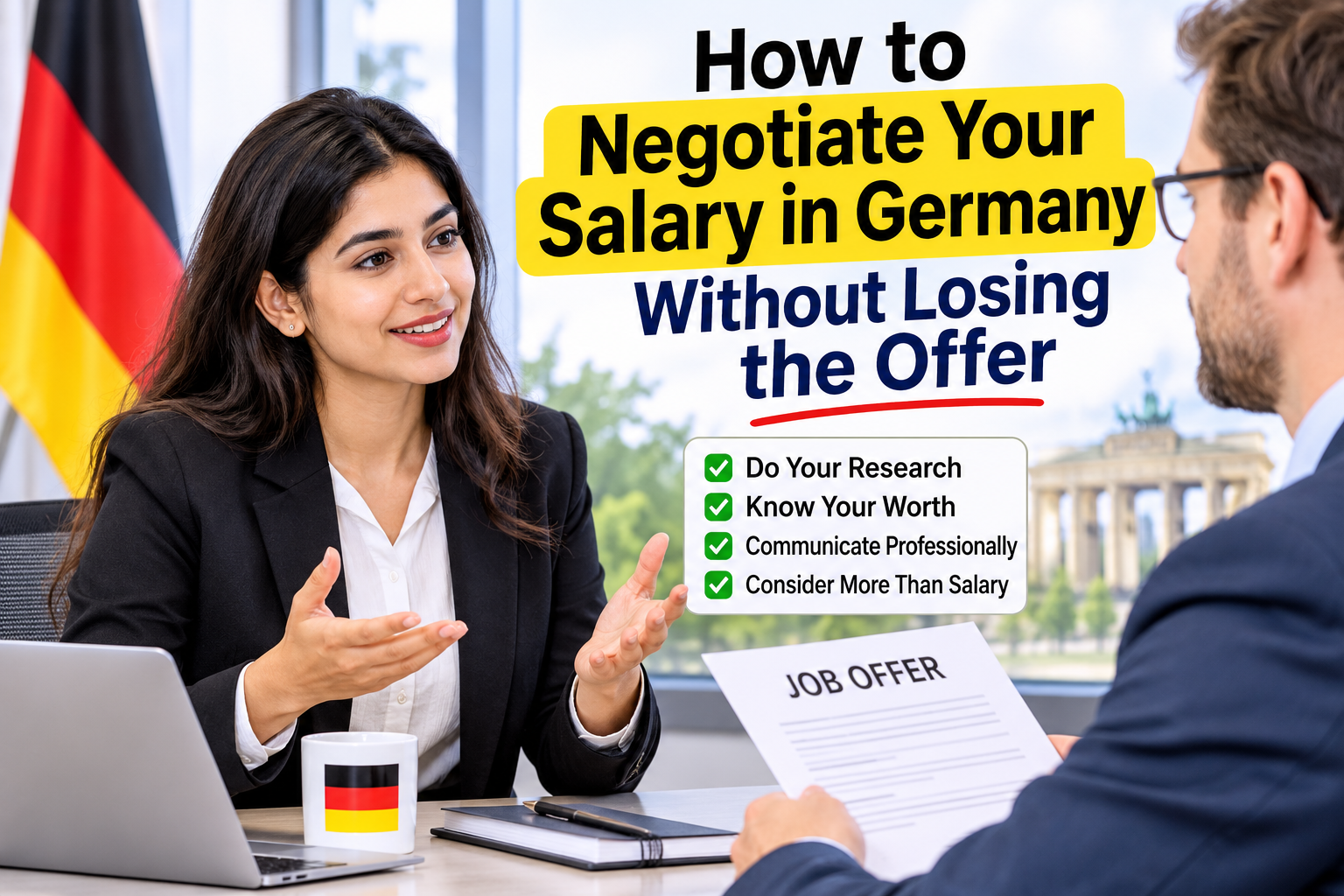
Introduction: Negotiate Your Salary
Landing a job offer in Germany is an exciting time for any job seeker. Whether you’re a fresh graduate or an experienced professional or an international job seeker, landing a job offer with a German employer means that new opportunities await. However, knowing how to Negotiate Your Salary will help you.
Many people feel nervous about negotiating their salary as they’re worried that it can impact their chance of gaining employment. In Germany it’s considered a standard part of professional life to Negotiate Your Salary. It’s common for employers to expect candidates to negotiate their salary. Knowing how to Negotiate Your Salary in Germany will help you gain a fair salary and build a positive relationship with your future employer. By carrying out research, you will be able to Negotiate Your Salary expectations.
How to Negotiate Your Salary in Germany?
1. Research Average Salary
Researching the average salary for professionals within your industry. Salaries can vary depending upon the industry, role, experience, qualifications and location. Some industries may offer higher salaries within IT, Engineering, Finance and Healthcare roles depending on your skills and experience. Salaries can also vary depending upon the city you’re working in.
For example, Munich, Frankfurt, Berlin and Hamburg may offer varying salaries due to the cost of living. There are many websites available to compare salaries, job portals and industry reports. Researching a fair salary will help you to state why your salary expectations are fair. This will prevent you from asking for a salary too high.
2. Know Your Skills and Value
You should know what your salary should be based upon the value you can offer a company. Make a list of your professional strengths, qualifications and achievements. Think about the projects you have completed, problems you have solved and the responsibilities you have taken on. If you have technical skills, language skills, professional qualifications or international experience this will help support your salary.
Fresh graduates will also have internships, academic projects, practical training and relevant skills. When Negotiating Your Salary in Germany focus on stating why you would make a good fit for the role. Avoid asking for more money, instead highlight how your experience and skills can benefit the organization.
3. Negotiate at the Right Time
It’s important to know when to Negotiate Your Salary. Usually it’s best to know what the role entails and what the employer is looking for before negotiating your final salary. If your recruiter asks what your salary expectations are during your initial interview you can state a fair salary range based upon your research. If they don’t ask, wait until they show genuine interest or have made an offer.
Once you have received an offer you’ll have a better chance at negotiating your salary as they have seen you as a good fit. Negotiating your salary at the right time will make the process easier and both parties can discuss the terms.
4. Provide a Fair Salary Range
Avoid stating a salary without doing proper research. Provide a realistic salary range that fits with your experience. If your research suggests that similar roles offer between €45,000 and €55,000 per annum then you can use this to help you. Your salary range should be based upon your qualifications, responsibilities and what the company pays.
It’s also worth noting that German employers will usually talk about gross salary. This is the salary before tax and social security. Providing a fair salary range will help make your Negotiate Your Salary in Germany more professional.
5. Be Polite and Professional
The way you phrase your salary expectations can make a big difference. Ensure that you don’t sound demanding. Use polite and confident language. State your expectations clearly and show that you are interested in the role. For example, you can say:
“Thank you for offering me this opportunity. I am very interested in joining your team. Based on my experience and the responsibilities of this position, I was expecting a salary closer to €52,000 annually. Would there be any flexibility in the proposed package?”
This will create a positive atmosphere and allow the employer to reply. Using professional language when Negotiate Your Salary in Germany can help to keep your job opportunity.
6. Don’t Ask for Too Much
A common mistake that candidates make is to ask for much more than the market rate without a strong reason. This can make it difficult to negotiate as employers will have a set budget. Consider your experience, the company size, industry and role responsibilities.
Also avoid threatening to turn the role down if you’re not genuine. Don’t use another job offer as leverage unless you have one. Keeping your approach balanced when Negotiate Your Salary in Germany will help you build trust and show that you are interested in reaching an agreement.
7. Be Ready for a Counter Offer
Your employer may not be able to offer you the salary you asked for. They may offer you a small increase or state that they don’t have much budget for salary. Don’t take this as a rejection. Take note and consider the overall offer.
If they can’t increase your salary ask if they can review your salary in 6 months / 1 year. You could also ask if there is a performance bonus, extra leave or training. Being flexible can help you reach a suitable agreement. Remember that sometimes Negotiate Your Salary in Germany conversations won’t go as planned and you may not get everything you asked for. Finding a fair middle ground can be the best option.
8. Confirm the Final Agreement in Writing
Once you have agreed upon your salary and benefits make sure all the key details have been added to your employment contract or written offer. Ensure that the gross annual salary, payment dates, bonus criteria, working hours, annual leave and any other agreed benefits.
If the employer has mentioned that they will review your salary after a certain period ask for this to be clearly stated. This is very important for international job seekers as they may be moving to Germany and need to organise their finances. Having a written agreement will ensure that you and the employer are on the same page.
Conclusion: Negotiate Your Salary
Negotiating your salary doesn’t have to be a stressful process. If you carry out proper research, know the market and use professional language you’ll be able to confidently discuss your salary expectations. Understanding your value as a professional, negotiating at the right time, providing realistic expectations and being flexible with the benefits will help you have a successful salary negotiation. Remember that employers will appreciate clear communication and respectful negotiations. Knowing how to Negotiate Your Salary in Germany will help you gain a fair salary. Always take the time to review your job offer as a fresher or experienced professional.
Another point to remember when negotiating your salary is that you want to ensure you have a good working relationship with your employer. Take your time to get to understand what is on offer. If there is anything you’re unsure of be sure to ask questions and make decisions based around your career and financial needs. If your employer cannot meet all of your expectations then having a respectful conversation can help you identify other areas of development. Be confident and know your worth – you should never be afraid to have professional discussions around receiving fair pay.
Looking for your next career opportunity in Germany? Explore trusted job portals, compare available positions, and prepare your CV before applying. Use the Best Job search Tools to discover suitable vacancies, understand salary expectations, and take the next step towards building a successful career in Germany.



Leave a Reply