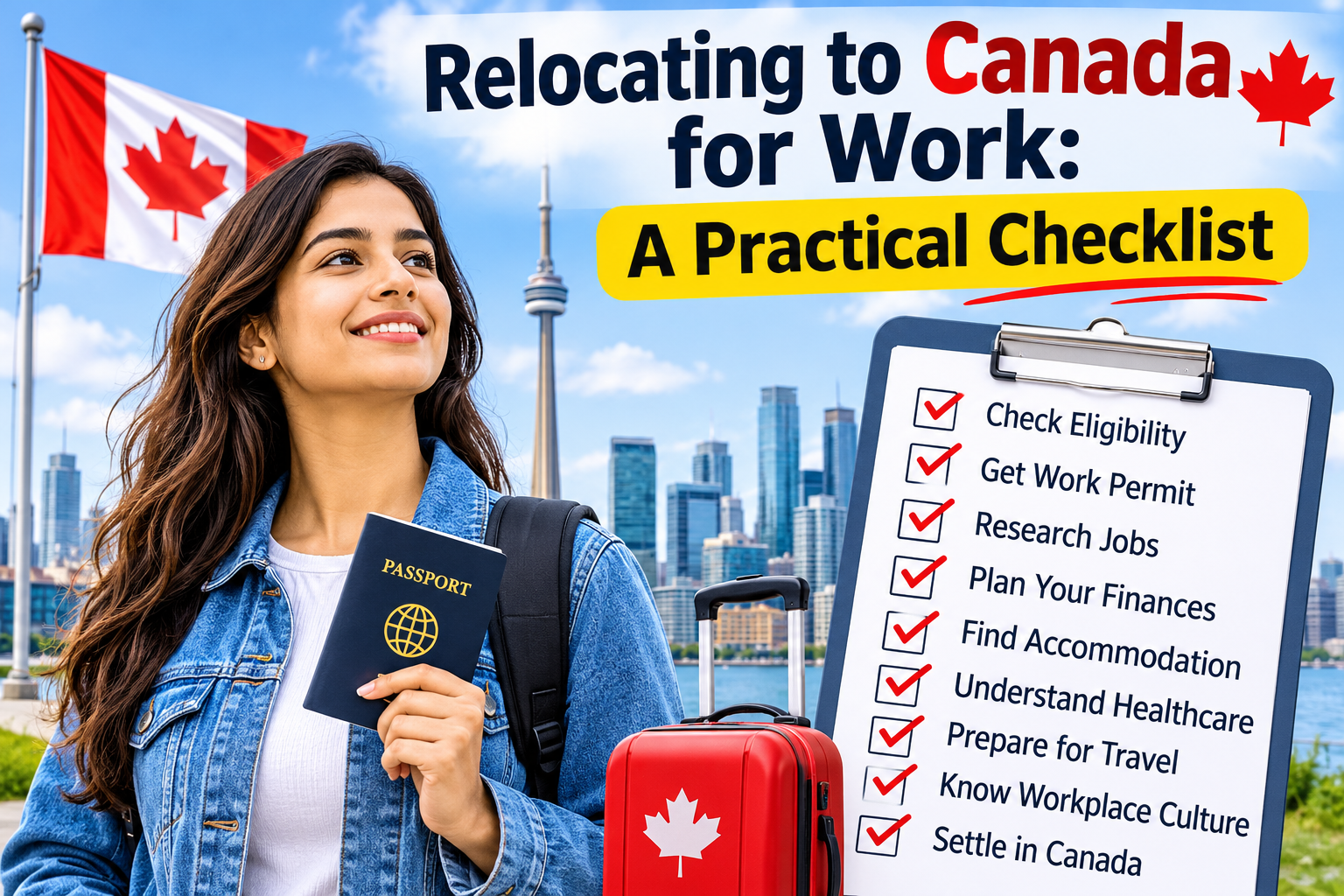
Introduction: Relocating to Canada for Work
Starting a new job in another country can be an exciting opportunity. Canada is a popular destination amongst international workers due to having a strong economy, high-quality lifestyle, great opportunities for professional development and being a very multicultural country. There are many opportunities to work in a variety of different industries including healthcare, IT, Engineering, Construction, Finance, Education and Hospitality.
When moving to a new country you want to ensure that everything is planned properly. Whether it be ensuring you have the correct work permit, finding the right type of accommodation, and managing your money. Once you have a clear understanding of what you need to do to move to Canada for Work, it can be easier to get started. This checklist will help you to organise everything you need to do.
What Should You Know Before Relocating to Canada for Work?
1. Check if you are eligible to work in Canada
Before you plan your trip, you want to ensure you are eligible to work in Canada. Most international workers will require a valid work permit. There are different types of work permits depending on your situation. An Employer Specific Work Permit means you can work for a specific employer in certain conditions.
An Open Work Permit means eligible individuals can work for various employers in Canada. Ensure you understand the requirements required for both and check the official IRCC page for the latest information. This is an important step in Relocating to Canada for Work as it ensures you understand your immigration options and avoid any issues with working without proper authorisation.
2. Sort your Work Permit and Documents
Once you know you are eligible to work, start to sort out the documents you will need to apply. These can include: Passport, Offer of Employment, Certificates of Education, Letters of Experience, Photos and other supporting documents. Depending on your situation some people may need a Labour Market Impact Assessment whilst others may be eligible for an Exempt Work Permit. Ensure your employer provides you with any documents needed. Save copies of all important documents digitally and physically. Starting to sort your documents can help avoid any delays.
3. Research the job market in Canada
Before moving to Canada, it is important to research the job market in your chosen city/Province. Whilst there will be opportunities in different industries there can be varying levels of demand, salary and qualifications. For example, Toronto offers opportunities in Finance, Technology and Business whilst Alberta offers opportunities in Engineering, Energy and Construction.
There are also opportunities for healthcare professionals and skilled trades throughout different provinces. Research job roles, expected salaries and what employers require. You can look at sites like LinkedIn, Indeed Canada and Job Bank. Knowing the job market will help you to make informed decisions about your career.
4. Plan your budget
Moving to Canada can be an expensive process. Before leaving your home country, plan your budget. You may need to budget for flights, accommodation, food, transport, phone bills, clothes and emergency funds. Prices can vary greatly in different cities in Canada. Toronto and Vancouver tend to be more expensive than many smaller cities.
Research what the average renting prices and cost of living will be in your chosen location. It is a good idea to save up enough money to cover your initial costs until you get paid. Planning your money is an important step in Relocating to Canada for Work as it will help avoid any unexpected costs.
5. Find the right accommodation
You will want to find a safe and affordable place to live. Look for rental apartments, shared accommodation, hostels or temporary accommodation. Use websites such as Rentals.ca, Realtor.ca and local rental sites to help you find the right property. Ensure you know what the location is, how much per month it will cost to rent, transport links and nearby shops.
If possible try to find temporary accommodation for the first few weeks. This will allow you to look around different areas and understand what the rental market is like. Finding somewhere comfortable to live will help you to feel less stressed whilst Relocating to Canada for Work.
6. Research Health Care and Insurance
Healthcare is an important thing to consider when moving to Canada. Every Province and Territory has their own public healthcare system. Depending on which province you are moving to and your immigration status, you may not be eligible straight away. Some provinces will require you to wait a certain amount of time to be eligible for public health insurance. Others may offer it sooner. Research what the healthcare requirements are for your chosen province.
Consider taking out private health insurance to help cover any costs whilst you are waiting. Organise your medical documents, prescriptions and vaccination documents. Understanding what the healthcare system will be like will help you to protect your wellbeing once you arrive.
7. Plan your travel and important items
Once you have sorted your work permit and travel, start to plan. Book your flights and check how much baggage you are allowed. Ensure you pack clothes that will be appropriate for the weather in Canada. Many areas can be extremely cold in the winter so you may need warm jumpers, thermals, gloves, scarves and waterproof shoes.
Ensure you have your important documents in your hand luggage including your passport, approved work permit documents, offer of employment, accommodation details and certificates of education. Ensure you also have important numbers and emergency contacts. Planning your travel will help you to stay organised whilst Relocating to Canada for Work.
8. Research Canadian workplace Culture
Understanding the workplace culture will help you to adapt to your new working environment. Generally Canadian workplaces are very punctual, teamwork orientated, great communication, respectful and professional. Employees are often encouraged to share their ideas, ask questions and communicate with their colleagues and management. Being respectful to different cultures and backgrounds is also important as Canadian workplaces tend to be very diverse.
Ensure you understand your contract, hours, salary, time off and benefits. Understanding what to expect in a professional setting will help you to adapt to Relocating to Canada for Work and will help you to form positive relationships with your colleagues.
Conclusion: Relocating to Canada for Work
Relocating to another country for professional development takes careful planning, patience and organisation. Ensuring you have everything sorted such as your work permit, money, accommodation and understanding the workplace culture will help you to have a successful transition.
Ensure you have checked your immigration requirements, sorted your important documents, researched your destination city and saved up enough money for your initial costs. Once arrived focus on completing your important registrations, understanding services and getting involved with professionals.
Canada can offer amazing opportunities for skilled international workers. Taking the time to plan and having a checklist will help to minimise any stress and start your new career with more confidence.
Planning to move to Canada for better career opportunities? Start exploring job openings, prepare your CV, and connect with potential employers. Use the Best Job Tools to discover relevant vacancies and take the next step towards building a successful career in Canada.




Leave a Reply