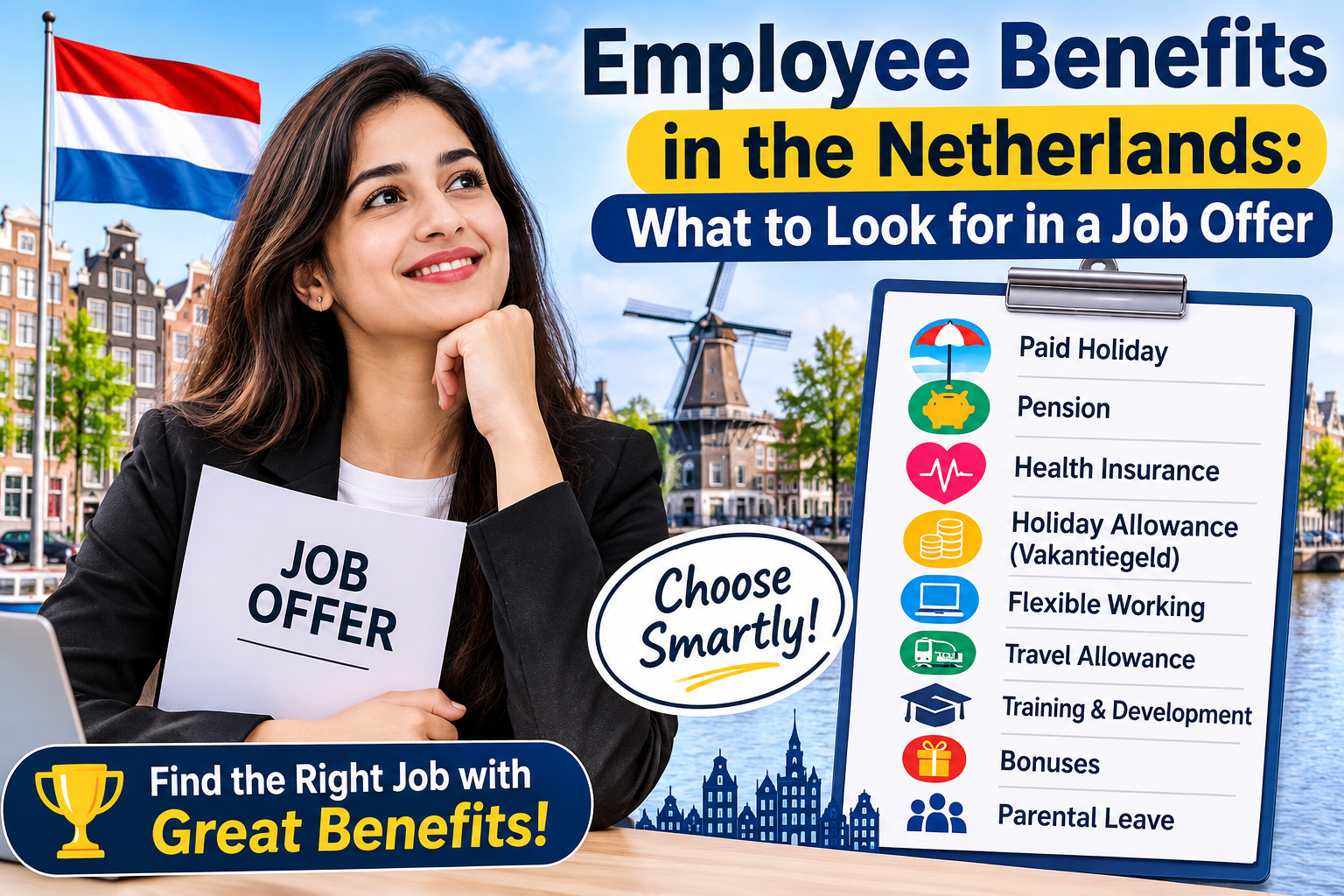
Introduction: Employee Benefits in the Netherlands
When choosing the right job in the Netherlands it is important to take a look at the benefits your employer will offer. Whether you’re a new graduate or experienced professional, if you’re an international worker looking for a job in the Netherlands; knowing what benefits you can expect can make all the difference. Although having a competitive salary is great to know, having additional benefits can really help you in terms of your financial security, work-life balance and job satisfaction.
Take time to look at what your total remuneration package includes. Employers within the Netherlands tend to offer lots of benefits including paid holiday, pension payments, health, travel and flexible working. However, this can vary from company to company and can depend on the industry, contract and applicable collective labour agreement.
This guide will help you to gain an understanding of the benefits your employer can offer. This will help you to compare the best job opportunities, negotiate and ensure that you choose a role that will help you achieve your long term career goals.
Employee Benefits in the Netherlands?
1. Paid Holiday and Public Holidays
One of the most important benefits to look out for is paid holiday. Generally employees will be entitled to a statutory number of holidays based on the number of hours you work per week. This will be a minimum of 4 times the number of hours you work each week. For example if you work 40 hours per week, you will get a minimum of 160 hours of paid holiday per year which is equal to 20 days.
You might also get more holiday days with some employers. You should also check how the company deals with public holidays. There isn’t a legal right for employees to have all public holidays off. Details can be found within your contract or applicable collective labour agreement.
When looking at employee benefits in the Netherlands, it’s important to know what additional benefits are available. Having more holiday can help you achieve a healthy work-life balance and spend time with your family and doing what you want without losing any income.
2. Pension
Another important factor to look at when considering a job offer is pension. Many employers in the Netherlands offer pension schemes to help you gain financial security. Depending on the employer and industry, you may be required to join a pension scheme based on your sector or it could be optional with the company.
Find out how much your employer will contribute and whether you’ll need to contribute to the pension monthly. It’s also important to know who the pension provider will be and the investment opportunities available. Having a good pension scheme can really add value to your remuneration package. When looking at employee benefits in the Netherlands, don’t just look at your monthly salary but also how the employer can help with your financial future.
3. Health Insurance
Healthcare is an important factor to consider when looking for a job in the Netherlands. Most people living/working in the Netherlands will need to take out basic health insurance. Generally employees will organise their own basic health insurance. However some employers may offer additional health benefits including group insurance, contributions to additional insurance, occupational health and wellbeing.
Speak to your potential employer to see if they offer any additional health support. Just because they offer group discounts or additional insurance doesn’t mean you won’t have to organise the mandatory basic insurance. When looking at employee benefits in the Netherlands it’s worth knowing these details. Especially if you’re moving from another country and aren’t familiar with the Dutch healthcare system.
4. Holiday Allowance (Vakantiegeld)
Holiday allowance is a very common benefit in the Netherlands. Employees should receive a minimum of 8% of their gross salary as holiday allowance. There are some exceptions to this rule. Employers will often pay this once a year, usually around May/June. Some employers may have different terms within their contract.
Before accepting a job offer, find out whether your salary includes holiday allowance or not. This can sometimes mean that your salary looks higher than your monthly salary. Knowing about holiday allowance is important when looking at employee benefits in the Netherlands. This will help you to know how much you’re actually earning per year.
5. Flexible Working Hours
Flexibility at work is becoming increasingly important. Many employers in the Netherlands offer flexible working, hybrid working and fully remote roles. Before accepting a role, find out how many days you’ll be expected to come into the office. Check if there are flexible working hours and whether the employer will provide any equipment, internet or home office allowance.
Flexible working can help you to manage your personal commitments, save time on commuting and increase productivity. However it is not always guaranteed that you can work from home. Always ask the company about their policies. Having flexibility at work can be one of the most valuable employee benefits in the Netherlands.
6. Travel Allowance
Having to pay for your commute can affect your monthly spending. Many employers in the Netherlands will offer you a travel allowance. This can include public transport, cycling or car costs depending on the company policy. Some employers may also offer company cars, bikes, public transport or reimbursement for business travel.
Before accepting a role find out if the company offers any reimbursement for your commute. Check if there are any rules regarding how far you live from the office. Find out if the travel allowance is included within your salary. Having travel support can be a great employee benefit in the Netherlands. This can help you save money on everyday costs.
7. Training
Training can help you to develop new skills, improve your qualifications and help you progress within your career. Many employers will invest in you by providing training, online courses, workshops and certifications. Find out if the company has a learning budget or will provide funding for external courses. Ask if employees can attend conferences, mentoring or receive paid time for development.
This can be particularly useful for international workers and new graduates wanting to understand the Dutch job market and gain industry specific knowledge. When comparing employee benefits in the Netherlands look at how much the employer is investing in your future.
8. Bonuses
Some employers within the Netherlands will offer extra payments to thank employees for their performance. This can include annual bonuses, commission, profit sharing or 13th month salary. However this isn’t guaranteed in all workplaces. It will usually depend on your contract, company policy or collective labour agreement.
Before accepting a role find out how bonuses are calculated, when they’ll be paid and whether you need to reach certain targets. Also check whether the annual salary includes any bonuses. This will help you to know how much you could earn per year.
9. Parental Leave
If you have family commitments or are looking to start a family then parental leave is an important factor to consider. The Netherlands has statutory maternity, partner, parental and other family leave. Eligible employees will have different types of leave available to them however the payment and eligibility will vary.
Some employers may offer additional family friendly leave including childcare support, flexible working and extra paid leave. Speak to the employer to see what their parental leave policy is and whether they offer any childcare support. Also ask how they handle returning to work after a long period of time. Family friendly policies can be an important employee benefit in the Netherlands. This helps to improve employee wellbeing.
10. Know your contract and CAO
Before signing your job offer, take time to read through your contract. Check if there is a Collective Labour Agreement (CAO). This is an agreement between employers and employee organisations. This sets out the conditions of employment for a specific sector/company.
This may include additional terms regarding your salary, hours, overtime, holiday, pensions and other employee benefits. Ensure that your contract clearly states your gross salary, hours, probationary period, holiday entitlement, notice period and any additional payments. If you’re unsure about anything, ask the employer to clarify in writing. Knowing what your contract includes will help you to compare employee benefits in the Netherlands.
Conclusion: Employee Benefits in the Netherlands
When looking for the right job, don’t just consider your monthly salary. Having paid holiday, pension, health, travel allowance, flexible working and training can really enhance your experience. Before accepting a role, compare the benefits available, know what your contract says and whether there is a CAO.
This will help you to make an informed decision and ensure that the employer can help you with your financial security, career progression and work-life balance. Overall knowing about employee benefits in the Netherlands will help you find a better job opportunity and create a more rewarding career.
Ready to find a job in the Netherlands that offers more than just a competitive salary? Explore the latest opportunities with the Best Job Tools, compare employee benefits, and connect with employers who support your career growth. Start your job search today and take the next step towards a rewarding career in the Netherlands!





Leave a Reply