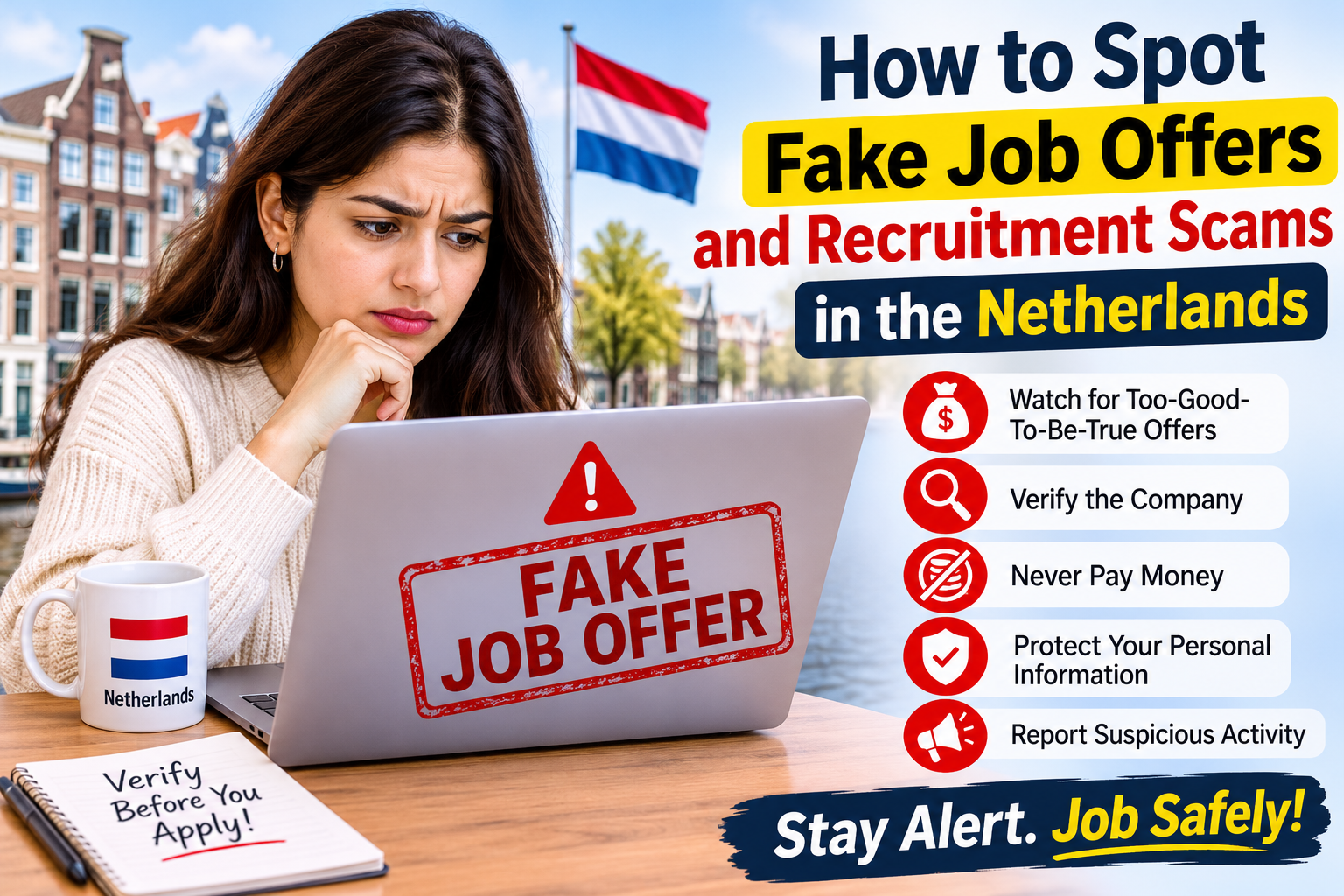
Introduction: Spot Fake Job Offers and Recruitment Scams
Finding employment in the Netherlands can be a great opportunity however there are many fake job recruitment scams online due to the number of online job platforms and recruitment agencies. Often fake recruiters will try to take advantage of those seeking employment by offering great sounding jobs and high salaries. Learning how to Spot Fake Job Offers and Recruitment Scams can help job seekers identify suspicious opportunities and protect themselves from fraudulent recruiters.
Understanding how to Spot Fake Job Offers and recruitment scams will help you to keep your money, personal information and career safe. Whether you are looking to apply for your first job or just exploring new opportunities, knowing the signs will help you make safer decisions. This article will show how recruitment scams work, what to look out for and how to verify a company.
How to Spot Fake Job Offers and Recruitment Scams?
1. Look out for jobs that are Too Good to be true.
One of the easiest ways to Spot Fake Job Offers and recruitment scams is by looking at the offers listed in the job. Often scammers will offer very high salaries, great benefits and flexible working hours without asking for any relevant qualifications or experience. For example, they may offer a high paying job working from home with instant selection after a quick chat online.
Legitimate employers will assess candidates with interviews, skill tests and background checks. They will also give clear information about what the job will involve and what the employment conditions are. If the job sounds Too Good to be true for similar roles within the Netherlands then do some research into the company and opportunity.
2. Ensure that the company is legitimate.
Before applying to any roles, research the company offering the role. Check their website, address, contact details and online presence. Legitimate employers will have lots of information about their business, what they offer, their management team and available roles.
You can also check if they are registered with the Dutch Chamber of Commerce (Kamer van Koophandel/KVK). You can search the official business register for companies registered in the Netherlands. However, scammers can often pose as legitimate employers so ensure you are able to Spot Fake Job Offers and recruitment scams by checking the company’s email, website and contact details match.
3. Don’t pay for your job.
A legitimate employer/recruitment agency shouldn’t charge you for a job. Scammers may ask you to pay to register, attend interviews, verify documents and training. They may also ask you to pay for specialist equipment or administration.
If they pressure you to send money quickly to get the job, never give them your bank details or send money. This is an important point to know when learning how to Spot Fake Job Offers and recruitment scams. International employees may not be familiar with how recruitment works in the Netherlands.
4. Be wary of unprofessional communication.
Often fake recruiters will contact you using personal email addresses, messaging apps or poorly worded messages. They may have spelling errors, poor description about the job, no information about the company and incorrect contact details.
Professional recruiters will often use company email addresses and will have clear information about how they will be recruiting. They should be happy to answer any reasonable questions about the role, salary, workplace and contract. If they are evasive or use unprofessional methods to contact you then do some research.
5. Be cautious about giving personal documents.
During recruitment employers may ask for documents such as your CV, academic certificates, ID details and work authorisation. However, giving out personal information too early can lead to identity theft and fraud. Don’t give out personal information such as passport copies, bank account details, national ID and other personal information until you have verified the employer.
Legitimate organisations will have clear information about how they will collect, process and keep your personal data safe according to the correct privacy rules (General Data Protection Regulation). If you want to Spot Fake Job Offers and recruitment scams then be wary if they ask for unnecessary personal information.
6. Do some research on the recruiter.
Recruitment agencies are an important part of finding the right candidates for employers in the Netherlands. However, scammers will sometimes pose as well known recruitment companies. Search the recruiter on LinkedIn. Check that they have worked for the company they say they have.
Search for the agency on their website and call/ email them using the contact details provided. Don’t always trust social media profiles as scammers can create fake profiles using stolen photos and professional information. This will help you to Spot Fake Job Offers and recruitment scams.
7. Be wary of pressure to accept the job.
A common sign of fake recruiters is pressuring you to accept the job. Scammers will often create a sense of urgency by saying the role will be taken within hours or that you need to complete the recruitment process by a certain date. This stops the candidate from checking important information.
Legitimate employers will usually give you a reasonable amount of time to read through your employment contract, understand your salary and ask any questions. Make sure to read through your contract carefully to ensure that the company details, role, hours and salary match the original offer. A legitimate recruitment process should give you enough time to make an informed choice.
8. Read through your employment contract.
An employment contract is an important part of starting a new job in the Netherlands. It should clearly state important employment information such as your salary, hours, job title, holiday entitlement, notice period and any other benefits. If the employer isn’t willing to give you a contract or they send one with incorrect company details, unclear role and unrealistic salary then be wary.
Check that the company name and registration details match. Knowing how to Spot Fake Job Offers and recruitment scams means knowing what a legitimate employment contract should include. If you’re unsure, seek advice from a qualified employment advisor.
9. Know who to report scams to.
If you have been offered a suspicious job or feel like someone is trying to scam you, don’t engage with them until you have verified the situation. Save any emails, messages, requests for money, phone number and website details. In the Netherlands you can report any suspected fraud to the Dutch police.
If they have been misleading you with commercial practices or suspicious business activity then you can report them to the Netherlands Authority for Consumers and Markets (ACM). If they have misused your personal information then you can seek advice from the Dutch Data Protection Authority.
Conclusion: Spot Fake Job Offers and Recruitment Scams
Looking for employment in the Netherlands can be a great opportunity to find exciting career opportunities. However it is important to be aware during the recruitment process. Fake recruiters will often offer high salaries, create a sense of urgency and ask for personal information. Doing some research on the employers, verifying the recruitment agencies, not paying for suspicious items and reading through your employment contract will help you make safer choices with your career.
Knowing how to Spot Fake Job Offers and recruitment scams will give you more confidence when applying for jobs and contacting recruiters. Always take your time to verify any opportunities. A legitimate employer will be happy to answer your questions and give you clear information.
Start Your Job Search with Confidence! Explore Best Job Tool in the Netherlands, connect with trusted employers, and take the next step towards building a successful career. Always verify job offers before sharing personal information or accepting an employment contract.




Leave a Reply