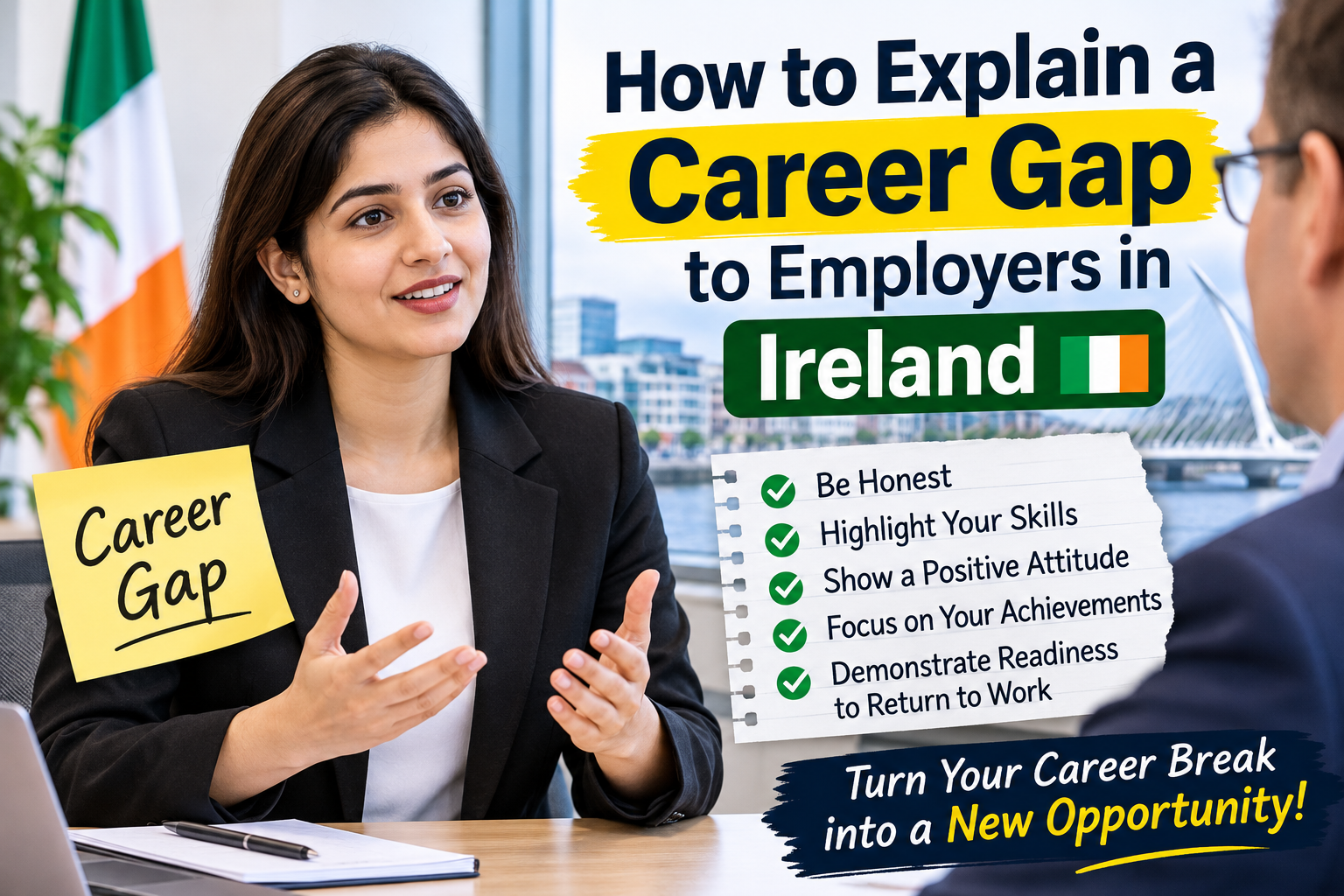
Introduction: Career Gap
It is actually quite common to take a Career Break. Whether it’s due to personal commitments, health, further study, moving house or looking for new career opportunities, there can be a few reasons why someone would take a break out of work. When then returning to the workforce it can be daunting to speak to employers about your Career Gap. So knowing how to talk about a Career Gap will help you create a good impression in interviews.
Employers in Ireland will generally be looking for candidates who display the right skills, experience, flexibility and eagerness to learn. Although having a Career Break can cause some questions, having a good way to talk about this can help you gain the job. Below are tips to help you.
How to Explain a Career Gap?
1. Be Honest
Being honest is one of the most important aspects of talking about your Career Break. Don’t hide any gaps in your employment history and don’t be misleading with your CV. If employers ask any questions relating to your Career Gap having a honest answer will allow you to talk to them in a professional manner. Keep your answer simple and give a short reason for why you had a Career Break. Whether you had personal commitments, were going on holiday or doing further study, keep your answer straightforward. This shows you have confidence in your answer.
2. Practice your Answer
Preparing your answer will help you feel more confident when asked by recruiters. Think about why you left your last role, what you were doing during your break and why you are now ready to return to work. Make sure your answer flows naturally. For example, if you were caring for a family member you could say that you had to put family first but are now ready to focus on your career goals. Having a well prepared answer will show you are mature, aware and confident.
3. Highlight Any New Skills
Whilst you may have had a break in your employment you may have still been learning new skills. Whether it was through volunteering, freelancing, personal projects, online courses or managing your own commitments. For example, you may have improved your organisation, time management and problem solving skills through looking after your family. Or improving your technical knowledge through online training courses. Talking about this will help employers understand that you have still been developing during your Career Break.
4. Update your CV
Your CV is very important when applying for a new role. Make sure to include your previous employment, qualifications, skills and any training you completed. If you have had a Career Break, add this into your CV. Either by adding a new section ‘Career Break’ or ‘Professional Development.’. Include the dates and a short explanation. Keep this relevant and don’t include too much personal information. Also make sure you have updated your professional summary to include your skills, experience and eagerness to return to the workforce.
5. Talk About Your Achievements
Don’t let your Career Break be the main focus of your conversation. Talk about Your Achievements, previous roles and what you contributed to previous companies. Talk about any successful projects, targets you hit, clients you supported or improvements to processes. Be specific with your examples. Employers in Ireland will want to know what you can offer their company. Focus on your strengths to help change the focus from your Career Break.
6. Talk About How You’ve Kept Up To Date
Some employers may be concerned that you haven’t kept up to date with your industry. This can be relevant in industries such as technology, finance, healthcare, marketing and engineering. Mention any relevant qualifications, webinars, events, online courses or groups you’ve joined. Following industry publications and learning about new technologies shows your eagerness to develop your professional skills. Showing that you have kept up to date during your Career Break will give employers peace of mind.
7. Be Confident & Positive
The way you come across can affect how employers view your Career Break. Don’t be apologetic and don’t make it seem like a failure. Be confident with your answer and explain how your situation has helped prepare you for the next stage of your career. For example, you could say that you used the time to reflect on your career goals, learnt new skills and what type of role you want. Having a positive outlook will show that you understand your career goals.
8. Practice Answers to Common Questions
Employers may ask a variety of questions to find out more about your employment history and why you’re looking to return to work. Preparing answers to common questions will help you stay calm and answer clearly.
Some questions you may be asked:
Why did you leave your last role?
Can you tell us about your employment gap?
What were you doing during your break?
How have you kept your skills up to date?
Why are you looking to return to work?
Prepare short, relevant answers. Keep your answers professional and focus on what you can do now. Being prepared to talk about your Career Break will help you feel more confident in interviews.
9. Show You’re Ready to Return
Employers want to know that you’ll be able to cope with the responsibilities of a new role. Explain why you’re ready to return and how this role fits your current career goals. Talk about how you’re available, have relevant experience, have updated your skills and are enthusiastic about the role. If you’re applying for a different industry mention how your current skills can be transferred. Being genuinely enthusiastic will help employers see your Career Break as part of your journey.
Conclusion: Career Gap
Talking about your employment gap doesn’t have to be a daunting task. Employers will generally want to know more about your professional journey, skills and how you’re ready to contribute. Being honest, preparing your answer, updating your CV and highlighting Your Achievements will help you feel more confident in interviews.
Remember your Career Gap doesn’t define your potential. Your skills, experience, attitude and eagerness to learn are just as important when applying for opportunities in Ireland. Focus on what you can offer employers now and clearly explain your career goals.
Ready to restart your professional journey in Ireland? Update your CV, highlight your skills, and prepare a confident explanation of your employment break. Explore the Best Job Tool in Ireland and take the next step towards building a successful career.




Leave a Reply