Introduction: Build a Second Career
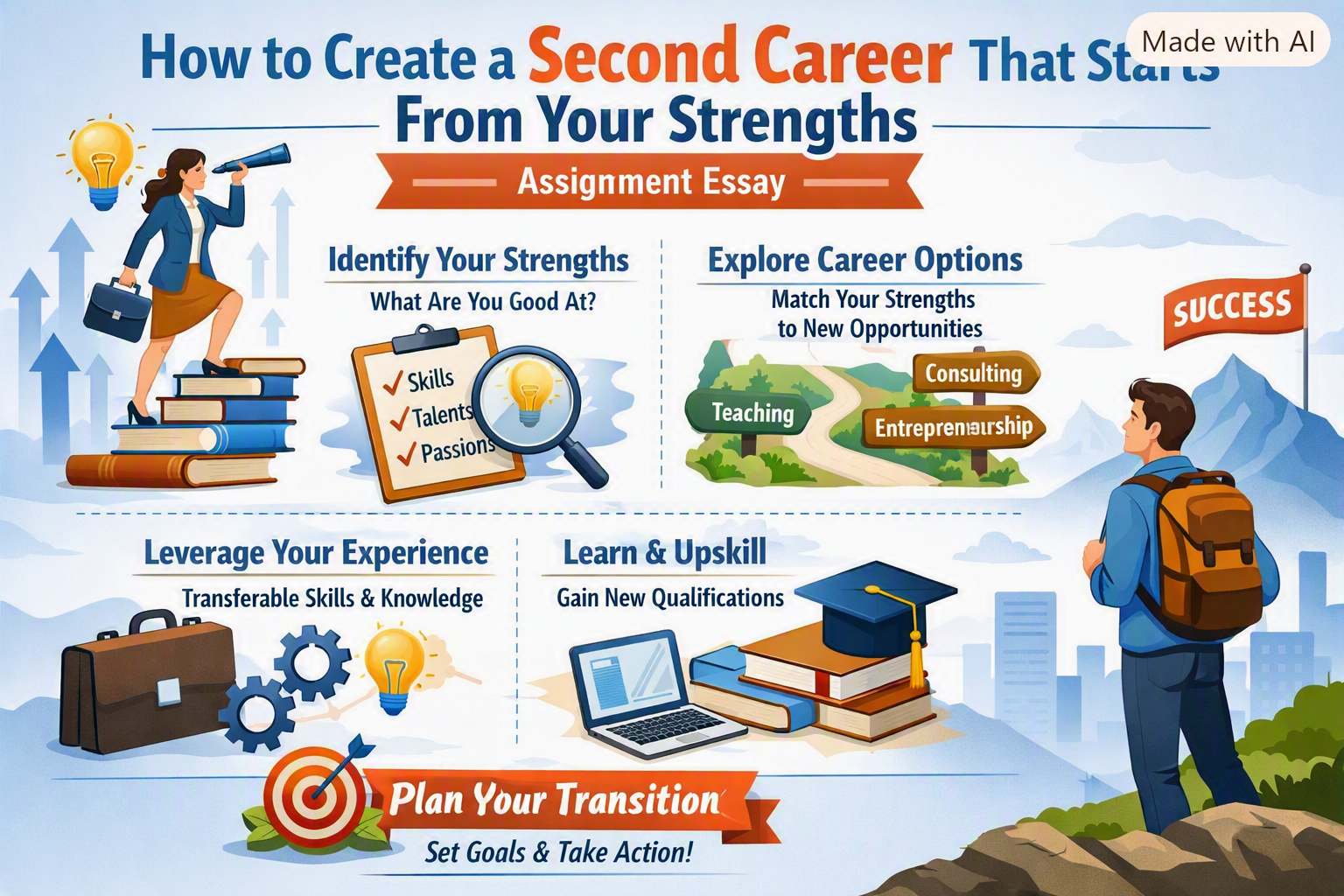
While starting a new career at age 45 might be intimidating, it presents a tremendous opportunity to leverage all of your skills. By the time you reach this stage in life, you have gathered years of professional expertise and valuable insights into the type of work you enjoy. Instead of reinventing the wheel, consider building your next professional chapter around your strongest skills and the types of work that you have excelled at in the past.
How to build a second career that starts from your strengths at 45 focuses on building a professional future on the skills that have served you well in the past.
How to Build a Second Career That Starts From Your Strengths at 45?
1. Understanding Your Strongest Skills
Your first order of business is to identify the skills that have been your strongest assets and determine how you can apply these skills in your next role. Reflect on the jobs you have held in your life and think about the skills that served you well. You might excel at communicating with others, managing, mentoring, or motivating people. Perhaps, your strongest skill is your ability to negotiate, understand finances, sell, or resolve conflicts. Additionally, you might have valuable technical skills or know a foreign language.
It is essential to make a list of all the tasks you have been consistently performing well and identify the skills required to perform these tasks. Next, cross-reference these skills and think about the work areas where your expertise would be a good fit. Consider what transferable skills you have that would enable you to make a smooth career transition. For instance, project managers can transition into careers in operations, while sales managers can become business consultants. If you have been working in a specialized field, there is a good chance that some of your skills would be applicable in other industries.
2. Focusing on Transferable Skills Enables a Smooth Career Change
When you change careers, you often do not need to start from scratch. You only need to identify the skills required to succeed in your desired field and match these requirements to your existing skill set. Think about how your expertise can help you hit the ground running in your new industry or occupation.
For instance, your years of experience in sales could be a tremendous advantage in business development. Individuals with years of experience in human resources can consider coaching, recruitment, or training as viable career options. Make sure you highlight how your skills and experience can address the needs of your future employer.
3. Choosing the Right Career Transition Based on Your Needs
When you are thinking about how to build a second career that starts from your strengths at 45, think about the lifestyle you desire. Do you want more flexibility, better work-life balance, and more independent work? Make sure you have realistic expectations about your next career. Research the industries and occupations that you are considering and talk to people who have successfully made the transition.
You should not feel pressured to embark on a complete career switch if you do not feel ready. At 45, you still have ample time to explore different career options before making a final decision. You might also want to consider the financial implications of your career transition. It is always a good idea to have a steady income stream, at least, for a while, as you learn new skills and gain more experience in your next field.
4. Leverage Learning Opportunities to Acquire New Skills
While you might need to learn new skills to make a career change, acquiring all the skills required to excel in a specific profession might not always be necessary. You might want to consider short courses, training, and certifications that will augment your skills. For instance, if you are considering a career in digital marketing, you might want to invest time and effort in learning SEO (search engine optimization), rather than pursuing a traditional business degree.
If you want to consider a career in analytics, you could start by learning Excel or acquire certifications in data visualization. Make sure the learning opportunities you invest in are directly relevant to the career you want to pursue.
5. Prove Your Skill Set with Practical Work Samples
A lot of times, new career changers find themselves in a catch-22 situation, where they need experience to get a job, but they do not have the experience yet. One way to address this issue is to supplement your professional experience with practical work samples. Showcase examples of your work, case studies, and samples that demonstrate your capability and expertise in the desired field. You could also start by taking up freelance gigs or work-from-home jobs to gain more experience and build a portfolio.
6. Networking Can Help You Find Your Next Career Opportunity
Your professional network is one of your most powerful assets when it comes to changing careers. Reach out to your network and let them know what type of work you are looking for in the future. Ask for their advice and support, and let them know you are looking to pivot to a different area.
Make sure you have clearly defined the space you want to move into so that your network knows how they can help. You could also consider using LinkedIn to connect to people in your desired industry. While it is essential to talk to people about your needs, the conversation does not always have to be about asking for a job. Sometimes, all it takes is a simple conversation to help you gain new insights and receive advice from people who have successfully made a similar career transition.
Conclusion: Build a Second Career
Building a second career at 45 does not mean starting over; it means using the skills, experience, and strengths you have already developed. By identifying your transferable skills, understanding your interests, strengthening any knowledge gaps, and exploring opportunities that match your abilities, you can create a career path that feels both practical and meaningful.
A successful career change takes patience, planning, and continuous learning. Most importantly, your previous experience can become an advantage, helping you bring valuable perspective and confidence to your next professional chapter.
Ready to build a second career around your strengths? Identify your transferable skills, explore suitable opportunities, and take your next step with the Best Job Tool platform to discover jobs that match your experience and goals.
Leave a Reply