Sales engineering and technical pre-sales are increasingly important career paths for professionals who enjoy technology but also want to work closely with customers, business teams, and revenue functions. These roles combine technical knowledge, communication, problem-solving, and commercial awareness.
Unlike traditional engineering roles, sales engineering focuses on helping customers understand how a product or solution can solve a specific business problem. As a result, professionals in this field often work across product demonstrations, technical presentations, solution design, proof-of-concept projects, and customer discussions.
For professionals considering this career path, it is important to understand the different roles available, the skills employers expect, and how to build relevant experience. Remote and hybrid opportunities have also expanded the career options, allowing technical pre-sales professionals to work with customers across regions without relocating.
Understanding Sales Engineering and Technical Pre-Sales
Sales engineering is the technical side of the sales process. A sales engineer works with account executives, customers, product teams, and technical stakeholders to explain how a product or service addresses specific requirements.
Technical pre-sales follows a similar model. The professional becomes involved before a customer makes a purchasing decision and helps connect the customer’s business requirements with a technical solution.
Typical responsibilities include:
- Understanding customer requirements
- Delivering product demonstrations
- Preparing technical presentations
- Answering technical questions
- Designing solution architectures
- Supporting proposals and RFP responses
- Conducting proof-of-concept demonstrations
- Working with sales teams during negotiations
- Coordinating with product and engineering teams
- Helping customers evaluate technical feasibility
Therefore, this career path is suitable for professionals who want to use technical knowledge in a customer-facing environment.
Common Career Paths in Sales Engineering
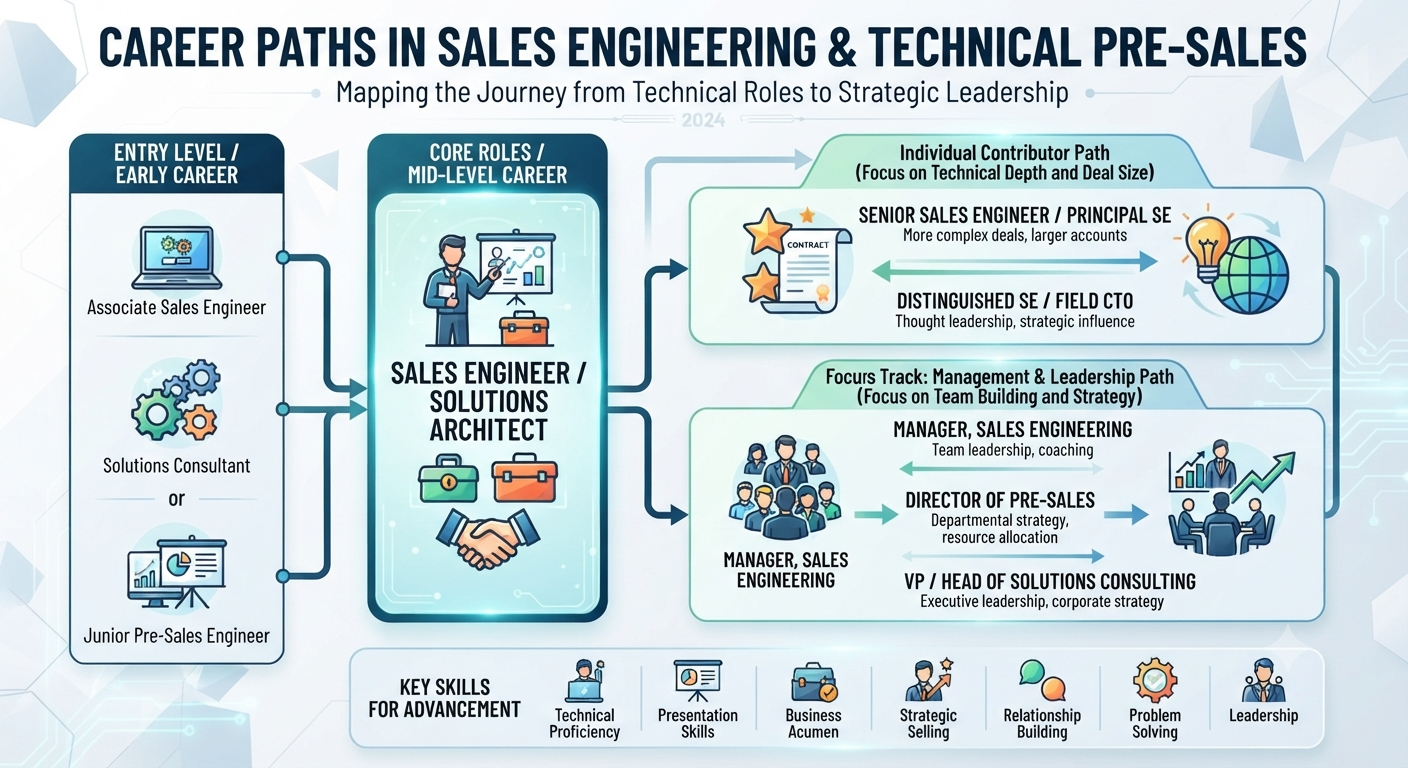
Sales engineering is not a single job title. Professionals can move into several specialized roles depending on their technical background and industry.
A common progression starts with roles such as Sales Engineer, Solutions Consultant, or Technical Consultant. With experience, professionals can move into senior positions such as Senior Sales Engineer, Solutions Architect, or Principal Solutions Consultant.
Another path leads toward management. Experienced professionals can become Sales Engineering Managers, Directors of Pre-Sales, or Heads of Solutions Engineering.
Specialized career options include:
- Cloud Solutions Consultant
- Cybersecurity Sales Engineer
- SaaS Solutions Engineer
- Data Solutions Consultant
- Network Solutions Engineer
- Enterprise Solutions Architect
- Technical Account Executive
- Pre-Sales Manager
- Solutions Engineering Director
The right direction depends on technical specialization, customer segment, industry, and long-term career goals.
For example, someone with cloud infrastructure experience may move toward cloud solutions architecture. Meanwhile, a cybersecurity professional may specialize in security demonstrations, compliance requirements, and technical evaluations.
Skills You Need to Build a Successful Career
Technical knowledge is important, but successful sales engineers need more than engineering skills. They must translate complex information into practical business language.
Communication is therefore one of the most important skills to develop.
Focus on building these capabilities:
- Technical presentation skills
- Business communication
- Product demonstration
- Requirements discovery
- Solution design
- Negotiation support
- Public speaking
- Customer relationship management
- Business analysis
- Problem-solving
In addition, learn to ask effective questions. A strong sales engineer does not immediately recommend a product. Instead, they first understand the customer’s existing systems, challenges, budget considerations, technical limitations, and expected outcomes.
For example, rather than saying, “Our platform has automated reporting,” ask what reporting process the customer currently uses and what problems exist with that process.
This approach makes technical conversations more Pathsrelevant and improves the quality of the proposed solution.
How to Move Into Technical Pre-Sales
Professionals from engineering, IT, software development, consulting, and technical support can transition into pre-sales.
Start by identifying the technical areas you already understand. Then connect those skills to customer-facing activities.
A practical transition plan can include:
- Choose an industry focus
Select an area such as SaaS, cybersecurity, cloud computing, networking, data platforms, or enterprise software. - Develop customer-facing skills
Practice presentations, demonstrations, discovery calls, and technical explanations. - Create demonstration projects
Build small projects that show how a technology solves a realistic business problem. - Learn sales fundamentals
Understand sales pipelines, qualification, proposals, RFPs, customer objections, and buying processes. - Work with sales teams
Volunteer for customer presentations or technical discussions in your current organization. - Update your resume
Highlight customer interaction, technical presentations, solution design, and measurable business outcomes rather than listing only technical tools. - Apply for transitional roles
Technical consultant, implementation consultant, solutions consultant, and customer-facing technical support roles can provide useful entry points.
This gradual approach can be more effective than trying to move directly from a purely technical role into a senior pre-sales position.
Remote Work and Global Opportunities in Pre-Sales
Remote work has changed how sales engineering teams operate. Many technology companies now support distributed sales teams, allowing technical professionals to participate in customer meetings from different locations.
However, remote pre-sales requires strong digital communication. A technical demonstration that works well in an office may become difficult to follow during a virtual meeting.
To succeed remotely:
- Prepare demonstrations before customer meetings.
- Test screen sharing, audio, and software access.
- Keep technical explanations concise.
- Use diagrams when complex architecture needs explanation.
- Document customer requirements after every meeting.
- Maintain clear communication with account executives.
- Schedule meetings across time zones carefully.
- Keep technical documentation organized.
Travel may still be part of some sales engineering careers. Enterprise customers may request onsite Paths workshops, technical evaluations, conferences, or implementation planning sessions.
Therefore, professionals should understand the travel expectations of a specific role before accepting an offer. Reviewing travel requirements during the interview process can help avoid unexpected schedule disruptions.
Travel testing can also be useful for professionals who frequently work remotely. Before an important customer presentation while traveling, test internet reliability, VPN access, conferencing software, presentation files, and backup connectivity.
Productivity and Financial Planning for Sales Engineers
Sales engineering can involve multiple Paths customer opportunities at the same time. Managing Paths demonstrations, technical questions, proposals, internal meetings, and follow-ups requires strong organization.
A practical productivity system can include:
- Use a calendar to protect preparation time.
- Maintain a checklist for every customer demonstration.
- Create reusable presentation templates.
- Keep technical FAQs organized.
- Document customer requirements immediately after meetings.
- Prioritize opportunities based on deadlines and business impact.
- Reserve focused time for proposal and solution-design work.
Financial planning is equally important when evaluating career opportunities. Sales engineering compensation can include salary, bonuses, commissions, or performance-based incentives.
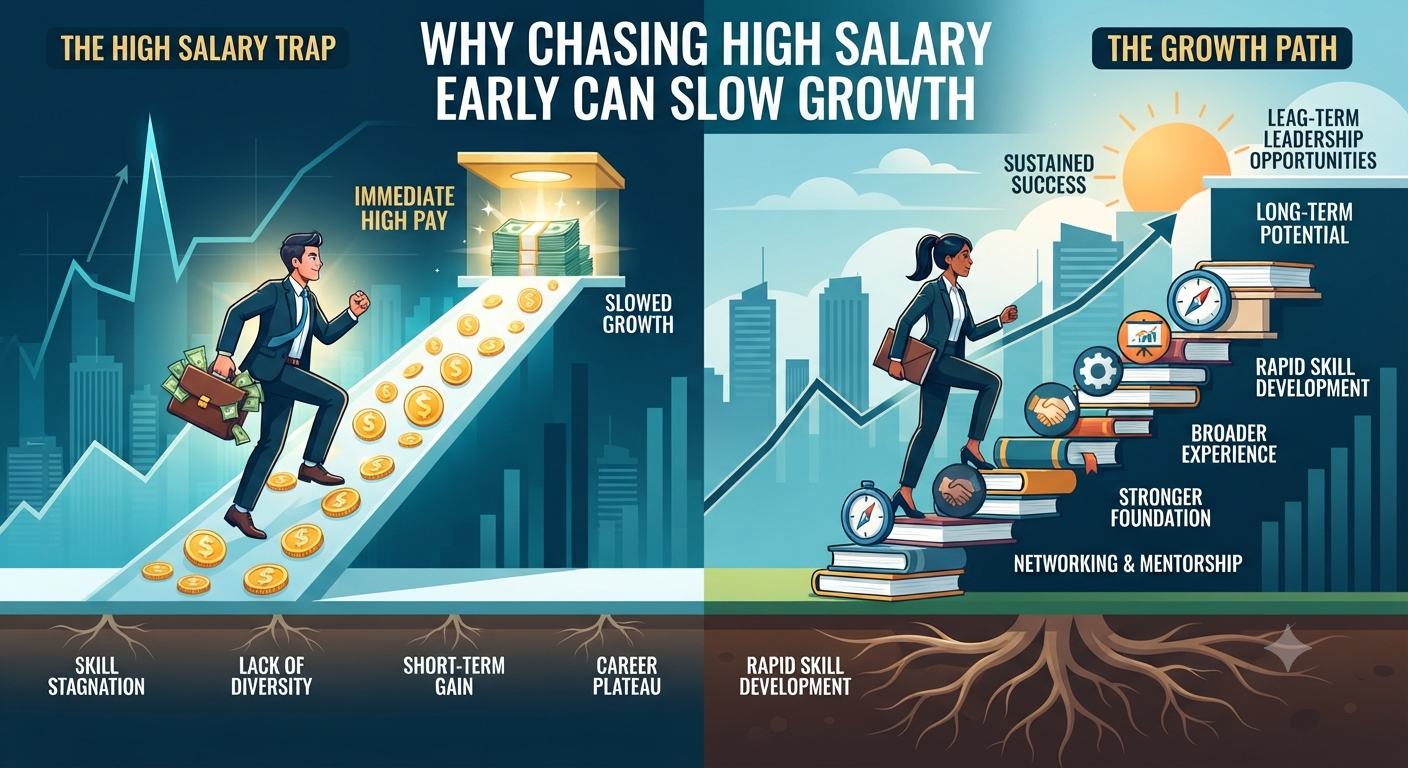
Before accepting an offer, evaluate the Paths complete compensation structure rather than focusing only on base salary.
Consider:
- Base compensation
- Variable compensation
- Commission structure
- Performance targets
- Travel expenses
- Professional development support
- Remote-work arrangements
- Relocation requirements
- Expected working hours
Professionals who travel frequently should also understand how business travel expenses are reimbursed and whether travel time affects their working schedule.
When comparing opportunities, calculate expected annual income under realistic performance assumptions instead of assuming the maximum variable compensation.
Building a Long-Term Career in Technical Pre-Sales
Long-term growth requires continuous development because technology, customer expectations, and sales processes change quickly.
Start by selecting a technical specialization that has strong relevance to your target market. Cloud computing, cybersecurity, artificial intelligence, data platforms, automation, and enterprise SaaS are examples of areas where technical and commercial skills often overlap.
At the same time, develop business knowledge.
Learn how companies evaluate technology investments, calculate return on investment, manage operational risks, and measure implementation success.
Networking can also accelerate career development. Participate in industry events, technical communities, professional groups, webinars, and customer-facing projects.
When searching for new opportunities, a global job platform such as best job tool can help professionals explore positions across different companies and locations.
Keep your professional profile updated with measurable achievements. Instead of writing “gave product demonstrations,” use evidence such as the number of demonstrations delivered, customer segments supported, or projects Paths influenced when those figures are available.
Conclusion
Sales engineering and technical pre-sales offer a career path for professionals who want to combine technology, communication, and business problem-solving. The field provides opportunities across SaaS, cloud computing, cybersecurity, data, networking, enterprise technology, and other industries.
Success requires more than technical expertise. Professionals must understand customer requirements, communicate complex concepts clearly, support sales teams, and design solutions that connect technology with measurable business needs.
Remote work has also expanded access to global opportunities, although some positions still require customer travel or onsite workshops. Therefore, candidates should evaluate travel expectations, compensation structures, productivity requirements, and career progression before accepting a role.
With continuous technical learning, stronger Paths communication skills, practical customer experience, and deliberate career planning, professionals can build sustainable careers in sales engineering and technical pre-sales. Using a global job platform such as best job tool can also support the search for opportunities that match specific technical skills, industries, and work arrangements.



Leave a Reply