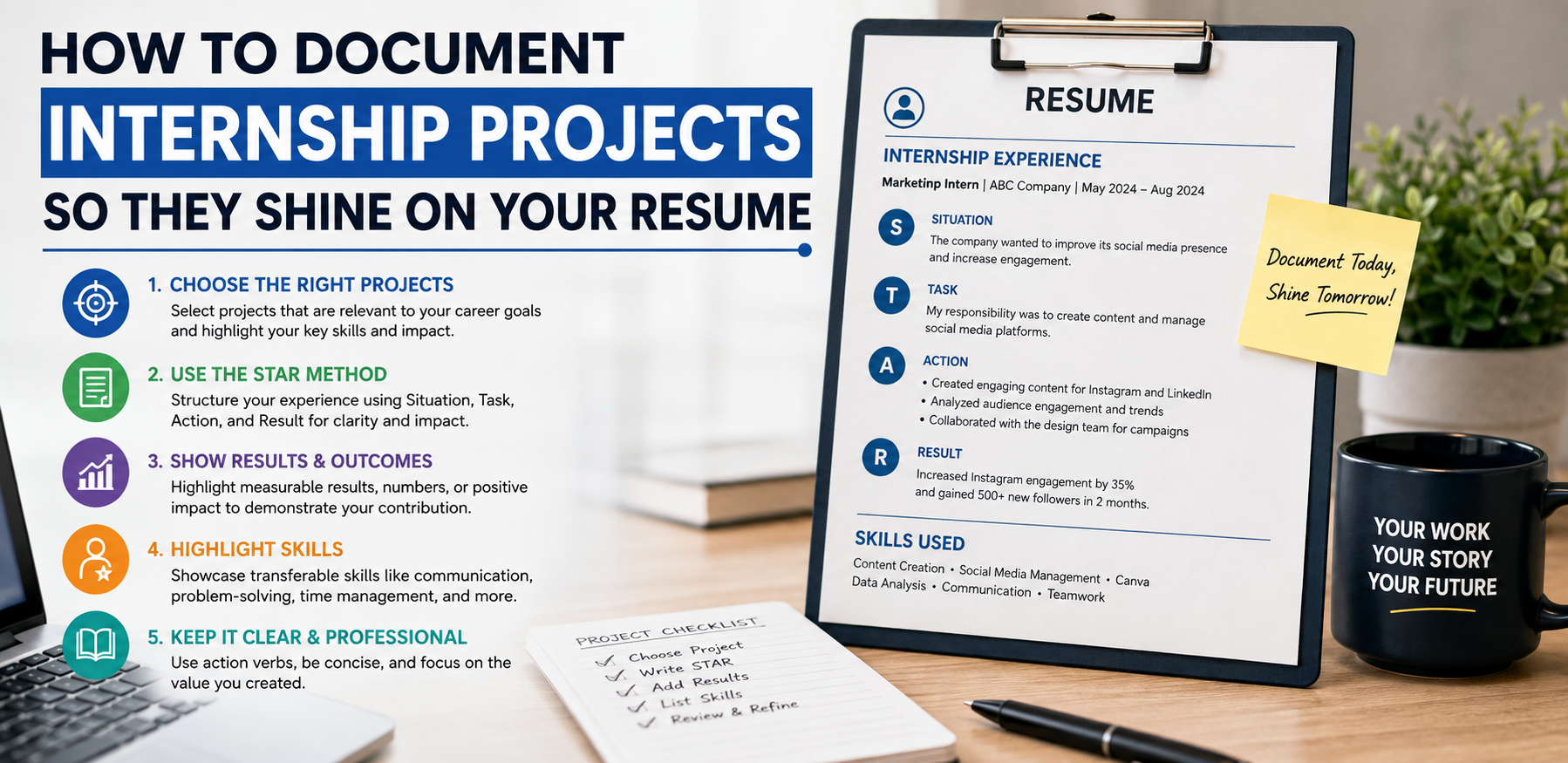
Introduction: Document Internship Projects
Many of us have done several internships in addition to our main job. These are very beneficial when it comes to getting a job. Having experience with internship is definitely a good thing, but many people do not understand how to document internship projects on your resume.
In this article, we will understand document internship projects so they shine on your resume.
How to Document Internship Projects So They Shine on Your Resume?
1. Choosing the Right Internships to Showcase
Firstly, it is important to understand that every internship is not suitable for your resume. You need to choose only those projects which are directly related to your target role or career goal. Relevance is more important than quantity.
Select those internships which shows your skills, problem-solving ability, and learning mindset. If you have started any project for just experiment and leaves it incomplete, then avoid that project including in your interview. Strong internships are those which represent your capabilities in a professional way, whether it is small or big.
2. Using the STAR Method
The STAR method is a popular framework for structuring career stories:
- S – Situation: Set the context. What was the situation or problem?
- T – Task: Describe your responsibility or role.
- A – Action: Explain what actions you took to address the task.
- R – Result: Share the outcome or impact of your actions.
Example:
- Situation: I wanted to build a writing portfolio
- Task: I needed to publish quality content
- Action: I wrote and published articles on Medium consistently
- Result: I published 9 articles and got accepted into 2 publications
This method keeps your story concise, structured, and impactful.
3. Showing Outcomes and Results
For professional presentation, only telling “what you did is not enough” telling “what was the result” is more impactful. If possible, tell your outcomes as a number or a measurable results, such as views, engagement, improvement, reach, or efficiency. If numbers are not available, then mention qualitative results, such as improved clarity, positive feedback, or successful outcomes to your internships to build credibility.
4. Highlighting Transferable Skills
The biggest benefit of Internship is you can showcase your transferable skills, which works for every role. Whether project is technical or creative, you can show skills like communication, problem-solving, time management, research, creativity, and ownership mindset. While writing description, also mention process instead of just telling output, such as planning, coordination, taking feedback, or maintaining consistency. These skills will shows that you can take responsibility easily.
5. Quantify Your Achievements
The most effective way to present internships is with numbers, percentages, or measurable results. Do not only say you have improved sales; instead, say, “I increased sales by 30% within six months.” This clearly shows the interviewer, the impact of your work. Quantifying achievements converts your efforts into concrete proof and boosts your credibility. It makes your results memorable and convincing.
Conclusion: Document Internship Projects
Your internship projects are often the strongest evidence of your abilities when you are starting your career. Instead of listing only your internship title, explain the projects you worked on, your specific contributions, the tools you used, and the results you achieved. Well-documented projects demonstrate initiative, practical experience, and problem-solving skills that employers value.
By keeping detailed records throughout your internship and presenting them with clear, measurable achievements, you can turn even a short internship into a powerful asset that helps your resume stand out and increases your chances of securing future opportunities.
“A great internship deserves more than a simple job title on your resume. Showcase your projects, achievements, and measurable impact with Best Job Tool.”




Leave a Reply