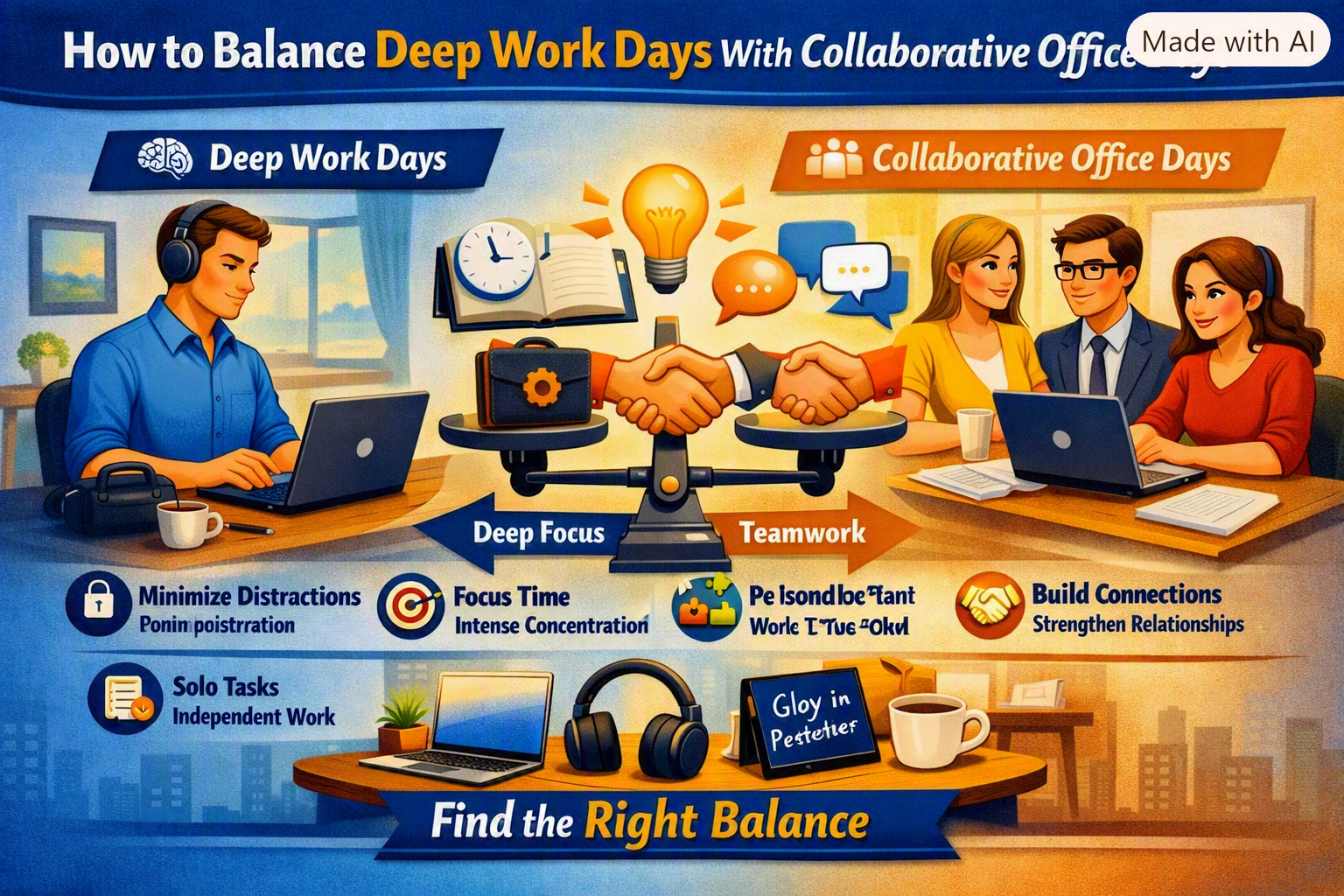
Introduction: Balance Deep Work Days
Modern offices are all about multitasking. Some days you need to be communicative, chatting, brainstorming, or debating. Other days you need to save your energy for deeper tasks, like report writing or strategic thinking. The key to a healthy work-life balance is understanding when you need time for focused work and who you need to collaborate with
How to balance deep work days with collaborative office days offers guidance on both practices.
How to Balance Deep Work Days With Collaborative Office Days?
1. Understand the Difference Between the Two
Deep work is where you spend your day tackling problems which require your undivided attention, like report writing, data analysis, creating or studying slides, project-planning, or coding
Collaborative days are used for meetings, chatting, and brainstorming. It’s days full of talking with people, and conversing with clients and bosses.
The first step is to figure out what kind of work requires what kind of atmosphere.
2. Plan Your Week In Advance
Start by scheduling your important, undistracted days in advance. As you look at your schedule, block out days or even just hours where you know you’ll have to be communicative and unable to focus on anything else. Then plan your week around filling those days with lighter work, and harder, more distracting work around your undistracted days
Say you always have meetings on Mondays and Tuesdays. You could plan report writing and other big projects for Wednesdays and Thursdays, leaving Fridays free for smaller tasks.
Again, your week does not need to look like this, but it’s about using your undistracted days as anchors in your otherwise busier and more scattered work days.
3. Save Time by Protecting Your Deep Work Time
Deep work only gets you so far if you’re constantly getting interrupted, switched off, or distracted. If you’re doing your deeper tasks, make sure you’re giving it your full attention
One way to do this is by turning off all notifications on your devices and only checking them every hour or so.
If possible, have your colleagues know that whenever you’re doing a specific and important task, you’re unavailable for any communications
In some calendars this can be done by changing your status to something like “Do not disturb” or “Focus time”. Even an hour of quality, non-interrupted work can produce more results than eight hours of distracted, unfocused work.
4. Make Sure Collaborative Days Are Actually Useful
Collaborative days are about meetings and talking but should not be wasted on needless conversations
Before jumping into every meeting, know why it’s necessary and what needs to get talked about.
That way you can prepare talking points, questions, and ideas to actually contribute to the outcome of the meeting, and move onto your next task faster. Another idea is to batch your meetings together so you can create long, uninterrupted blocks of time for focused work. Similarly to how undistracted days need to be shielded from distraction, focused work needs to be shielded from meetings, interruptions, and any other distractions.
5. Explain Your Communication Style to Your Team
It might not always be obvious to your team when you need to be left alone or when you’re available. The good news is that explaining your needs and desires around focused work doesn’t take much
Maybe tell your colleagues or team, “I’m working on this report this morning so I’ll be unavailable until lunch”
Having a clear, communicative attitude towards organizing your days also means being communicative with other people
6. Leave Yourself Some Room to Transition
It can be mentally taxing to switch from a highly communicative day to a focused day. Your brain needs some breathing room to make the switch
Take a break to stretch or review your meeting notes in between focused work sessions to give yourself some space. Or even tidy up your desk, get a glass of water, or decide on your plan of attack for that day’s deep work session. Anything to give your mind a little break.
Conclusion: Balance Deep Work Days
Deep work and collaboration are two of the most important parts of a balanced and happy workplace. Knowing when to multi-task and when to put the world on pause for a focused report-writing or strategic-planning session can make all the difference. Keep in mind that the healthiest schedule is planned, not found, and use the following tips to keep a balance between focused and collaborative work.
Ready to find a work setup that fits your productivity style? Explore opportunities on Best Job Tool and discover roles that support both focused deep work and meaningful collaboration.
Leave a Reply