
Career growth in your 30s is often associated with acceleration. Professionals are encouraged to pursue promotions, increase their income, accept leadership responsibilities, change companies, build professional networks, and continuously acquire new skills. While ambition can create valuable opportunities, constant acceleration is not the only path to long-term career Down .
For some professionals, slowing down strategically in their 30s can create a stronger foundation for their 40s. Slowing down does not mean abandoning ambition or accepting stagnation. Instead, it can mean becoming more selective about opportunities, developing deeper expertise, protecting personal productivity, strengthening finances, and making career decisions based on long-term objectives rather than short-term recognition.
This approach can be particularly valuable in a working environment where remote roles, international opportunities, changing technology, and flexible career paths have expanded the number of choices available to professionals.
The goal is not to do less simply for the sake of doing less. The goal is to build a career that remains sustainable and valuable over time.
1. Replace Career Speed With Career Direction
During the early stages of a career, changing jobs frequently can help professionals gain experience. However, as responsibilities increase, constantly changing direction can make it harder to develop deep expertise.
Your 30s can be a useful period for identifying where you want your professional experience to lead.
Instead of asking only:
“How can I get promoted faster?”
consider asking:
“What do I want to become exceptionally good at?”
A clearer direction can help you choose opportunities more selectively.Slowing
Evaluate potential career moves based on:
- Skill development
- Industry knowledge
- Leadership opportunities
- Long-term earning potential
- Professional reputation
- Work-life sustainability
- International opportunities
- Future career flexibility
A slower decision does not necessarily mean a slower career. Sometimes it prevents a fast move in the wrong direction.
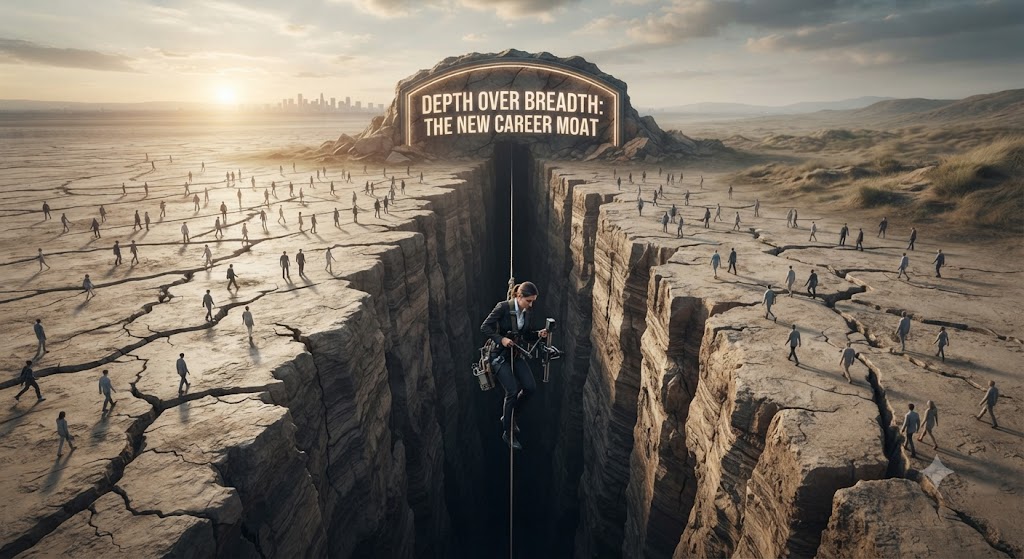
2. Build Deep Expertise Instead of Collecting Titles
Job titles can change quickly. Expertise takes longer.
Professionals who spend several years developing deep knowledge in a valuable area may eventually become the people others consult when complex problems arise.
Developing expertise requires repetition, challenging assignments, and exposure to different situations.
Focus on:
- Solving increasingly difficult problems
- Understanding the business behind your role
- Learning how decisions affect customers and revenue
- Documenting successful projects
- Developing specialized knowledge
- Teaching others what you have learned
For example, a marketing professional might move beyond general campaign execution and develop deep expertise in performance measurement, customer acquisition, or marketing operations.
That specialization can become more valuable as responsibilities increase.
3. Protect Your Energy and Productivity
Career acceleration often comes with longer working hours and more responsibilities. Sustaining that pace indefinitely can reduce productivity.
Slowing down strategically means identifying the work that requires your highest level of attention.
For remote professionals, this may involve establishing clearer boundaries between work and personal time.
Useful practices include:
- Creating defined working hours
- Protecting uninterrupted focus periods
- Reducing unnecessary meetings
- Limiting nonessential notifications
- Scheduling regular breaks
- Maintaining a consistent sleep routine
- Taking genuine time away from screens
Productivity is not measured only by the number of hours spent working. The quality and impact of those hours matter as well.
Professionals who protect their energy can potentially maintain strong performance for longer periods.Slowing
4. Use Your 30s to Strengthen Financial Stability
Career planning and financial planning should develop together.
A professional who earns more but continuously increases expenses may have less flexibility than someone with a slightly lower income and stronger financial reserves.
Your 30s can be an important period for building financial flexibility.
Consider prioritizing:
- Emergency savings
- Retirement contributions
- Debt management
- Insurance
- Long-term investments
- Professional development
- Planned travel
- Major future expenses
Financial stability can also influence career decisions.
If you maintain adequate savings, you may have more flexibility to consider a career transition, professional education, relocation, or a temporary period between jobs.
Before making a major career decision, calculate your essential monthly expenses and determine how long your available savings could support them.
This turns career flexibility into something measurable rather than theoretical.
5. Make Remote Work a Career Advantage
Remote and hybrid work can provide flexibility, but professionals need to use that flexibility intentionally.
Instead of treating remote work simply as a way to avoid commuting, use Slowing additional time strategically.
You might use saved commuting time for:
- Professional learning
- Exercise
- Family responsibilities
- Portfolio development
- Networking
- Financial planning
- Rest
Remote work can also expand access to employers outside your immediate location.
However, professionals should evaluate international and remote opportunities carefully. Consider time zones, employment arrangements, tax requirements, communication expectations, and travel restrictions before accepting a role.
Travel testing can also help. If you are considering working remotely from another city or country, try a short period first.
Track:
- Internet reliability
- Workspace quality
- Productivity
- Meeting compatibility
- Living expenses
- Time-zone challenges
- Work-life boundaries
This allows you to test whether a location supports your professional routine before making a larger commitment.
6. Become More Selective About Career Opportunities
Not every promotion, job offer, project, or certification deserves your time.
As your career develops, opportunity selection becomes increasingly important.
Before accepting an opportunity, ask:
What will this add to my career three years from now?
A role may be worthwhile if it provides:
- Valuable expertise
- Leadership experience
- Industry exposure
- Strong professional relationships
- Higher earning potential
- International experience
- Greater career flexibility
On the other hand, an opportunity that offers only a slightly better title but significantly more stress may not support your long-term objectives.
This creates a more structured way to evaluate career moves.
7. Build a Career That Can Compound Into Your 40s
The strongest reason to slow down strategically is the compounding effect of career decisions.
Skills accumulate. Professional relationships accumulate. Industry knowledge accumulates. Reputation accumulates. Financial savings accumulate.
This approach focuses on career capital rather than constant movement.
Career capital includes the combination of skills, experience, credibility, relationships, and results that make a professional valuable in the marketplace.
Conclusion
Slowing down your career in your 30s does not mean becoming less ambitious. It can mean becoming more deliberate.
Instead of measuring progress by promotions, salary increases, job changes, or hours worked alone, consider whether your career is developing deeper expertise, stronger professional relationships, greater financial stability, and sustainable productivity.
Use remote work strategically. Test travel arrangements before making major commitments. Protect your energy. Develop specialized skills. Save consistently. Evaluate opportunities based on long-term value rather than immediate status.
The objective is to arrive in your 40s with more than an impressive job title. Ideally, you want a combination of expertise, financial flexibility, professional credibility, and career options.
A best job tool, as a global job platform, can support this process by helping professionals explore opportunities and compare roles based on their longer-term career objectives.
Career growth does not always require moving faster. Sometimes, slowing down long enough to choose the right direction can create a stronger foundation for everything that comes next




Leave a Reply