Introduction
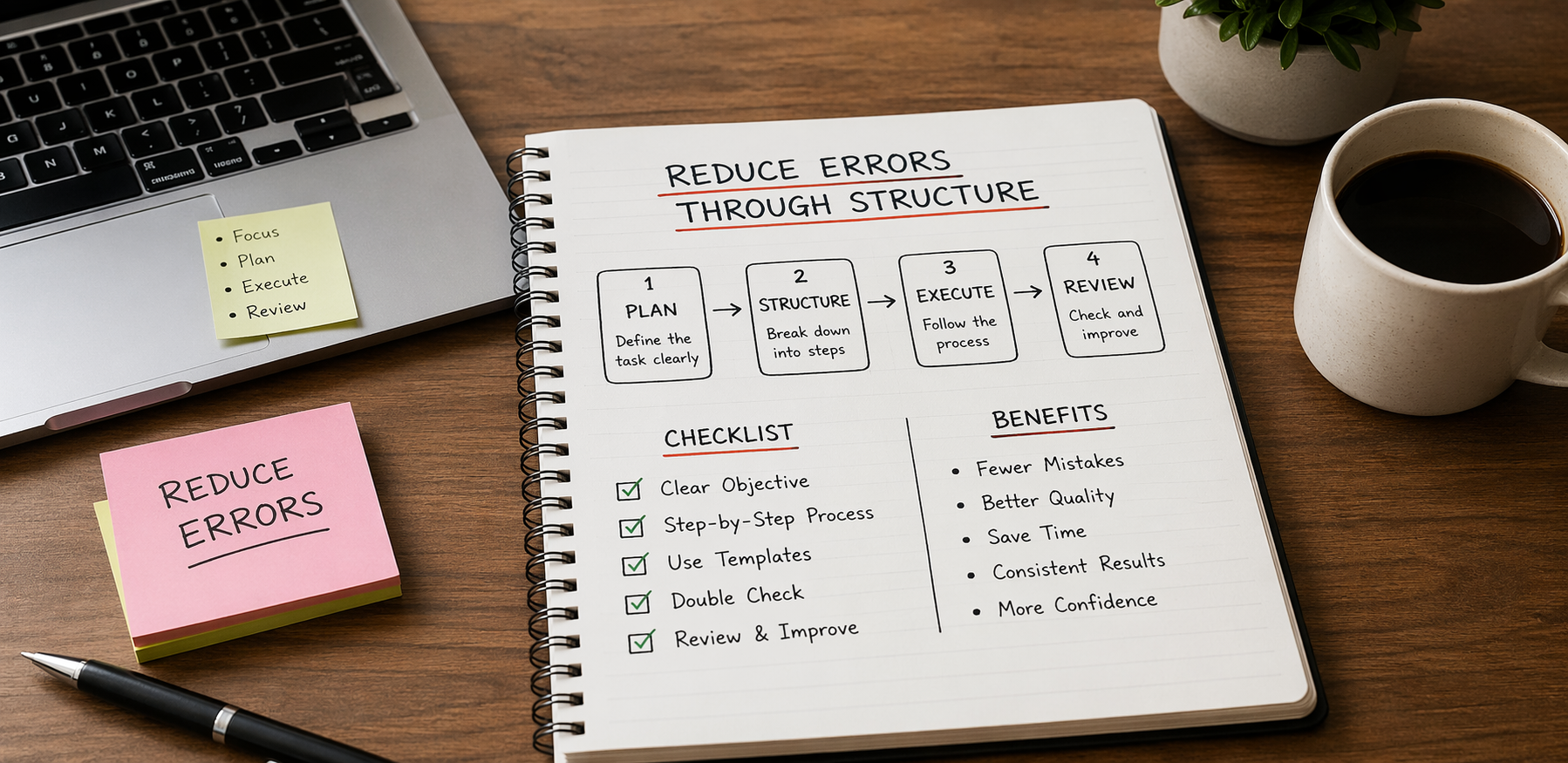
Reducing errors is very important because the more mistakes we make, the higher the risk of failure. But reducing errors does not mean doing more hard work. It means doing your work in a structured way so that mistakes can be minimized. It also means completing every task properly so that you can achieve your goals and move towards success.
In this article, we are going to understand how we can reduce errors through structure.
How to Reduce Errors through Structure?
1. Break Work into Clear Steps to Reduce Errors
The first and most effective way to reduce errors is to break your work into clear steps. When a task is big and we try to complete it all at once, the chances of making mistakes increase, which can affect the final result. That is why dividing big tasks is a smart move.
Break the task into smaller parts. For example, if you have to write an article, you can divide it into steps like research, outline, first draft, editing, and then proofreading. This way, there is less confusion, and you can focus on each step properly, which helps reduce mistakes.
2. Use Checklists (Your Error Shield)
Another strong way to reduce errors is to create a checklist. When you make a checklist, you include every important point, so nothing gets missed. This helps reduce the chances of mistakes.
For example, if you are a content writer, your checklist can include: grammar checked, headings clear, CTA included, and proper formatting done. This way, you can easily review your work and notice everything. Nothing important will be missed, which reduces errors and improves the overall quality of your work.
3. Follow Templates to reduce errors
Following a template is one of the best ways to reduce errors. When you complete a task in the best way once, using the same method again is a smart move. It reduces the chances of mistakes because you already understand the structure, and everything is planned in advance.
For example, a blog structure can be: introduction, problem, solution, example, and conclusion. When you follow the same structure every time, you gradually become more professional in your work. As a result, every part gets completed with proper quality, and the chances of making mistakes become much lower.
4. Separate Creation and Editing
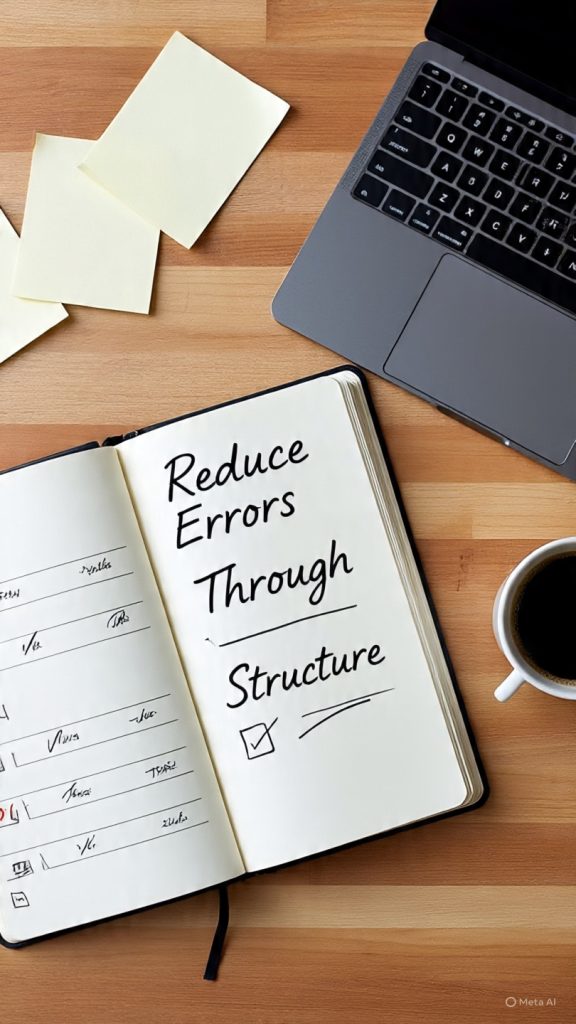
Many people edit their work while doing it to make it better and faster. But this is a big mistake because it actually increases errors. When you try to create and edit at the same time, your focus gets divided. You are not able to fully focus on writing or editing, and the quality of both decreases while mistakes increase.
That is why it is best to separate creation and editing. If you are a content writer, first write your ideas freely, and then focus on errors and edit it later. This way, you can give full attention to both writing and editing, which helps reduce content errors as well as grammar mistakes.
5. Use Time Blocks
Time management is very important, no matter what kind of work you are doing. Structuring your time for every task is necessary because without it, we often waste a lot of time.
Plan your time by deciding which task you will complete at a specific time, what you will do next, and how much time you will give to each task. This makes your mind clear and helps you work with better focus, which also reduces errors.
6. Apply “Pause and Review” Rule
A simple way to reduce errors is to review your work before submission. No matter how urgent the work is, you should always take 5 to 10 minutes to review it before submitting.
When you read your work with fresh eyes, you can easily spot errors. This helps improve the quality of your work and reduces mistakes.
Conclusion
Reducing errors through structure is about creating a clear, repeatable system for your work. When you break tasks into steps, use checklists, follow templates, and separate creation from editing, you remove confusion and reduce chances of mistakes. Structure also helps you stay focused, manage time better, and catch errors before submission.
In simple terms, structure turns random effort into consistent, accurate output—and that is what improves quality over time.
“Reduce errors and improve your efficiency with structured decision-making — explore opportunities on Best Job Tool that help you work smarter and more accurately.”






Leave a Reply