Introduction
Organizations today are focusing more on retaining talent rather than constantly hiring externally. Employees also expect growth opportunities within their current companies. This shift has made internal career mobility a key priority. Therefore, understanding how to become a specialist in internal career mobility can open doors to a highly strategic and in-demand career.
Internal career mobility focuses on helping employees move across roles, teams, and departments within an organization. It ensures that talent is utilized effectively while supporting employee growth. As a result, companies improve retention, engagement, and productivity.
Professionals who specialize in this area play a critical role in shaping long-term workforce strategies.
Understanding internal career mobility
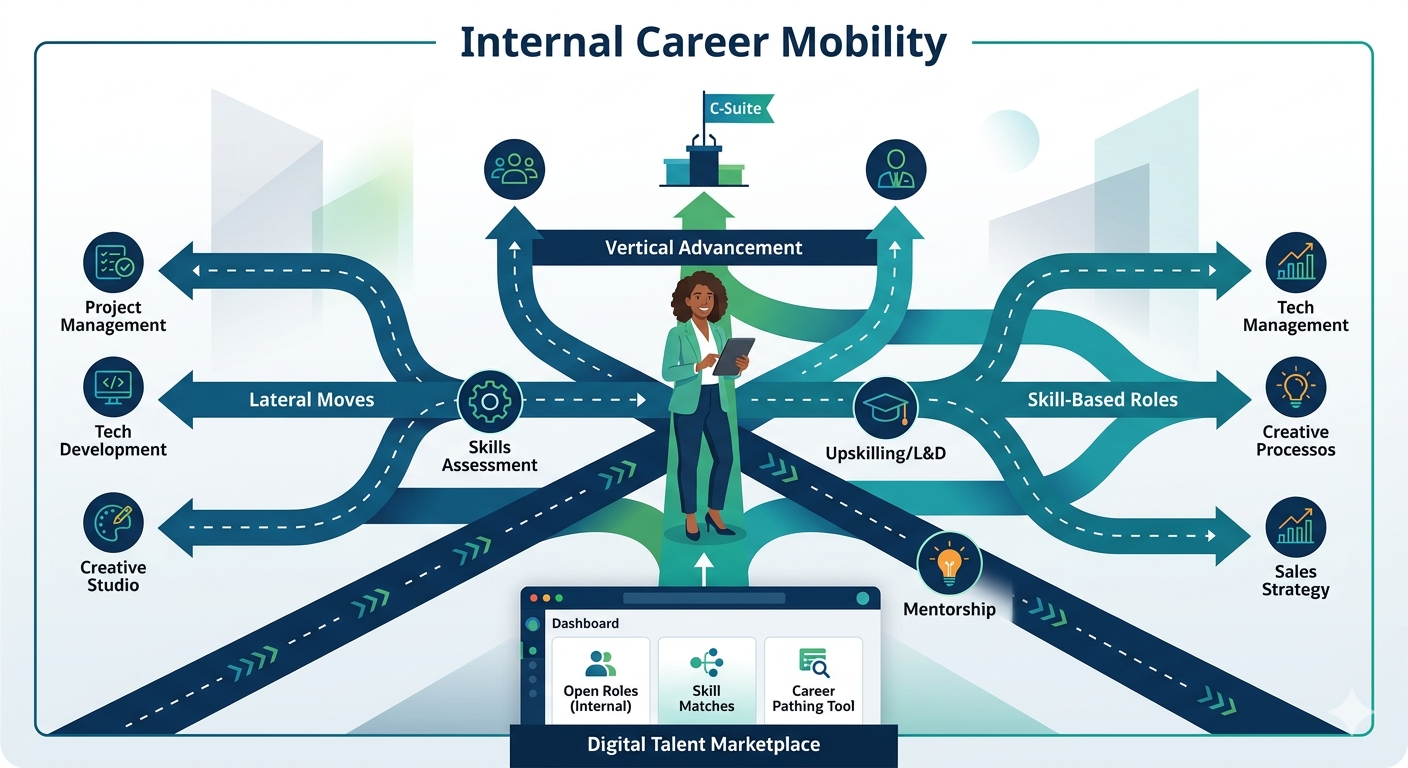
Internal career mobility refers to the movement of employees within an organization. This can include promotions, lateral moves, or role transitions across departments.
It is not just about filling positions internally. Instead, it focuses on aligning employee skills, aspirations, and business needs.
Additionally, it involves creating systems that make internal opportunities visible and accessible. Employees should clearly understand how they can grow within the organization.
Therefore, internal mobility is both a strategic and operational function.
Why internal career mobility is becoming important
Hiring externally is often expensive and time-consuming. At the same time, organizations risk losing valuable employees due to lack of growth opportunities.
Internal mobility solves both problems. It allows companies to retain talent while reducing recruitment costs.
Moreover, employees who see growth opportunities are more engaged and motivated. This improves overall performance.
Additionally, internal mobility supports workforce planning. Organizations can build future leaders from within.
Thus, the demand for specialists in this field is increasing rapidly.
How to become a specialist in internal career mobility
Building a career in this field requires a combination of HR knowledge, strategic thinking, and practical experience. Start by understanding how talent management works within organizations.
Gain experience in areas such as recruitment, employee engagement, or performance management. These roles provide valuable insights into workforce dynamics.
Additionally, learn how to analyze skills, roles, and career paths. Understanding how employees grow within an organization is essential.
Moreover, develop the ability to design systems that support internal movement. This includes career frameworks and job visibility platforms.
Over time, you can specialize in creating and managing internal mobility strategies.
Key skills required for this role
Strong communication skills are essential. Specialists must interact with employees, managers, and leadership.
Analytical skills are equally important. Professionals need to assess workforce data and identify opportunities for internal movement.
Additionally, problem-solving skills help address challenges such as skill gaps or role mismatches.
Empathy plays a critical role. Understanding employee aspirations improves decision-making.
Moreover, strategic thinking ensures alignment between employee growth and business goals.
These skills together define success in this field.
Educational background and learning path
There is no single degree required for this career. However, backgrounds in human resources, business management, or organizational psychology are beneficial.
Certifications in talent management, HR analytics, or organizational development can add value.
Additionally, continuous learning is important. Professionals must stay updated with trends in workforce planning and employee experience.
Practical exposure often matters more than formal education alone.
Therefore, combining knowledge with real-world experience is key.
Building systems for internal mobility
A major responsibility of specialists is to design systems that enable internal movement. This includes creating clear career paths and role frameworks.
Employees should have access to internal job opportunities. Transparency improves engagement.
Additionally, skill mapping helps identify suitable candidates for roles. This ensures better alignment.
Moreover, mentorship and training programs support employee development.
Thus, structured systems make internal mobility effective.
The role of technology in internal mobility
Technology plays a significant role in enabling internal career movement. Platforms that track skills, performance, and opportunities are essential.
Internal job portals allow employees to explore roles easily. AI-driven tools can match employees with suitable opportunities.
Additionally, data analytics helps organizations understand workforce trends.
Therefore, integrating technology improves efficiency and decision-making.
Career opportunities and growth
Specialists in internal career mobility can work in various roles. These include Talent Development Specialist, Employee Experience Manager, or Workforce Planning Analyst.
Additionally, large organizations often have dedicated roles for internal mobility.
With experience, professionals can move into leadership positions focused on talent strategy.
Moreover, consulting opportunities are also growing in this field.
Thus, this career path offers strong growth potential.
The impact of internal career mobility on organizations
Effective internal mobility improves retention and engagement. Employees feel valued when they see growth opportunities.
Additionally, organizations benefit from faster role transitions. Internal hires require less onboarding.
Moreover, internal mobility supports leadership development. Companies can build future leaders from within.
Therefore, this function directly contributes to business success.
Conclusion
Understanding how to become a specialist in internal career mobility can lead to a highly impactful and future-ready career. This role combines strategy, people management, and system design to improve organizational performance.
By developing the right skills, gaining relevant experience, and staying adaptable, professionals can build strong careers in this growing field.
As organizations continue to prioritize employee growth and retention, the demand for internal mobility specialists will only increase.
To explore opportunities in this domain, use the best job tool and discover roles that align with your expertise and career goals.
Find Your Dream Job Today – Explore Endless Career Opportunities and Secure Your Next Role with Best Job Tool.

Leave a Reply