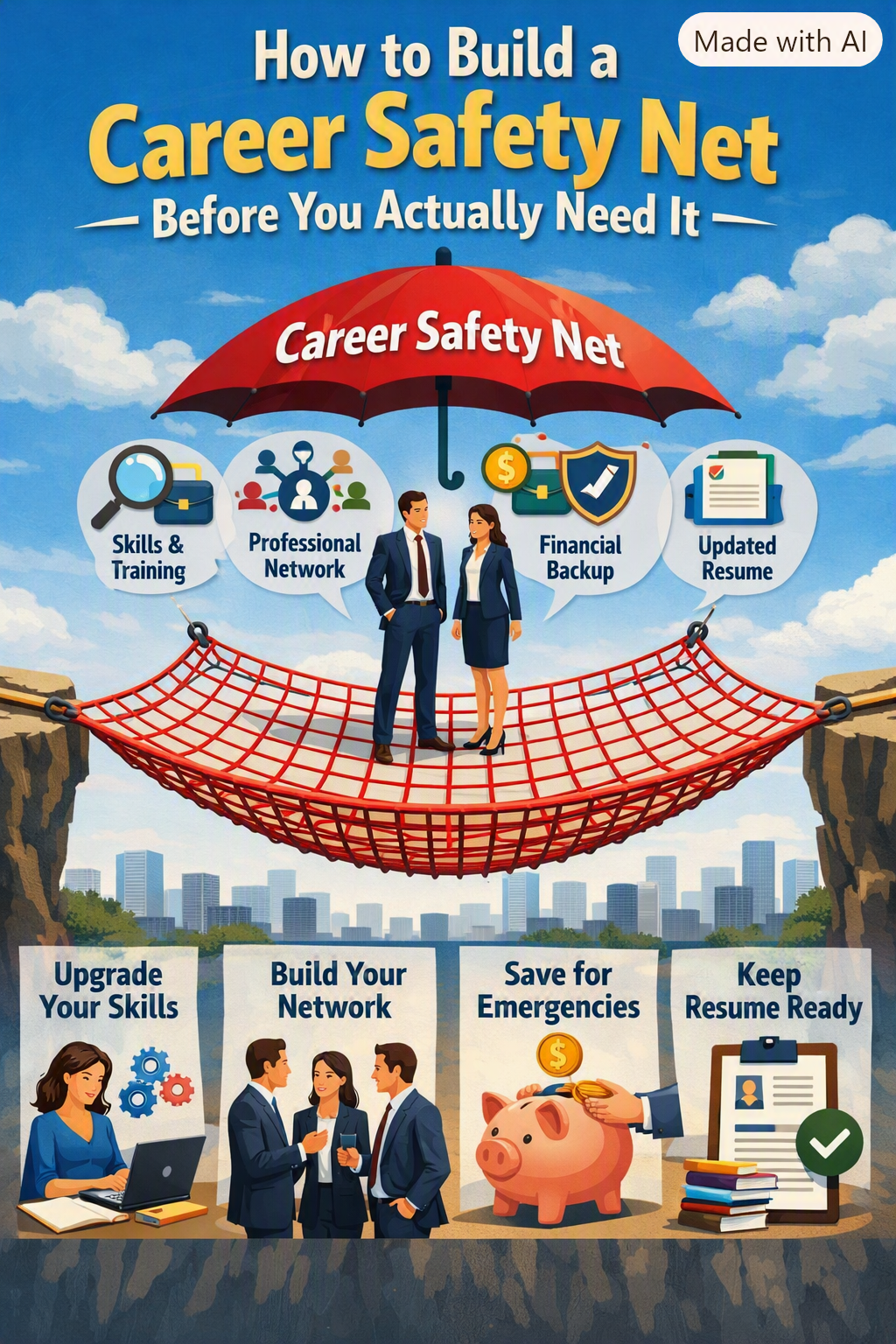
Introduction: Career Safety Net
A career can go from good to bad in an instant. One day things are happening smoothly, and the next – the company lays off workers, a new boss comes in, the project is canceled, or, unfortunately, for your own good, they send you away.
It is hard to predict what will happen, but it is always necessary to be prepared. This is where the concept of a career safety net comes in handy. It is essential to have it on standby.
A career safety net is something that should not be desired; instead, it should be created with certainty. There is never a guarantee that everything will stay calm and quiet for a long time. Sometimes it is not even possible to control what is going on in the workplace.
Therefore, every professional must always have some kind of career safety net. This way, even if the worst comes, he or she will know what to do. A career safety net is usually built from skills, contacts, experience, and confidence.
How to Build a Career Safety Net Before You Actually Need It?
1. Keep Your Skills Updated
One of the most substantial pillars of a career safety net is the combination of marketable and updated skills. As time goes by, the demand for your expertise may decrease, and a particular skill that got you promoted might become obsolete. It is essential to continuously update your skill set, even if you are confident in your current abilities.
It is not necessary to spend hours upon hours studying new subjects if you are busy with your work. You can set aside a few hours weekly to educate yourself in your professional field. You can take online courses, watch training videos, read articles, or practice using new things you have learned. It is essential to broaden your skills and remain competitive to advance in your current position or be eligible for another opportunity.
For instance, a content writer should consider updating their skill set with SEO, social media, analytics, or artificial intelligence-related skills. An accountant might want to learn new accounting software or improve their data-analysis skills. The point is not to rely on a single skill or area of expertise.
2. Build a Strong Professional Network
Building a professional network is an activity that many people engage in when they are already unemployed. In contrast, it is much easier to develop relationships while you have a job.
It is important to keep in touch with colleagues, classmates, managers, clients, and other people you interact with in your field. It is not necessary to ask everyone if they have job opportunities. Instead, it is good to develop professional relationships, express admiration for others’ work, share useful information, and stay in touch. A network of such contacts can become helpful to you when looking for advice, references, freelance work, or job leads. People are often willing to go out of their way to help someone they know and trust.
Besides, you can also build and maintain your professional image on LinkedIn. This online platform allows you to keep track of the people in your network and manage your professional reputation. Make sure your personal page looks attractive and highlights your skills and experience so that you can get the job you want.
3. Keep Your Resume and Portfolio Up to Date
You should never leave your resume to the last minute when you need a new job. It is not easy to list everything that you have experience with and all of the skills that you have developed.
It is important that you keep your resume up to date every few months. You can add skills, responsibilities, and achievements along the way. Keeping track of any positive feedback or successful campaigns in another document can help you when it comes time to show what you have done.
This also applies if you have a portfolio of your work, such as writers keeping samples of their best work or marketers saving their successful campaigns.
4. Create More Than One Career Option
Basing your career solely on the prospect of one employer is a gamble. This does not mean, however, that one should have to juggle multiple jobs at once. It is important, nevertheless, to have at least some idea of one’s alternatives in the professional world.
This might take the form of a freelance position, consulting role, teaching post, remote work options, or even a related field.
It is always wise to investigate these options ahead of time so as to be prepared for any emergency. The skills required for such options should be at least theoretically understood and practiced at a basic level.
This way, for instance, a full-time writer might cross-train as a freelancer and build up a portfolio, or a teacher might become familiar with online platforms for virtual instruction. Meanwhile, a corporate professional might invest time in honing skills relevant to a consulting career path.
Such measures serve to open up a wider field of opportunity while reducing one’s reliance on any single position, role, or even employer.
5. Build Financial Security Along With Career Security
Another component that should be taken into consideration when planning a career safety net is financial security. Job searches can be long, and career breaks can occur at any time.
Therefore, it is important to have some financial security, even if only in the form of a small amount of savings. This way, a person will not have to take the first job offer that comes along due to financial desperation. A career safety net should include financial security because with both job and financial stability, a person will have more opportunities to choose from and can wait for the best conditions instead of taking the first opportunity due to financial issues.
Financial security and career security should go hand in hand, and one cannot exist without the other. One’s skills and experience, financial and professional networks, and the ability to take career breaks or even sabbaticals, are only a few examples of how someone can build both career and financial security.
6. Maintain Your Professional Reputation
You never know where your reputation will lead you. Strive to conduct yourself so as to be associated in people’s minds with being competent, ethical, and pleasant to work with. Always fulfill your obligations, communicate effectively, meet deadlines when possible, and show respect to your colleagues. They might very well wind up being your future manager, client, vendors, or even refer a friend for a position in the company you work for now.
On the other hand, it is always necessary to maintain excellent relationships with your previous employers or contractors. If you have a choice, try to part ways on good terms, even if you are not entirely happy with them. You never know what professional opportunities may arise from your previous positions.
7. Build confidence in your own abilities
Another thing to consider is that a career safety net is not just about experience, salary, or skill sets. It’s confidence-building, too. Being adaptable is never easy, but the ability to know that you can learn something new and start over elsewhere can help take the edge off difficult circumstances.
Remember, you should not be defined by the title of the position you hold or the company that employs you. The relationships you establish, the expertise you possess, and the adaptability you demonstrate are always with you. After all, businesses change, but individuals can move on to meet new challenges.
Conclusion: Career Safety Net
The best time to build a career safety net is when you do not need it. Knowing that a career backup plan is in place eases anxieties about being laid off, fired, or unexpectedly needing to change careers. You can reduce your exposure to risk and increase your level of control by keeping your skills sharp, maintaining your professional networks, keeping your resume up to date, researching career options, putting money in the bank, and paying attention to layoffs in your industry.
You can’t control everything, but you can control your preparation. A strong career safety net gives you options, confidence, and time.
“Don’t wait for a career setback to start preparing. Build in-demand skills, strengthen your professional network, maintain an updated resume, and create financial flexibility so you’re ready when opportunities or challenges arise. Build a stronger career safety net with Best Job Tool.”


Leave a Reply