Introduction
A bad interview round is not always a disqualifier for the candidate. In some cases, the candidate may have been nervous, misunderstood the question, given vague answers, or simply had a bad day.
At the same time, hiring managers know that a poor performance during one round may not be entirely representative of a candidate’s true capabilities. Therefore, in some situations, hiring managers decide to grant a second chance to the candidate.
The primary factors that determine whether a hiring manager grants a second chance to a candidate after a bad round are unique for every scenario. Therefore, there is no specific answer or list of criteria that can be provided. However, typically, such a decision depends on the candidate’s overall assessment, performance, and potential, as well as the reason for his or her poor showing during the interview.
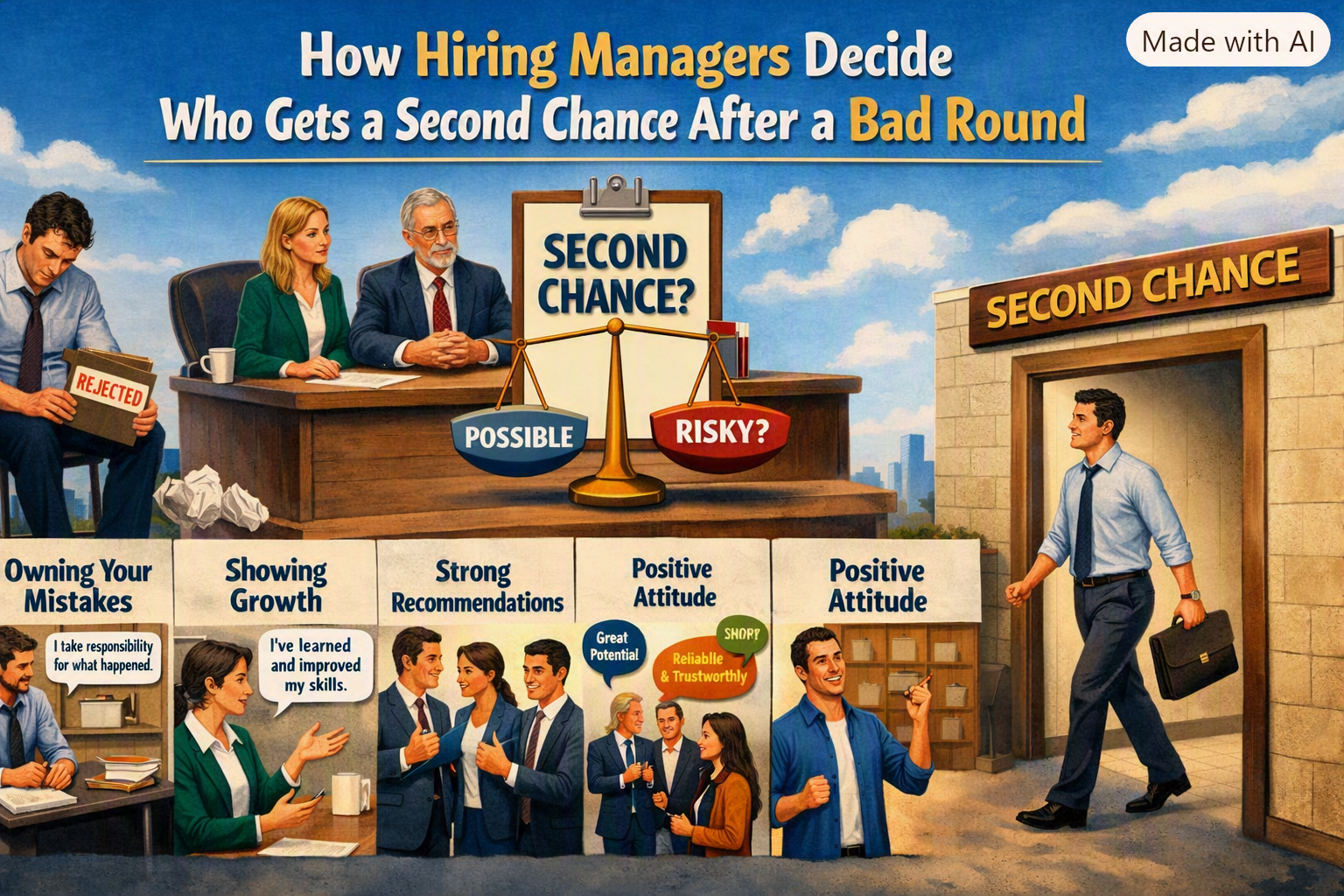
How Hiring Managers Decide Who Gets a Second Chance After a Bad Round?
1. Hiring Managers Look at the Candidate’s Overall Profile
The first thing a hiring manager looks at is the candidate’s overall profile. If everything looks good and the candidate has the relevant skills and experience, then one interview might not be enough to eliminate them from consideration. Let’s say there’s a candidate with good experience, achievements, and skills, but they messed up during the interview and became very nervous.
The hiring manager might think that they know the job well but just failed to demonstrate their knowledge adequately.
In such a scenario, the hiring manager might decide to give them another interview or ask additional screening questions before making a final decision.
2. Hiring Managers Try to Understand Why the Round Went Badly
Different reasons could cause such an outcome, and you must consider each situation individually. It can happen that the candidate underperformed due to their lack of preparation. In some cases, the pressure could have been too high for them, especially if the round was highly significant for them. It can also occur that the technical or communication issues took place, or the questions were unclear to the candidate.
A competent hiring manager will always try to understand the details of the situation to determine if the candidate can perform better on the next stage. For instance, if the applicant demonstrated poor knowledge of the required skills and competencies, there is probably no sense in giving them another chance.
On the other hand, if they had a poor interview round due to their anxiety and nervousness, the hiring manager might consider their overall performance and provide the candidate with another opportunity.
For example, if the applicant had poor answers on the first questions but then performed well and gave precise and knowledgeable responses, this could be a sign that the first stage did not reflect their true skills and knowledge.
3. Previous Interview Rounds Also Matter
If there is more than one interview round, the hiring team will consider the performance of the candidate in all the interview rounds.
Say, if a candidate has performed exceptionally well in the first interview but miserably in the second interview, the hiring manager will take into consideration his performance in the first interview as well while taking the final decision.
Hence, a candidate who performs well in the first round but poorly in the second round might still convince the hiring manager to consider them for the position because one bad interview is not enough to disqualify them..
This especially happens if different people conduct different interviews as they can have different viewpoints regarding the same candidate’s performance. It, therefore, becomes necessary for the candidate to perform consistently well in all rounds of interviews conducted by different people. It is always better for the candidate to clear all the rounds of interviews if he is considering taking up the position.
4. Hiring Managers Look at the Most Relevant Information
There are usually several skills that are required for a certain position, with varying levels of importance. If the candidate shows underperformance in one of the areas but has excellent skills in other, more relevant ones, there is a good chance that they will have another interview.
For instance, a content writer who demonstrates excellent writing and research skills but performs poorly in an interview because of nervousness might receive another opportunity. The hiring manager may give them a writing test to assess the skills most important for the position.
Meanwhile, candidates who fail to demonstrate proficiency in the key skills for the position are less likely to have a second interview. This is how hiring managers decide who gets a second chance after a failed round. They evaluate whether the candidate demonstrated the skills relevant to the position and whether their failure to perform is a sign of a minor flaw or serious underperformance.
5. Improvement and Potential Are Important
Some hiring managers do not only focus on a person’s current output; they might be interested in a candidate’s potential to improve. Therefore, even if a person does not perform well during an interview, they might still be hired because of their potential to improve.
If someone can accept criticism and apply it, they might demonstrate an opportunity for improvement. For instance, the company could decide to give a candidate a second chance during another task or interview.
The second chance is not necessarily a mistake-free task; it is meant to demonstrate how a candidate would handle it.
Conclusion
A bad round in an interview can be disheartening, however, it is by no means a deal-breaker. Mostly, the hiring manager will consider other factors before making the final shortlisting decision. These include the candidate’s file, skills, prior rounds results, attitude and motivation, the potential offered by the applicant, and even the justification of the bad interview round.
Who gets a second chance at the interview depends on several issues, and for different companies, the parameters differ. Therefore, in some cases, the bad interview round can be overlooked depending on the seriousness of the errors committed. In conclusion, the only way to deal with the bad interview is to remain calm and collected, acknowledge the mistakes made and show eagerness to learn from them. After all, the bad round should not be the primary deciding factor for a potential offer.





Leave a Reply